Rice and Diabetes: Portions and Glucose
Can You Eat Rice With Diabetes?


BBH Physical Health · Diabetes & Blood Sugar · Research-based U.S.-priority guide with UK, Canada and Australia comparisons
Thank you for reading this post, don't forget to subscribe!Rice is a central part of meals in many cultures, yet people with diabetes often hear conflicting instructions: never eat white rice, choose only brown rice, or refrigerate leftovers to cancel the carbohydrates. Reliable diabetes guidance is more nuanced, focusing on portions, rice variety and the complete meal.
This guide to rice and diabetes explains how cooked rice affects glucose, how carbohydrate servings work, what distinguishes white, brown and basmati varieties, and how to build balanced rice-based meals. It prioritizes ADA 2026 recommendations for U.S. readers and compares relevant UK, Canadian and Australian guidance.
The article also addresses common content gaps: the difference between dry and cooked measures, glycemic index versus load, cooling-and-reheating research, and safe storage of leftover rice. It is educational, not an insulin-dosing instruction.
Can people with diabetes eat rice?
Yes. Rice is a carbohydrate-containing staple that can fit into a varied diabetes eating pattern. The American Diabetes Association’s 2026 nutrition standards do not require everyone with diabetes to avoid rice; they favor high-quality carbohydrate sources, adequate fiber and an individualized plan. Rice portions should reflect the person’s glucose goals, overall meal and treatment.
Carbohydrates are broken down into glucose. After a rice meal, glucose can rise; how much depends on the cooked quantity, rice variety, preparation, meal composition and individual physiology. Taking medication, activity, illness and sleep may also influence the response.
A bowl of rice should not be labeled either a cure or a poison. A modest amount with vegetables and lean protein is different from a very large portion alongside sugary drinks and minimal vegetables. Both the serving and the complete meal deserve attention.
People using insulin may need to include rice in their prescribed carbohydrate counting approach. Others may use the diabetes plate method as a practical visual guide. Neither approach defines one permitted portion for every reader.
How rice affects blood glucose
Rice is rich in starch, which digestion converts into glucose. White rice generally has less intact grain fiber than brown rice because milling removes the bran and germ. But the glycemic response to a serving is not determined by grain color alone.
Variety, cooking duration, grain structure and processing affect digestibility. A sticky, rapidly digested rice dish may produce a different response from a firm-grained basmati preparation, although that distinction should not be mistaken for a guarantee about any person’s glucose.
Glucose response also depends on the total carbohydrate eaten at the same sitting. Rice, naan, sweet sauces and dessert all contribute to a meal’s total carbohydrates. Counting only the rice is misleading if the rest of the meal contains substantial starch or sugar.
For readers who monitor glucose, repeat observations can help distinguish a recurring response from a single unusual day. A healthcare professional can explain how to interpret results without independently changing medication.
Rice and Diabetes: Portion Sizes
One carbohydrate choice in common U.S. diabetes education represents approximately 15 grams of carbohydrate. The ADA and CDC use roughly one-third cup of cooked rice as a familiar example. This is not a recommendation that all people must eat exactly one-third cup, or that two servings are unsafe.
For a rough visual comparison, two-thirds cup cooked rice is often around 30 grams of carbohydrate and one full cup around 45 grams, based on standard long-grain rice examples. Actual values vary with variety, moisture, cooking method and how tightly a cup is filled.
| Cooked rice quantity | Approximate carbohydrate | How to use the example |
|---|---|---|
| ⅓ U.S. cup | ≈15 g | One U.S. carbohydrate choice |
| ⅔ U.S. cup | ≈30 g | Two choices |
| 1 U.S. cup | ≈45 g | Three choices |
Measuring rice after cooking is essential when using cooked-food references. A cup of dry rice and a cup of cooked rice are not equivalent. Package nutrition labels may list dry weights, requiring careful conversion when preparing a family batch.
A registered dietitian can help establish appropriate carbohydrate quantities for the entire meal. Pregnancy, type 1 diabetes, kidney disease, activity levels and individual weight goals can change the best strategy.
The best rice and diabetes approach considers serving size, grain quality, the whole meal and the person’s diabetes treatment.
Rice and Diabetes: Brown, White and Basmati
Brown rice retains the bran and germ, usually providing more fiber and certain nutrients than comparable refined white rice. This aligns with ADA 2026 advice to favor whole grains. A whole-grain option is an improvement in nutrient quality, not a carbohydrate-free substitute.
Basmati rice, particularly some long-grain varieties, often has a lower glycemic index than many rapidly digested white rice varieties. Diabetes UK and the British Dietetic Association list basmati among practical lower-GI rice choices, while noting that GI values vary.
| Rice variety | What differs | Important limitation |
|---|---|---|
| Brown rice | More whole-grain fiber and nutrients | Still carbohydrate-containing |
| White rice | Usually less fiber; common everyday staple | Response varies by portion and cooking |
| Basmati rice | Often lower GI than many other refined varieties | GI and glucose response not guaranteed |
| Wild rice or blend | Potential variety and additional fiber | Count total carbohydrate |
White rice can still be eaten in a balanced plan. Smaller cooked portions, vegetables and a protein-rich side may make it easier to include a culturally familiar food without abandoning other nutrient goals.
Wild rice and rice blends offer variety, though the total starch still needs consideration. Brown basmati is an option for readers who like aromatic rice and want to incorporate more wholegrain foods.
Understanding glycemic index and glycemic load
Glycemic index, or GI, ranks foods according to how quickly carbohydrate raises blood glucose under standardized testing conditions. It is not a measure of a normal portion’s total carbohydrate or the nutritional value of an entire meal.
Glycemic load incorporates both the GI of the carbohydrate food and the amount of available carbohydrate in the portion. This helps explain why a large amount of lower-GI rice can still contribute considerable glucose exposure.
Preparation matters. Rice that is processed, cooked differently or eaten with other ingredients may behave differently from the rice used to establish a published GI value. A single GI number for ‘white rice’ is therefore an oversimplification.
Diabetes UK and Australian NDSS support considering lower-GI choices within an overall eating pattern while emphasizing portion size and a range of other nutrients. Focusing on GI alone can distract from fiber, sodium, total energy and food enjoyment.
The best rice and diabetes approach considers serving size, grain quality, the whole meal and the person’s diabetes treatment.
Build a balanced rice plate
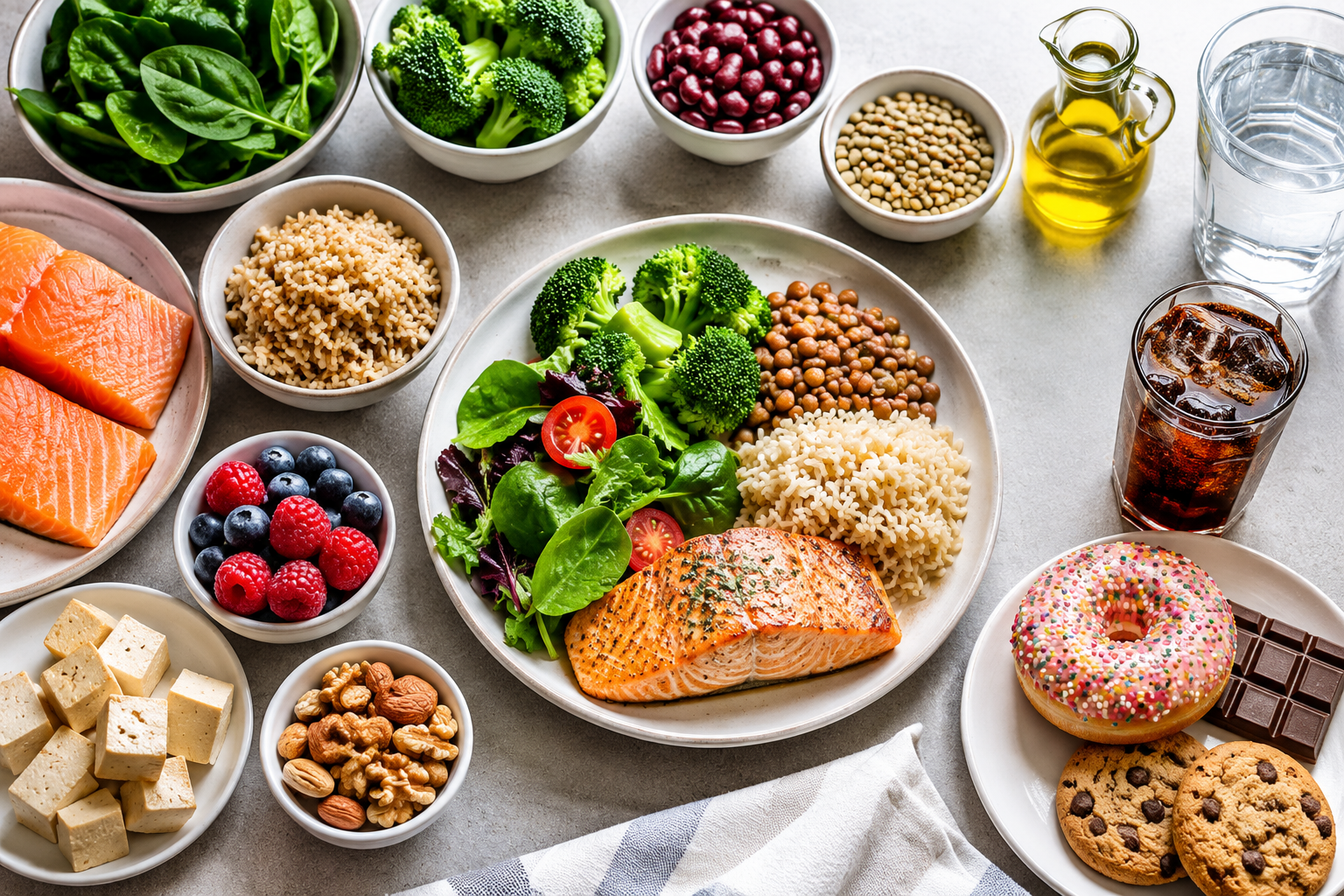
Using the diabetes plate method, reserve approximately half the plate for non-starchy vegetables, one-quarter for a protein food and one-quarter for carbohydrate-rich food such as cooked rice. This is a starting point, not a precise prescription of grams.
Vegetable options include spinach, broccoli, cauliflower, peppers, green beans or salad. Protein can be fish, chicken, tofu, eggs or lentils. Beans and lentils also contribute carbohydrate, so their starch content belongs in the complete meal calculation.

A useful example is a modest serving of brown rice with grilled fish, vegetables and lemon. A vegetarian version might combine basmati rice with tofu, sautéed greens and a small portion of chickpea curry.
Choose water or another unsweetened drink more often than regular soda or sweetened tea. A large sugary beverage can add more carbohydrate than an otherwise carefully planned rice portion.
Five rice-based meal combinations
Meal one: brown rice, baked salmon and roasted broccoli. Keep rice on roughly one-quarter of the plate while vegetables occupy about half. Season with citrus, herbs and a little unsaturated oil.
Meal two: basmati rice with lentil dal and mixed vegetables. Dal provides protein and carbohydrate, so adjust the grain serving to reflect the entire plate rather than assuming legumes are free foods.
Meal three: tofu-and-vegetable stir-fry with rice. Choose plenty of peppers, mushrooms and greens, and check bottled sauces for added sugar and sodium. The grain does not need to occupy most of the bowl.
Meal four: brown rice with chicken, cucumber salad and yogurt dressing. Meal five: vegetable rice bowl with beans, leafy greens and avocado. Both demonstrate that familiar rice meals can be varied without requiring expensive specialty products.
Rice and Diabetes: Cooling and Reheating
Cooling some cooked starches encourages the formation of resistant starch, which is digested differently from readily available starch. A small study in people with type 1 diabetes found a lower glucose response to cooled and reheated rice compared with freshly prepared rice under the study conditions.
However, this research does not prove that cooled rice is a diabetes treatment or that everyone will experience the same change. Most starch remains digestible, and the meal’s total carbohydrate must still be counted when that is part of the person’s treatment plan.
Food safety is particularly important. Cooked rice may contain Bacillus cereus spores; unsafe time at room temperature can allow bacteria to multiply and produce toxins. The UK Food Standards Agency advises cooling leftovers quickly, ideally within one hour, then refrigerating and consuming within 24 hours.
Rice should be refrigerated promptly, kept cold and reheated thoroughly only once if reheating. Never leave it on a countertop overnight to generate resistant starch. Any potential glucose benefit is not worth the risk of food poisoning.
What about rice at night or after exercise?
There is no universal rule that rice eaten at dinner is harmful while the same rice at lunch is safe. Meal timing can interact with individual glucose patterns, medication schedules, activity and sleep, but total carbohydrate and the context of the meal matter greatly.
Some people have higher morning glucose because of dawn physiology or overnight patterns. Others see a stronger rise after dinner. These differences are a reason to review recurring glucose information rather than apply a one-size-fits-all cutoff time.
Exercise can alter glucose during and after activity, especially for people using insulin. Do not treat physical activity as a guaranteed way to cancel a large rice meal, and avoid unsupervised medication adjustment after exercise.
People who frequently experience nighttime low glucose require their own safe meal and insulin schedule. Avoid skipping necessary carbohydrate or medication guidance because an internet article describes evening rice as undesirable.
Rice choices in the US, UK, Canada and Australia
In the United States, the ADA 2026 prioritizes nutrient-dense, high-fiber carbohydrate choices such as whole grains. The ADA and CDC use cooked rice examples to teach carbohydrate serving sizes, while stressing an individualized overall meal plan.
Diabetes UK recommends awareness of carbohydrate portions and suggests brown or basmati rice in place of many higher-GI refined choices. UK dietary advice also places rice within a broader pattern including vegetables and protein.
Diabetes Canada’s balanced-plate resources include whole grains or starchy vegetables such as rice in about one-quarter of the plate. This is a food-group illustration rather than a uniform gram limit for every person.
| Country | Relevant approach | Reference |
|---|---|---|
| United States | Measure cooked portions; prioritize whole grains | ADA/CDC |
| United Kingdom | Consider brown or basmati; GI and portions | Diabetes UK/BDA |
| Canada | Reserve about ¼ plate for grains or starch | Diabetes Canada |
| Australia | Choose suitable lower-GI grains and balanced meals | NDSS |
Australia’s NDSS encourages lower-GI carbohydrate foods, healthy cooking methods and appropriately sized servings. A familiar basmati rice dish with lean protein and vegetables can be adapted to its nutritional guidance.
Monitoring your individual glucose response
Home glucose meters and continuous glucose monitors can show patterns after meals for people who use them as part of a care plan. Time of measurement matters: a fasting number, a random result and a postmeal value cannot be interpreted using one universal diagnostic chart.
Many nonpregnant adults with established diabetes use individualized glucose goals that may include peak postmeal values below 180 mg/dL, often assessed one to two hours after beginning a meal. This is a treatment goal, not a diabetes diagnostic test.

Record the rice amount and the other foods in the meal if recurring postmeal rises are a concern. A single reading is not enough to identify whether the rice variety, medication timing, illness or another factor was responsible.
If glucose is persistently above target or frequent lows occur, speak with the diabetes team rather than removing all carbohydrates or independently changing insulin doses.
Common rice myths and mistakes
One myth says brown rice cannot raise blood glucose. It can: brown rice is a carbohydrate food. Its advantage is mainly fiber and nutrient content, along with potentially different glycemic characteristics for some varieties.
Another myth says basmati is always low GI. Actual glycemic responses vary by variety, processing and cooking. Basmati may be a useful swap, but portion control and complete meal composition still apply.
A third misconception is that cooling rice removes its carbohydrate content. Resistant starch may increase under some preparation methods, but reheated rice is not carbohydrate-free and should not be consumed after unsafe storage.
Finally, all diabetes diets are not identical. Someone managing type 1 diabetes with mealtime insulin needs different planning from a person managing prediabetes with food and activity alone.
Frequently asked questions
Can diabetics eat white rice? Yes, in portions that fit an individualized meal and carbohydrate plan. More whole grains can improve food quality.
How much rice can a person with diabetes eat? There is no universal allowance. Around one-third cup cooked rice is a common 15-gram carbohydrate example in U.S. education.
Is brown rice better than white rice? Brown rice typically has more fiber and micronutrients, but both contribute carbohydrate.
Is basmati rice suitable? It may have a lower GI than many other white varieties, although the exact value and glucose response vary.
Does rice always cause a spike? Rice affects glucose, but the response depends on portion, rice type, mixed meal and individual factors.
Does cooled rice have fewer carbs? Cooling can increase resistant starch modestly; it does not make rice carbohydrate-free or replace medication.
Can I eat rice at dinner? There is no universal rule against dinner rice; consider your individual glucose and treatment schedule.
Is cauliflower rice the same as rice? No. It can be a lower-carbohydrate vegetable alternative, but the nutrients and experience are different.
Conclusion: Make Rice Fit a Balanced Meal
The evidence on rice and diabetes supports thoughtful portions and high-quality food choices rather than blanket bans. Brown rice and some basmati varieties may improve nutrient quality or glycemic characteristics, but no rice type is carbohydrate-free.
Measure cooked quantities when accurate counting matters, pair rice with vegetables and suitable protein, and review your repeated glucose patterns with your treating professional. Safe food handling is essential when storing or reheating rice.
Evidence and Scientific References
- ADA 2026: Nutrition and Positive Health Behaviors
- ADA: Carbohydrate Serving Visual Guide
- CDC: Diabetes Meal Planning
- Diabetes UK: Glycaemic Index and Diabetes
- Diabetes Canada: Balanced Plate
- Australia NDSS: Glycaemic Index
- Peer-Reviewed Study: Cooled Rice, Resistant Starch and Glucose
- UK Government: Safe Rice Storage