Diabetes and Heart Disease: Risks
Diabetes Heart Risks: Prevention Guide


Managing diabetes often means monitoring blood glucose, taking medication and planning meals. But what if your glucose readings improve while your blood pressure or cholesterol remains elevated? Many people understandably focus on their HbA1c result and may not realize that it captures only one component of long-term cardiovascular health.
Thank you for reading this post, don't forget to subscribe!Understanding Diabetes and Heart Disease Risks can help patients and families recognize warning signs, ask more useful questions during medical appointments and make informed decisions alongside their healthcare team. This guide is designed for adults in the United States, with relevant information for readers in the United Kingdom, Canada and Australia.
Medical Safety & Disclaimer
This article provides general education and does not replace medical advice, diagnosis or treatment. If you develop chest pressure, sudden breathlessness, cold sweating, faintness or unexplained upper-body discomfort suggestive of a heart attack, call emergency services immediately. Do not delay to check your glucose or drive yourself.
Quick Answer
People with diabetes are approximately twice as likely to experience heart disease or stroke as those without diabetes, according to the CDC. Individual risk varies. Managing blood pressure, cholesterol, kidney health, smoking and glucose together is important. Cardiovascular complications are not inevitable.
In This Guide
A practical approach to diabetes and heart disease risks is to review glucose management alongside cholesterol, blood pressure, kidney function and any new symptoms. Discuss personal treatment priorities with a qualified clinician instead of relying on a single A1C result.
What you will learn
The diabetes–heart connection • Heart attack and heart failure • Risk factors • Emergency warning signs • Type 1 and type 2 diabetes • HbA1c limitations • Kidney screening • Medical tests • Prevention and treatment • Appointment checklist • FAQs
1. Understanding Diabetes and Heart Disease Risks
The cardiovascular system includes the heart and blood vessels that transport oxygen and nutrients throughout the body. Diabetes can influence this system through long-term metabolic changes. Elevated glucose can damage the inner lining of blood vessels, while insulin resistance, hypertension and abnormal lipid levels may create additional strain. These processes can occur over years, which is why prevention matters even when someone feels well.
How diabetes and heart disease develop together
The endothelium normally helps regulate blood vessel dilation, clotting and inflammation. Chronic hyperglycemia can impair endothelial function. Atherosclerosis occurs when cholesterol-containing plaque builds within arterial walls. A plaque can narrow a vessel or rupture and trigger a clot, potentially interrupting blood flow to the heart or brain.
Insulin resistance, particularly in type 2 diabetes, can coexist with elevated triglycerides, low HDL cholesterol and abdominal adiposity. Oxidative stress and inflammation may also contribute to vascular damage. These mechanisms overlap, but no single mechanism predicts exactly what will happen to an individual. Age, disease duration, genetics, treatment and social circumstances all matter.
2. Cardiovascular conditions associated with diabetes
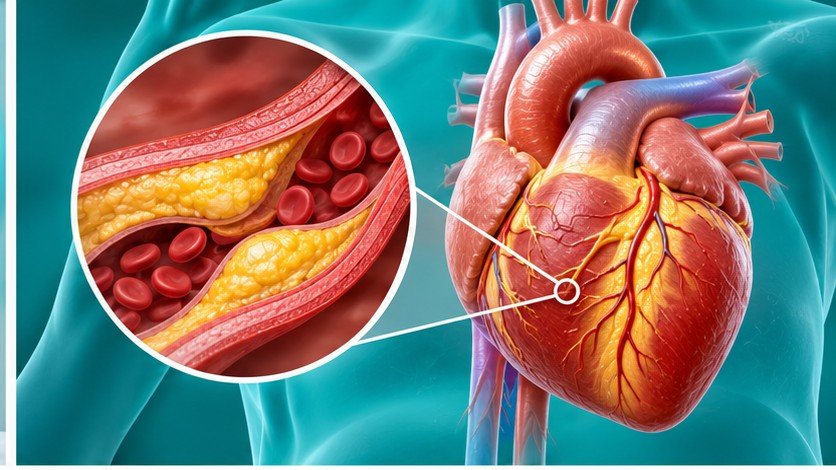
| Condition | What it means |
|---|---|
| Coronary artery disease | Atherosclerosis affects arteries supplying the heart. |
| Heart attack | Blood flow to part of the heart is critically interrupted. |
| Heart failure | The heart cannot fill or pump effectively enough to meet the body’s needs. |
| Stroke | Blood supply to the brain is interrupted or bleeding occurs. |
| Peripheral artery disease | Arteries supplying the limbs become narrowed. |
| Cardiac autonomic neuropathy | Nerve damage affects heart rate, blood pressure regulation or symptom perception. |
Coronary artery disease and heart attacks
Coronary artery disease may cause exertional chest discomfort or breathlessness. Some people develop few symptoms before an acute event. A heart attack is a medical emergency, not simply an episode of elevated blood sugar. Prompt assessment can make a substantial difference to outcomes.
Heart failure is a separate condition
Heart failure does not mean the heart has stopped. It describes impaired pumping or filling function. Diabetes, kidney disease, hypertension and coronary artery disease can contribute. Possible signs include gradually worsening breathlessness, swelling in the legs, reduced exercise tolerance and difficulty breathing when lying flat. Sudden severe breathlessness requires emergency assessment. New or worsening symptoms should not be dismissed as normal aging or poor fitness.
3. Diabetes and Heart Disease Risks: Major Factors
| Risk factor | Why it matters |
|---|---|
| High blood pressure | Increases strain on the heart and vessels. |
| Elevated LDL cholesterol | Promotes atherosclerosis. |
| Smoking | Damages vessels and raises clotting risk. |
| Kidney disease | Raises cardiovascular risk and may alter treatment options. |
| Persistent hyperglycemia | Contributes to vascular and other complications. |
| Physical inactivity | Can worsen metabolic and cardiovascular fitness. |
| Age and diabetes duration | Influence cumulative risk. |
| Family history | May indicate inherited susceptibility. |
Risk is not determined by body weight alone. A person with a healthy weight can still have high LDL cholesterol or hypertension. Equally, a person living with obesity should receive respectful, individualized care rather than assumptions about their behavior. Cost, access to safe exercise spaces, medication affordability and healthcare access can affect prevention. Discuss barriers openly with the care team.
4. Diabetes and Heart Disease Risks: Symptoms
Diabetes and heart disease risks require careful attention to cardiovascular disease may be silent in its early stages. Some symptoms appear during exertion and resolve with rest, while others occur unexpectedly. Chest discomfort, reduced exercise tolerance, palpitations, unexplained fatigue and breathlessness deserve assessment according to their severity and pattern.
Diabetes and heart attack: Recognizing less typical symptoms
Autonomic nerve damage can sometimes alter how cardiac pain is perceived. A person may have a heart attack without dramatic chest pain. However, chest pressure or discomfort remains an important warning sign in people with diabetes. Women and men can both experience nausea, fatigue, breathlessness or pain in the arm, jaw or back.
Emergency Warning Signs
Chest pressure or pain, sudden shortness of breath, cold sweating, faintness or unexplained arm, jaw or back discomfort may indicate a heart attack. Call emergency services immediately: USA and Canada 911; UK 999 or 112; Australia 000. Do not wait for symptoms to resolve or drive yourself. Follow the emergency dispatcher’s instructions.
5. Type 1 versus type 2 diabetes and cardiovascular risk
Both forms of diabetes can increase cardiovascular risk. In type 1 diabetes, autoimmune destruction of insulin-producing cells makes insulin treatment essential. Long-term glucose exposure, kidney disease and other cardiovascular risk factors influence outcomes. Type 2 diabetes frequently involves insulin resistance and may coexist with hypertension, abnormal lipids and other metabolic risks.
The prevention approach for both types includes appropriate glucose management, blood pressure assessment, cholesterol evaluation, smoking cessation and kidney screening. Medication choices differ. Evidence supporting certain cardiovascular-protective glucose-lowering medicines in type 2 diabetes should not be automatically extrapolated to type 1 diabetes.
6. Content gap: Why a healthy HbA1c does not guarantee heart protection
HbA1c estimates average glucose exposure over the preceding months. It does not directly measure arterial plaque, cholesterol, blood pressure, kidney damage or cardiac function. Consider two fictional patients with the same HbA1c result but different cardiovascular risk factors.
| Measurement | Person A | Person B |
|---|---|---|
| HbA1c | 6.8% | 6.8% |
| Blood pressure | 118/76 mmHg | 152/94 mmHg |
| LDL cholesterol | 65 mg/dL | 155 mg/dL |
| Smoking | No | Yes |
| Urine albumin | Within reference range | Elevated |
Person B has several additional risk factors that require clinical attention. This illustration is not a diagnostic scoring tool and cannot establish either person’s actual risk. It demonstrates why diabetes and heart disease prevention should involve a broader assessment. Even Person A could have other risk factors, such as a family history or established coronary disease.
Beyond Blood Sugar
At your next appointment, ask about your individualized blood pressure and LDL cholesterol targets, kidney screening and cardiovascular medication options. An improved HbA1c is meaningful progress, but it is not the only measure of health.
7. The heart–kidney–metabolic connection
Diabetes and heart disease risks are connected to kidney health. The heart and kidneys are connected through circulation, blood pressure regulation and fluid balance. Kidney disease can increase cardiovascular risk, while heart failure may affect kidney perfusion and fluid regulation. Diabetes-related kidney damage may develop without noticeable symptoms.
Two important kidney measurements are estimated glomerular filtration rate (eGFR), which estimates filtration function, and urine albumin-to-creatinine ratio (UACR), which detects albumin leakage. Elevated UACR may identify risk even when eGFR is relatively preserved. Results can fluctuate and abnormal values may require repeat testing. Screening is generally recommended at least annually for type 2 diabetes and for type 1 diabetes of at least five years’ duration, with frequency individualized according to findings.
Understanding kidney results can improve conversations about blood pressure, cardiovascular prevention and medication suitability. Read Diabetic Kidney Disease: Complete Guide for related education.
8. Medical tests for diabetes and heart disease
| Test | Purpose |
|---|---|
| HbA1c | Longer-term glucose management. |
| Blood pressure | Detects and monitors hypertension. |
| Lipid profile | Measures LDL, HDL and triglycerides. |
| eGFR and UACR | Evaluate kidney function and albumin leakage. |
| ECG | Evaluates electrical activity when indicated. |
| Echocardiogram | Assesses cardiac structure and function when indicated. |
| BNP or NT-proBNP | May help assess heart failure risk or suspected heart failure. |
Routine screening for coronary artery disease with stress testing is not recommended for every asymptomatic person with diabetes when cardiovascular risk factors are appropriately treated. The need for an ECG, imaging or additional testing depends on symptoms, history and clinical guidance. A normal ECG does not exclude coronary artery disease. The ADA also supports considering natriuretic peptide screening for heart failure in adults with diabetes; abnormal results need clinical evaluation.
9. Preventing Diabetes and Heart Disease Risks
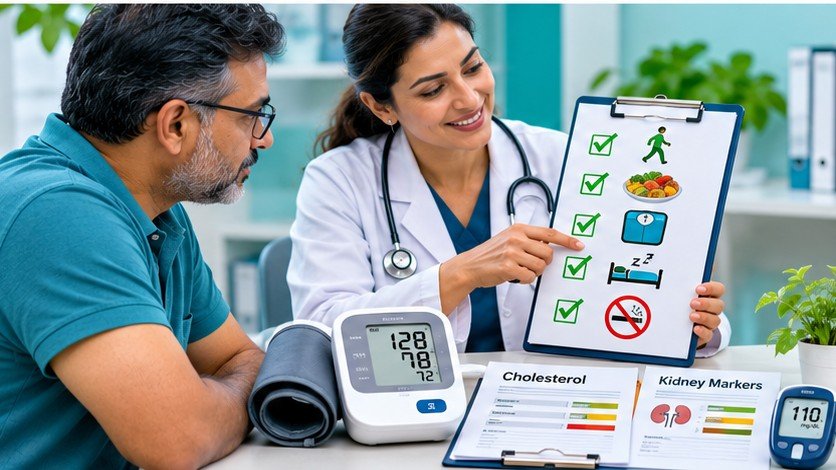
Manage glucose and blood pressure safely
Work with your clinician to establish an individualized HbA1c target. Avoid treatment strategies that produce recurrent or severe hypoglycemia. For many adults with diabetes and hypertension, a blood pressure target below 130/80 mmHg is appropriate if safely achievable. More intensive targets may be considered for selected higher-risk patients; dizziness, falls, kidney function and medication effects matter.
Address cholesterol and smoking
Statin therapy is commonly recommended for adults aged 40–75 with diabetes. Treatment intensity and LDL goals depend on cardiovascular history and other risk factors. If you experience suspected side effects, discuss them before discontinuing therapy. Smoking cessation is another important intervention; counseling and appropriate medications may help people who want to quit.
Discuss cardiovascular-protective medicines
Certain SGLT2 inhibitors and GLP-1 receptor agonists have demonstrated cardiovascular or kidney benefits in selected people with type 2 diabetes. Some benefits are relevant independently of the need for additional glucose lowering. SGLT2 inhibitors have important heart failure and kidney indications, while specific GLP-1 receptor agonists reduce major cardiovascular events in eligible populations. Suitability depends on medical history, kidney function, adverse effects and local approvals. These medicines are not a universal recommendation for every patient.
Aspirin may be indicated for secondary prevention after established atherosclerotic cardiovascular disease, but it is not automatically appropriate for primary prevention because bleeding risks may outweigh benefits. Do not start or stop aspirin or other cardiovascular medicines without professional advice.
10. Nutrition and cardiovascular protection
A heart-supportive eating pattern emphasizes vegetables, whole fruits, whole grains, legumes, unsalted nuts and suitable sources of protein. Replacing some saturated fats with unsaturated fats and limiting highly processed foods, excess sodium and sugar-sweetened beverages can support cardiovascular risk management.
A Mediterranean-style eating pattern offers practical meal ideas without requiring special products. For instance, combine beans or fish with vegetables, a whole grain and olive oil. Choose foods that fit your budget, culture and preferences. People with kidney disease may need individualized guidance about sodium, potassium, phosphorus and protein. Read Mediterranean Diet and Type 2 Diabetes.
11. Physical Activity and Cardiovascular Health
Many adults can work toward at least 150 minutes of moderate-intensity aerobic activity per week, with resistance activity on appropriate days. Start at a manageable level if you have been inactive. Walking, cycling and other accessible activities may help improve fitness and insulin sensitivity.
People using insulin or medicines that can cause hypoglycemia should follow individualized glucose monitoring and exercise guidance. If you have known cardiovascular disease, significant neuropathy or unexplained symptoms, discuss a safe activity plan with your clinician. Stop exercise and seek urgent help for concerning chest discomfort, sudden breathlessness or faintness. See Exercise and Blood Sugar: Safety Tips.
12. BBH cardiovascular appointment checklist

Questions to discuss with your healthcare team
What are my current HbA1c, blood pressure and LDL results? Is kidney screening up to date? Do I need a heart failure assessment? Are my medicines appropriate for cardiovascular protection? What exercise and nutrition plan suits me? How should I respond to new symptoms? When should I return for follow-up?
Sleep, stress and access to care also influence day-to-day management. Explore Stress and Blood Sugar: The Connection and Managing Blood Sugar: Daily Habits for practical education. The checklist is not a cardiovascular risk calculator and does not replace medical assessment.
13. Frequently asked questions
Can diabetes cause heart disease?
Diabetes contributes to cardiovascular risk through vascular and metabolic pathways. Other factors, including blood pressure, cholesterol and smoking, can increase the risk further.
Can diabetic heart disease be reversed?
Some risk factors and aspects of heart function may improve with treatment. Established cardiovascular disease cannot be assumed to disappear, and ongoing medical care remains important.
Can normal glucose readings rule out heart disease?
No. Glucose readings do not measure arterial plaque or heart function. Symptoms and other risk factors require appropriate assessment.
Does diabetes cause silent heart attacks?
Some people experience less noticeable or unusual symptoms, particularly when autonomic neuropathy is present. Suspected heart attack symptoms require emergency care.
Are heart attacks inevitable with diabetes?
No. Diabetes increases risk, but evidence-based risk factor management can reduce the likelihood of cardiovascular complications.
Is walking good for people with diabetes and heart disease?
Walking can support cardiovascular fitness. People with established heart disease or concerning symptoms should follow an individualized activity plan.
Conclusion
Diabetes and heart disease are closely connected, but prevention extends beyond glucose management. Addressing blood pressure, cholesterol, kidney health, smoking, activity and nutrition alongside appropriate medications provides a more comprehensive approach.
BBH Key Takeaway
Protecting the heart is part of diabetes care. Ask your healthcare team about your overall cardiovascular risk, not only HbA1c. Recognize emergency symptoms and seek prompt help when needed.
Scientific references
American Diabetes Association. Cardiovascular Disease and Risk Management: Standards of Care in Diabetes—2026. CDC: Diabetes and Your Heart. NIDDK: Diabetes, Heart Disease, and Stroke.
Related reading on BBH
BBH support: BBH Support & Resources — education and navigation support, not emergency services.
Explore: Physical Health → Diabetes & Blood Sugar support page