Raspberries: Nutrition, Benefits and Side Effects
Raspberry Health Benefits, Nutrition and Risks

Raspberries can be a convenient way to add fiber and flavor to a meal, but the claims surrounding them range from ordinary nutrition advice to promises of rapid fat loss. If you are managing blood glucose, trying to increase dietary fiber or wondering whether frozen berries are as useful as fresh ones, these messages can be confusing. The evidence about whole fruit is different from research on concentrated extracts and commercial raspberry ketone supplements.
Thank you for reading this post, don't forget to subscribe!Understanding raspberry health benefits requires separating established nutritional composition from preliminary clinical findings. This guide uses US reference servings alongside metric weights for readers in the United Kingdom, Canada and Australia. It considers practical meal planning, individual digestive tolerance, evidence limitations and food handling. No single berry is a substitute for medical treatment or a varied eating pattern.
Medical Safety & Disclaimer
This article is educational, not a diagnosis or individualized treatment plan. Follow professional advice if you have diabetes, kidney disease, digestive disorders, food allergies or prescribed dietary restrictions. Never replace medication with berry products or supplements.
Quick Answer
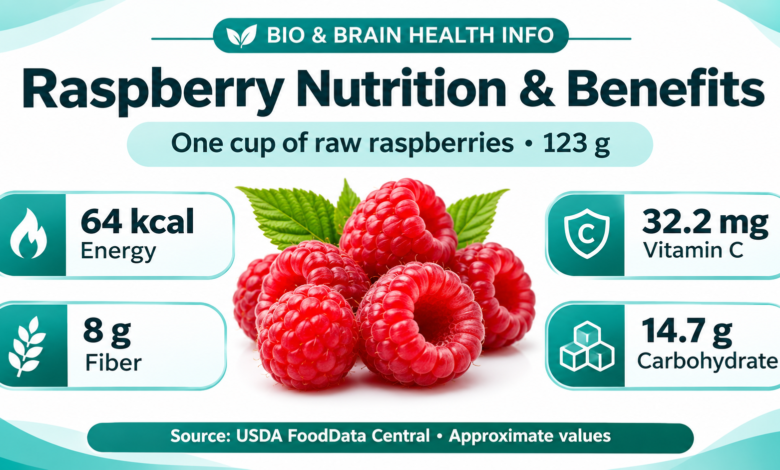
One cup of raw raspberries (123 g) contains approximately 64 calories, 14.7 g total carbohydrate, 8 g fiber and 32.2 mg vitamin C. Small human studies report promising metabolic findings, but pooled clinical evidence does not establish sustained glucose lowering. Whole berries and concentrated raspberry ketone supplements are not equivalent.
In This Guide
What you will learn
Nutrition facts • Fiber and vitamin C • Blood sugar trials • Gut microbiome • Whole fruit versus extracts • Heart health • Weight management • Fresh and frozen berries • Digestive and allergy precautions • Food safety • FAQs
1. Raspberry nutrition facts: What does a cup contain?
The edible fruit contains water, carbohydrate and relatively little protein or fat. Its characteristic structure includes numerous small drupelets, each containing a seed. Fiber is distributed throughout the edible fruit, which makes whole raspberries a useful source of dietary fiber. Reference values below describe raw raspberries rather than sweetened jam, dried powder or juice.
| Nutrient | Per 100 g | One cup (123 g) |
|---|---|---|
| Energy | 52 kcal | 64 kcal |
| Total carbohydrate | 11.94 g | 14.7 g |
| Total sugars | 4.42 g | 5.4 g |
| Fiber | 6.5 g | 8.0 g |
| Protein | 1.2 g | 1.5 g |
| Fat | 0.65 g | 0.8 g |
| Vitamin C | 26.2 mg | 32.2 mg |
| Potassium | 151 mg | 186 mg |
Sources: USDA FoodData Central, raw raspberries, record 167755 and USDA-derived nutrient table. These are rounded SR Legacy reference values, and actual composition varies with cultivar and maturity. US total carbohydrate includes dietary fiber and sugars. The reference cup supplies about 29% of the US adult label Daily Value for fiber (28 g) and 36% of the vitamin C Daily Value (90 mg). These figures are labeling references, not individual prescriptions.
Which nutrients explain raspberry health benefits?
Vitamin C supports collagen formation and normal immune function. It also helps the absorption of nonheme iron from plant foods. Fiber contributes to dietary adequacy and bowel function. Potassium supports normal muscle and nerve activity. These established nutrient roles should not be confused with claims that a particular fruit treats infections, anemia or cardiovascular disease.
2. Raspberry health benefits for digestion and dietary fiber
Eight grams of fiber in a reference cup is a meaningful contribution to daily intake. Dietary fiber includes components with different water-holding and fermentation properties. These characteristics can influence stool consistency, fullness and the activity of gut microorganisms. However, fiber is not a single uniform substance, and the response to a particular food differs among individuals.
If your current diet is low in fiber, introducing a smaller portion of berries and increasing gradually may be more comfortable than making a sudden large change. Adequate fluid intake is also relevant, although people with prescribed fluid restrictions should follow their clinical plan. Other foods such as legumes, vegetables and whole grains can contribute complementary types of fiber.
Raspberries have not been established as a specific treatment for chronic constipation. If eating more berries produces pain or urgent loose stools, the increased fiber intake is not necessarily helping your overall digestive health. Consider symptoms, bowel habits and daily functioning rather than simply aiming for the highest possible fiber number.
Digestive Safety
Persistent bowel changes, blood in stool, unexplained weight loss or significant abdominal pain require medical assessment. Severe pain with vomiting or inability to pass stool or gas may require urgent care. Do not delay evaluation while experimenting with dietary fiber.
3. Raspberries and blood sugar: What human research shows
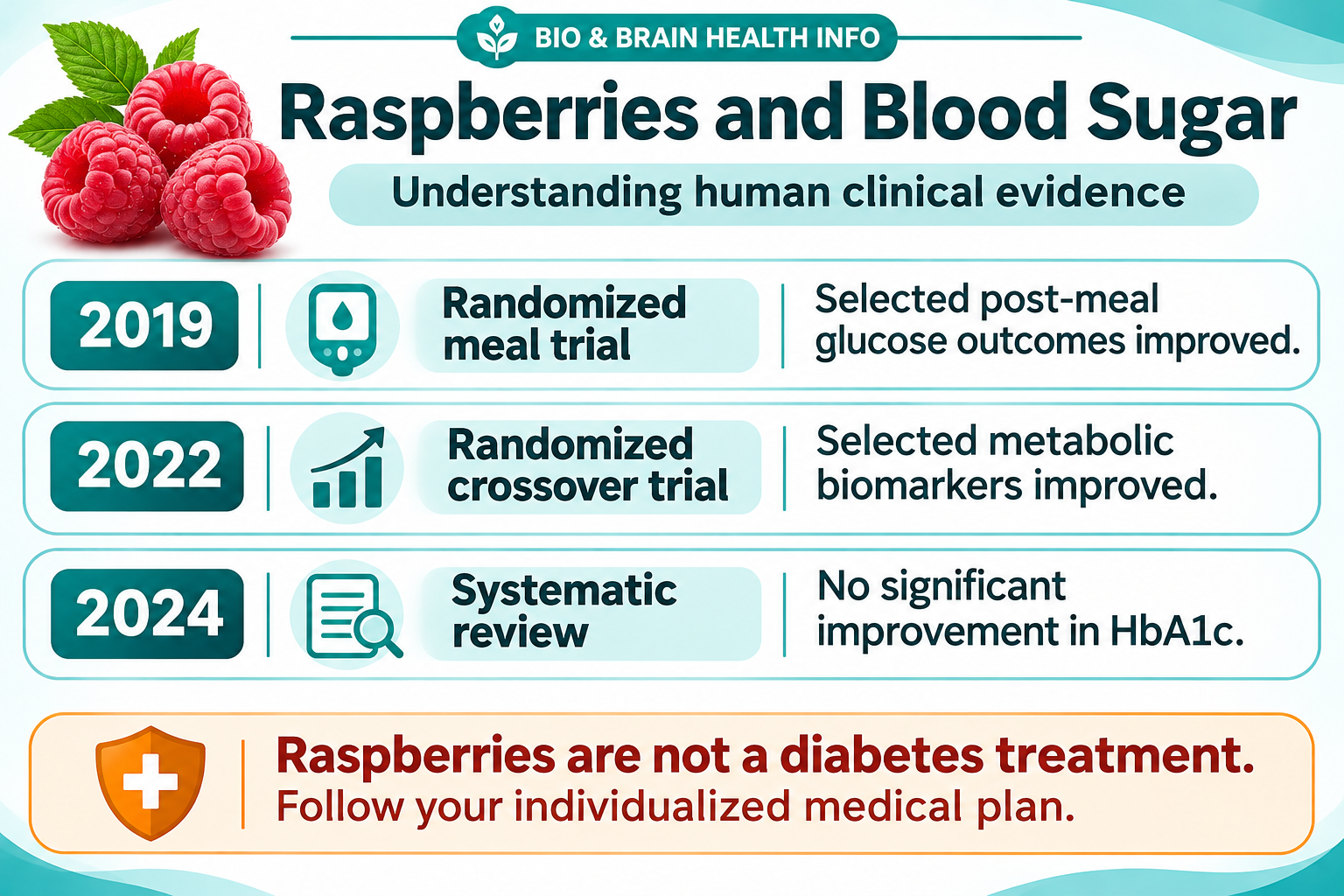
The 2019 randomized meal challenge examined three breakfast conditions containing no raspberries, 125 g or 250 g of frozen red raspberries. Among adults with prediabetes and insulin resistance, both berry-containing meals reduced the measured two-hour insulin response. The larger portion also reduced selected glucose outcomes compared with the control breakfast.
This was a short-term meal challenge in a selected population. The findings cannot establish that adding unlimited raspberries to any meal lowers glucose, or that the same response occurs in people with established diabetes. A meal response is not equivalent to a sustained change in HbA1c or fewer diabetes complications.
A 2022 randomized crossover trial compared four-week periods of raspberries alone or raspberries combined with a prebiotic. In the prediabetes group, selected insulin resistance and lipid measures improved from baseline during the raspberry intervention. The design and comparison matter: baseline changes do not prove that berries outperform an otherwise identical diet without berries over the long term.
The 2024 glycemic and inflammation meta-analysis pooled randomized interventions and found no significant improvement in fasting glucose, HbA1c or HOMA-IR. Some inflammatory outcomes differed, but the evidence does not establish a reliable glucose-lowering treatment. The included interventions and raspberry species varied. This broader evidence is important when interpreting an encouraging individual trial.
Blood Sugar Safety
Raspberries contain carbohydrate and can raise blood glucose. Do not change insulin or other medicines because of berry research. Follow your individualized monitoring and hypoglycemia treatment plan.
4. Content gap: Raspberry health benefits and microbiome differences
Raspberries contain anthocyanins and ellagitannins, groups of plant polyphenols. Digestion and metabolism can transform these compounds into different substances. Some transformations depend on intestinal microorganisms. Consequently, eating identical amounts of a food does not guarantee identical circulating metabolites in every person.
The 2021 polyphenol metabolism study examined polyphenol metabolites after meals containing different raspberry doses in adults with and without prediabetes and insulin resistance. The researchers identified differences in the production of some metabolites between groups. This illustrates a potential source of individual variation rather than a validated test that predicts who will benefit.
The 2020 polyphenol metabolism study also investigated raspberry polyphenol metabolism over several weeks, including an intervention with a prebiotic ingredient. Compounds known as urolithins are among the metabolites of interest. A change in their concentration does not establish improved symptoms, protection against disease or a requirement to purchase a microbiome supplement.
| Evidence level | What it can tell us |
|---|---|
| Food composition | Which nutrients and compounds are present in the reference food. |
| Metabolite measurement | Which compounds appear after digestion and metabolism. |
| Short-term meal trial | How selected outcomes respond under tested meal conditions. |
| Long-term clinical trial | Whether meaningful health outcomes change over time. |
This distinction is useful because antioxidant marketing often moves directly from food composition to disease prevention. A chemical antioxidant test does not reproduce the complexity of human metabolism. A laboratory result or a change in one biomarker should not be presented as proof that raspberries prevent cancer, dementia or diabetes. Look for clinical outcomes that are directly relevant to the proposed claim.
5. Raspberry carbohydrate portions for diabetes
Many people with diabetes can include whole raspberries within an individualized eating plan. Their relatively high fiber content does not eliminate the need to consider carbohydrate. The following calculations use 11.94 g total carbohydrate and 6.5 g fiber per 100 g of raw raspberries.
| Edible portion | Total carbohydrate | Fiber |
|---|---|---|
| 50 g | 6.0 g | 3.3 g |
| Half cup (61.5 g) | 7.3 g | 4.0 g |
| 100 g | 11.9 g | 6.5 g |
| One cup (123 g) | 14.7 g | 8.0 g |
| Two cups (246 g) | 29.4 g | 16.0 g |
A reference cup is close to one 15 g carbohydrate choice under common US diabetes education. This is an educational calculation rather than a recommended insulin dose or a mandatory portion. UK and other national labels may report carbohydrate differently. Follow the counting approach your diabetes team recommends.
Why net carbohydrate is not a universal dosing rule
Subtracting fiber from US total carbohydrate gives an arithmetic estimate of nonfiber carbohydrate. Commercial net carbohydrate definitions and clinical insulin-counting methods are not necessarily identical. Fiber type, digestion and meal composition matter. Do not automatically use a subtraction formula to change medication doses. Read Fruit and Diabetes: Portions and Choices and Carb Counting for Diabetes.
For example, plain raspberries served with unsweetened yogurt are different from a sweetened smoothie containing several fruits, syrup and milk. The entire meal determines carbohydrate exposure. A food substitution and an additional serving are also different interventions. Individual glucose monitoring, when advised by your care team, can help identify suitable meals.
6. Raspberry health benefits for heart health and inflammation
Whole berries can form part of a varied cardiovascular dietary pattern. Their fiber, vitamin C and polyphenols are relevant to normal physiology and nutrition research. However, a short-term change in LDL cholesterol or an inflammatory marker does not prove fewer heart attacks or strokes.
The 2024 glycemic and inflammation review found differences in selected markers, but not consistent changes across all measured outcomes. This matters because inflammation is not a single measurement and a statistically detectable change does not automatically translate to clinical benefit. Evidence for raspberry-specific cardiovascular event prevention remains insufficient. See Mediterranean Diet and Type 2 Diabetes for broader dietary context.
Evidence Literacy
Ask whether a study tested whole red raspberries, another raspberry species, an extract or a mixture. Check the primary outcome and comparison group before applying a result to ordinary food.
7. Weight management: Whole raspberries versus raspberry ketones
Raspberries are relatively low in energy per gram and contain substantial fiber. Replacing an energy-dense snack with a suitable fruit portion can change the overall energy and nutrient composition of a diet. Adding fruit without changing anything else is a different intervention. Neither establishes a unique fat-burning property.
The 2024 weight and liver outcomes meta-analysis included nine studies involving 355 participants and found no significant effect on weight, BMI, waist circumference or the liver enzymes assessed. A broader 2026 berry intervention review examined multiple berry interventions; pooled findings from different berry types or extracts cannot establish a specific effect from fresh raspberries.
Raspberry ketone is an aroma compound marketed in concentrated weight-loss products. According to NIH dietary supplement evidence, human evidence is inadequate to isolate its weight-loss effects from other ingredients in the tested supplements. MedlinePlus raspberry ketone also identifies safety uncertainties and potential interactions with stimulants. Ordinary food exposure does not establish the safety of concentrated doses.
Supplement Safety
Do not use raspberry ketone products as a substitute for evidence-based weight management. Consult a pharmacist or clinician about supplements, especially if taking medicines or managing chronic health conditions.
8. Raspberry health benefits: Fresh and processed forms
| Food form | Practical consideration |
|---|---|
| Fresh whole berries | Original food structure and fiber. |
| Unsweetened frozen berries | Convenient option; check preparation instructions and recalls. |
| Freeze-dried berries | Water removal concentrates nutrients and carbohydrate by weight. |
| Juice or strained puree | Fiber may be reduced depending on processing. |
| Jam or sweetened products | Check added sugar and actual serving size. |
Frozen berries can help reduce waste and make fruit available outside the growing season. They are not automatically nutritionally inferior to fresh berries, although processing and storage can affect particular nutrients. A small bag of freeze-dried fruit may represent a considerably larger fresh-fruit weight. Compare the actual serving and ingredients instead of relying on the fruit name.
9. Raspberry side effects and food safety
Digestive sensitivity, allergy and medical restrictions
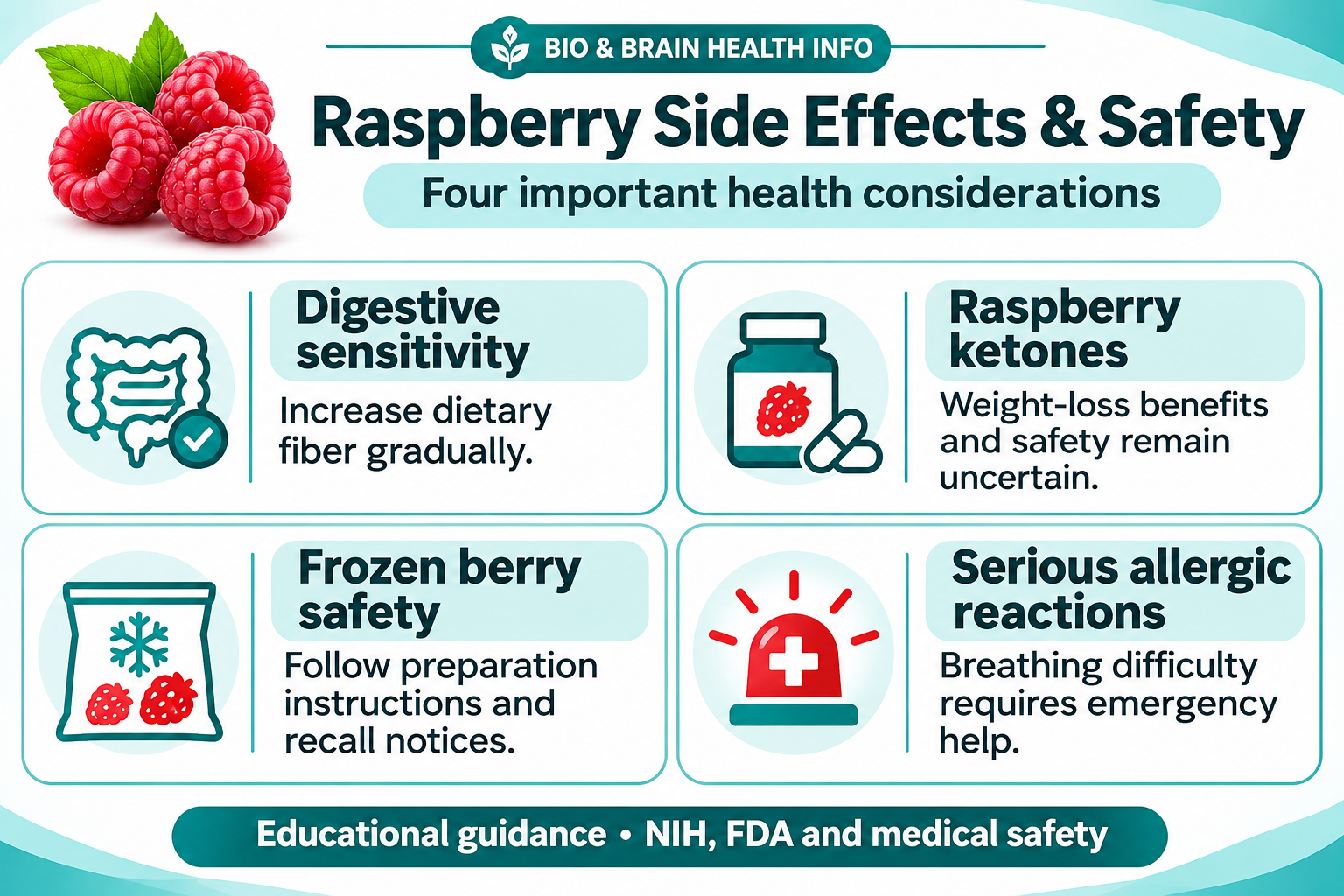
Large portions may cause gas, bloating or loose stools in susceptible individuals, especially after a sudden increase in dietary fiber. A person with a digestive disorder may need a tailored approach. Related fruit articles, Pear: Nutrition, Benefits and Side Effects and Cherries: Nutrition, Benefits and Side Effects, explain why individual tolerance and food composition matter.
Food allergy is possible. Stop eating the berries if an allergic reaction is suspected. Breathing difficulty, throat swelling or faintness can indicate an emergency; call local emergency services and use prescribed epinephrine if indicated. People with kidney disease should follow individualized dietary guidance instead of assuming that all fruits are unrestricted or forbidden.
Frozen berry safety: Why freezing is not sterilization
The FDA frozen berry surveillance reports testing frozen strawberries, raspberries and blackberries from 2018 to 2023. Viral material associated with hepatitis A and norovirus was detected in some samples, including raspberries. Detection in surveillance does not mean every package is contaminated or establish the probability of illness from an individual serving.
Freezing does not reliably destroy these viruses. Follow package instructions, official recall notices and local public health advice. Do not consume recalled products, even if you intend to cook them. People at higher risk of severe foodborne illness should discuss appropriate food choices with their healthcare team. For fresh berries, FDA produce safety recommends washing produce under running water and using clean preparation surfaces.
Food and Allergy Safety
Check official recalls and preparation instructions for frozen berries. Wash fresh berries gently under running water; do not use soap. Seek emergency help for severe allergic symptoms.
10. How to enjoy raspberry health benefits in everyday meals
Try a measured portion in oatmeal, plain yogurt or a meal containing a suitable protein source. Use berries to add flavor rather than assuming that more is always better. Choose unsweetened products if that suits your dietary plan. Refrigerate fresh berries promptly, discard spoiled fruit and use clean utensils. A varied diet can include different fruits rather than relying on one berry for every nutrient.
11. Frequently asked questions
Can I eat raspberries every day?
They can fit many varied diets when tolerated. No universally required serving exists.
Are raspberries good for diabetes?
Many people can include them in an individualized meal plan. They contain carbohydrate and are not a glucose-lowering medicine.
Do raspberries help constipation?
They provide fiber, which can support regularity. Persistent symptoms need medical assessment.
Do raspberry ketones burn fat?
Reliable evidence does not establish concentrated raspberry ketones as an effective weight-loss treatment.
Are frozen raspberries safe?
They can be a convenient food. Follow preparation instructions and official recall guidance; freezing does not sterilize food.
Conclusion
The most dependable raspberry health benefits come from their fiber, vitamin C and contribution to dietary variety. Human metabolic studies are interesting, but long-term glucose-lowering and weight-loss claims remain unproven. Choose appropriate portions, distinguish food from supplements and follow safe handling and individualized medical guidance.
BBH Key Takeaway
Enjoy whole raspberries as nutritious food, not medicine. Consider fiber tolerance, total carbohydrate, research limitations and safe preparation.
Scientific references
USDA FoodData Central, raw raspberries, record 167755 • USDA-derived nutrient table • 2019 randomized meal challenge • 2022 randomized crossover trial • 2024 glycemic and inflammation meta-analysis • 2021 polyphenol metabolism study • 2020 polyphenol metabolism study • 2024 weight and liver outcomes meta-analysis • 2026 berry intervention review • NIH dietary supplement evidence • MedlinePlus raspberry ketone • FDA frozen berry surveillance • FDA produce safety
Related reading on BBH
Explore: Physical Health → Weight, Nutrition & Metabolic Health