Family Health Insurance Plans: 2027 US Guide
Family Health Insurance: Costs and Coverage


Family health insurance plans help households manage the financial impact of medical care, from childhood checkups and prescriptions to maternity services and treatment for chronic conditions. In the United States, however, choosing coverage for several people involves more than comparing the monthly premium. Each family member may have different doctors, medications and healthcare needs. A practical comparison considers these differences alongside the household budget.
Thank you for reading this post, don't forget to subscribe!In This Guide: Coverage options; family eligibility; dependent children; individual and household deductibles; 2027 costs; children’s care; maternity and newborn enrollment; chronic illness; college students; split coverage; enrollment and frequently asked questions.
What are family health insurance plans?
A family health policy provides eligible healthcare benefits for enrolled household members under one contract. Depending on the arrangement, these members may include the policyholder, spouse and eligible dependent children. Insurers and employers define eligible dependents according to the applicable law and plan documents. The term family does not automatically mean that every relative who lives in a household can join the same policy.
For Marketplace applications, the relevant household usually consists of the tax filer, their spouse and tax dependents. Certain circumstances require different treatment. Someone may need to be included in the application for eligibility calculations even if they do not need insurance through that application. Consult the official Marketplace household guide and seek enrollment assistance when family circumstances are complex.
Family health insurance plans: compare your coverage options
Employer-sponsored family coverage
When one or both parents have workplace benefits, request the current options from each employer. Record employee-only, employee-plus-spouse, employee-plus-children and full family contributions where available. Ask whether dependent coverage is offered, whether an additional spouse surcharge applies and which enrollment windows are relevant.
Compare actual payroll deductions rather than the total premium alone. Check whether deductions are made before tax and whether the employer contributes to a health savings or reimbursement arrangement. A plan with a larger employer contribution may offer better financial value, but only if the household can obtain the care it needs.
ACA family health insurance plans
An individual Marketplace policy can cover eligible family members. The application evaluates household circumstances and potential financial assistance. The official 2027 plan preview lets consumers explore estimated prices before completing an application. Final eligibility and pricing require the actual application.
Where an employer offers coverage, eligibility for Marketplace assistance can depend on the affordability and adequacy of the available job-based arrangement. For 2027, HealthCare.gov lists an affordability threshold of 10.22% of household income. The employee test uses the lowest-cost qualifying self-only offer; for eligible relatives, the applicable family coverage contribution is considered. Minimum value and other eligibility conditions also matter. The assessment for an employee and their family members may differ. Do not assume that everyone qualifies for the same assistance because one family member receives a particular eligibility determination.
Medicaid and CHIP for eligible children
Medicaid and CHIP provide an additional pathway for eligible households. Children may qualify for CHIP even when their parents do not qualify for Medicaid. Benefits and eligibility rules vary by state. Check official CHIP information and contact the appropriate state agency. Applications for these programs can generally be made throughout the year. Check the current Medicaid and CHIP guidance; eligibility and renewal requirements may change in 2027 and vary by state.
How much do family health insurance plans cost?
There is no universal monthly premium for a family of four or any other household size. Marketplace prices can reflect geographic location, age, eligible family enrollment and applicable tobacco-rating rules. Financial assistance and employer contributions can change the amount the household pays. See the official premium-setting guidance.
A family budget should include annual premiums, expected physician and specialist charges, prescription costs, emergency expenses and any services excluded from coverage. Include planned orthodontic, vision or dental expenses separately when they are not covered by the medical policy.
Consider a fictional household comparing two policies. Plan A requires $550 per month in premiums and an estimated $4,800 in annual covered medical cost sharing. The combined estimate is $11,400. Plan B requires $750 monthly with an estimated $1,900 in annual cost sharing, producing a total of $10,900. Plan B costs more each month but less overall in this particular scenario. These are hypothetical figures, not 2027 quotations.
Test an ordinary healthcare year and a higher-use year. For a household managing variable earnings, consider whether a large medical bill early in the year could create financial pressure. A policy’s headline deductible does not explain when every covered service begins to receive benefits.
Family health insurance plans: individual and family deductibles
Family plans may specify both a deductible for each person and a collective deductible for the household. Under some arrangements, individual benefits subject to a deductible begin once that person reaches their own threshold. Other arrangements apply a collective family deductible before certain benefits begin. Review the precise policy wording, because benefit designs differ.
For example, a hypothetical policy with a $2,000 individual deductible and $4,000 family deductible may handle one person’s $2,000 of eligible expenses differently from a plan that requires the household to reach a collective threshold. The example illustrates why you need to understand the design, not merely compare the largest number on a benefit summary.
Certain covered preventive benefits may be available without meeting a deductible. Other services may have a copayment or different cost-sharing arrangement. Consult HealthCare.gov’s deductible explanation and the plan’s Summary of Benefits and Coverage.
Family out-of-pocket limits for 2027
The CMS 2027 benefit-year guidance sets standard cost-sharing ceilings of $12,000 for self-only coverage and $24,000 for other-than-self-only coverage. However, the 2027 final rule permits certain individual-market Bronze plans to exceed the standard ceiling by up to 30 percent. A particular policy may have lower limits; always verify its actual benefit summary. These figures concern covered in-network benefits subject to the limit, not the total amount a family may spend on all healthcare.
Premiums, noncovered services and many out-of-network charges are outside this protection. The official out-of-pocket limit guide explains the distinction. Compare individual limits as well as the combined family limit, particularly when one household member has greater medical needs.
Health insurance for children and teenagers
Ask whether the plan’s network includes your child’s pediatrician, preferred hospital, urgent care services and relevant pediatric specialists. Consider travel time, appointment availability and whether care is accessible outside school hours. A large directory does not establish that every listed practice is accepting new patients.
Check benefits for age-appropriate preventive services, vaccinations, diagnostic investigations, developmental assessments and behavioral healthcare. A service that begins as preventive care may lead to additional diagnostic or treatment expenses. Ask how specific services are classified and what referral requirements apply.
Where a child receives ongoing therapy or specialist support, request information about covered providers, documentation requirements and the treatment setting. Educational support provided through a school is not identical to a medical insurance benefit. Coordinate the two systems as appropriate without assuming that insurance pays for all learning or developmental services.
Dental and vision coverage for children
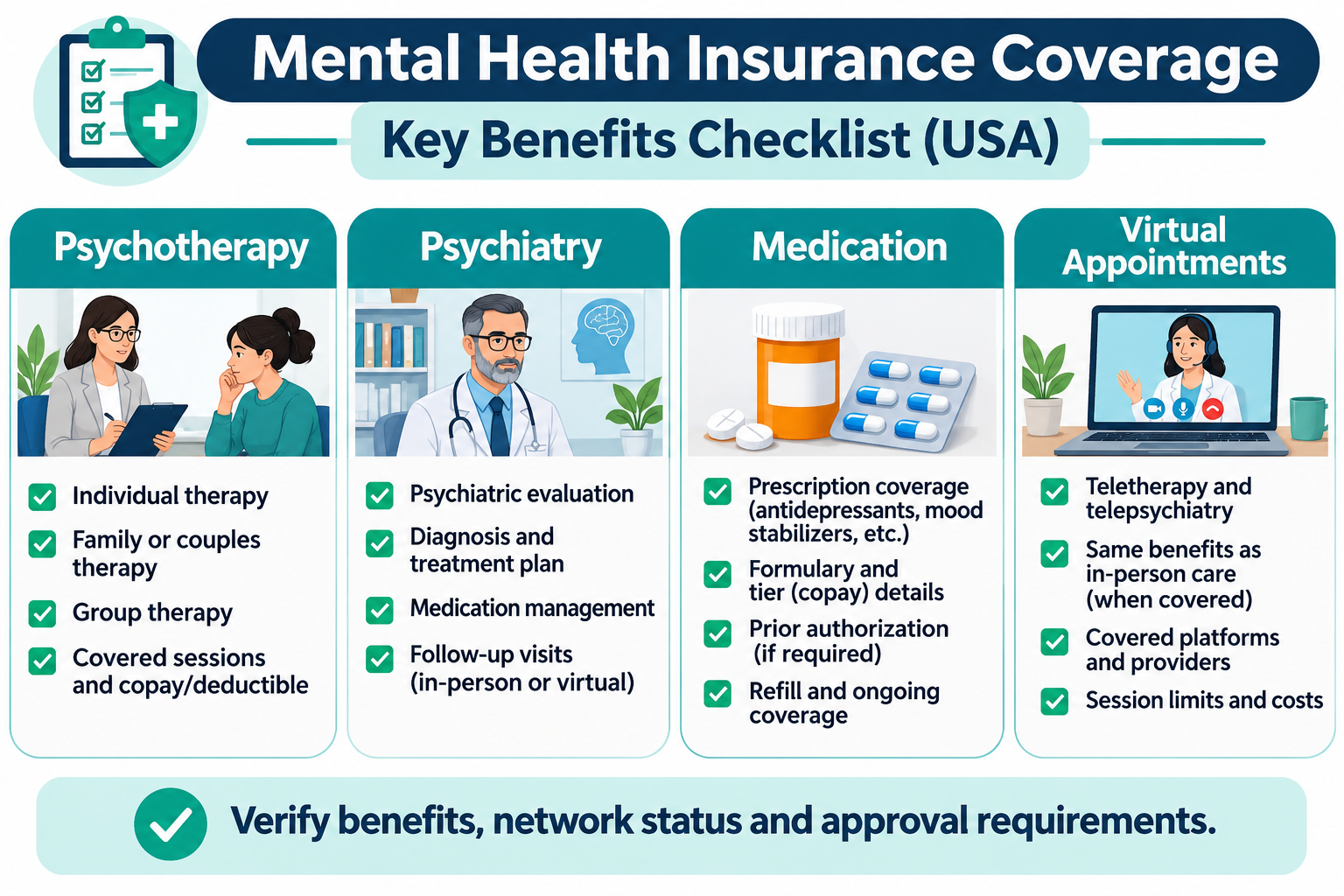
Ask whether pediatric dental and vision benefits are included in the medical plan or offered through another arrangement. Verify the provider network, covered examinations, treatment limits and any separate premiums. Do not assume that orthodontic treatment or every type of eyewear is covered. Adult dental and vision benefits should be checked independently.
Can adult children remain on family health insurance?
When a parent’s plan offers dependent coverage, young adults can generally remain eligible until age 26. The precise termination date can depend on the coverage arrangement and applicable state rules. HealthCare.gov explains that young adults on a parent’s Marketplace policy may generally remain enrolled until the end of the calendar year in which they turn 26, subject to relevant state rules.
Consult the official under-26 coverage guide before planning a transition. An adult child who moves away for college or work should check whether routine care is available near their new residence. Emergency coverage alone may not make a distant network practical for regular treatment.
When a young adult approaches the end of dependent eligibility, explore workplace insurance, Marketplace coverage and any applicable public program. Confirm enrollment deadlines and effective dates early enough to avoid an unintended gap.
Family health insurance for pregnancy and newborns
Marketplace policies include maternity and newborn care within their required benefit categories. Nevertheless, the amount owed for prenatal appointments, diagnostic tests, delivery, hospital care and postpartum treatment depends on the policy and circumstances. Review the preferred obstetric and pediatric providers as well as the hospital network.
Birth or adoption may create a special enrollment opportunity. Notify the insurer or Marketplace promptly, follow the applicable documentation requirements and confirm the child’s effective coverage date. Employer plans can have different notification windows. Do not assume that a newborn is automatically added to every insurance arrangement.
Pregnancy itself is not generally a qualifying life event for enrollment through the federal Marketplace, although state arrangements may differ. Medicaid or CHIP eligibility may also be relevant. Refer to official pregnancy coverage guidance for current options.
Health insurance for families managing chronic conditions
A household may include one person who needs only periodic preventive care and another who requires regular medication and specialist appointments. Build the comparison around actual healthcare needs instead of selecting a plan based on an average member’s expected spending.
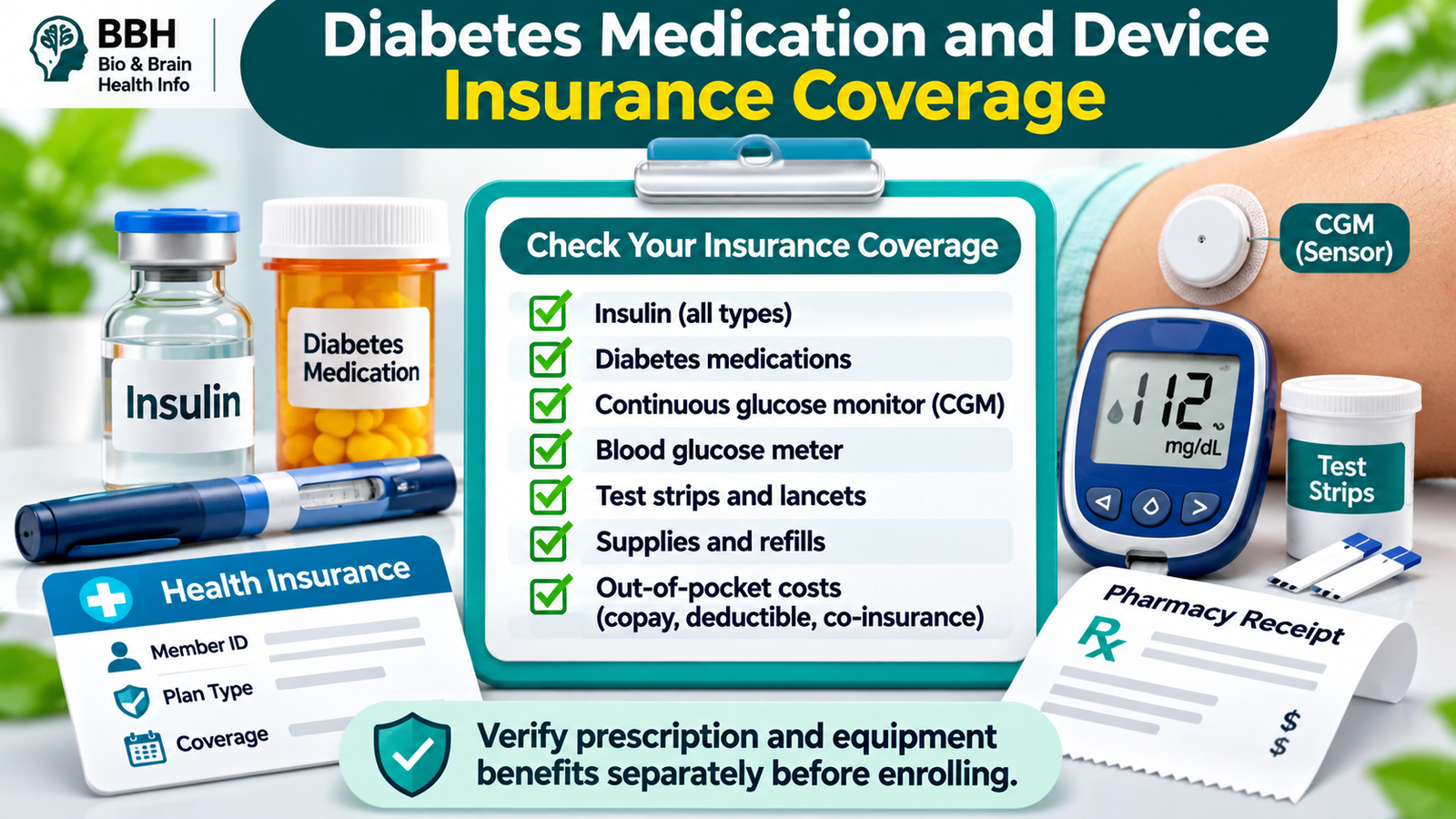
For diabetes, check prescription formularies, glucose-monitoring equipment, approved suppliers and specialist networks. BBH’s continuous glucose monitors guide and blood glucose meter guide can help readers identify equipment-related questions. Discuss medical suitability with the treating professional.
Check whether routine monitoring and follow-up are available locally. Read BBH’s diabetes eye exams guide for an example of ongoing preventive and diagnostic needs. Families should also consider access to emotional and behavioral healthcare; our diabetes and depression guide explains the importance of coordinated support.
Content gap: should everyone in the family use one insurance policy?
One shared policy can simplify paperwork, premium payments and some deductible tracking. But a different arrangement may provide better access or lower expenses if family members have different eligibility. For example, children may qualify for CHIP while a parent receives workplace coverage. A college student living away from home might need a network suited to their location.
Compare the full cost of combined and separate arrangements. Separate policies may mean separate deductibles, different prescription networks and additional administrative responsibilities. Where someone has more than one active coverage arrangement, ask the insurers how coordination of benefits works. Do not assume that two policies automatically eliminate every personal expense.
Original BBH family coverage stress test
Make a coverage map with one row per family member and columns for the exact policy, doctor, hospital, medication, deductible, out-of-pocket limit and enrollment deadline. Then test two arrangements: everyone on one plan versus separate eligible coverage. Compare annual contributions and expected cost sharing, then repeat with a major medical event. Verify the applicable individual cap within family coverage instead of assuming each person’s costs can reach the entire family maximum.
Now assume that one child needs specialist care in another city. If the split arrangement excludes that specialist or introduces an additional deductible, the apparent savings may disappear. Obtain written confirmation of provider participation, medical necessity criteria and effective dates before choosing. A lower projected budget should not override access to medically necessary treatment. This BBH exercise is a decision aid, not a validated risk model.
Enrollment and family life changes
Marriage, birth, adoption and loss of qualifying coverage may affect enrollment options. Consult the official special enrollment guide and relevant employer rules. Keep documents that establish the event and confirm the deadline, eligibility and start date.
Report relevant changes in household income and composition through the appropriate channels. For a separated or blended family, tax dependency, custody arrangements and geographic differences can complicate eligibility and network choices. A qualified enrollment assister or tax adviser may help clarify the situation.
BBH checklist for family health insurance plans
Start by listing household members who need coverage, their current providers, prescriptions and planned care. For each eligible policy, document the net premium, individual and family deductible, individual and family out-of-pocket limit, prescription formulary, hospital network, pediatric benefits and specialist referral rules.
Next, estimate ordinary and higher-use annual spending. Compare whether different family members could receive suitable coverage through separate arrangements. Confirm the current policy documents, financial assistance determination and enrollment deadlines before making a decision. Save dated benefit summaries and enrollment confirmations.
Review the choice at renewal and when major family circumstances change. Keep personal medical and financial records secure. Ask questions about unclear claims promptly and obtain written explanations when necessary.
Related BBH insurance and healthcare resources
Read Private Health Insurance in the US for more information on plan types. Four linked diabetes resources above explain medication, monitoring and complication care. Visit the Health Insurance and Healthcare Costs support page for the wider insurance series.
Frequently asked questions
What is the best family health insurance plan?
No single plan is best for every household. Compare available eligibility, healthcare access, prescription benefits and annual expenses.
Is CHIP available if parents have different insurance?
It may be. Eligibility depends on state rules and the child’s circumstances. Check with the state program.
Does a family deductible mean everyone must pay the same amount?
No. The allocation of eligible expenses depends on the plan’s individual and family deductible design.
Is it cheaper to put everyone on one plan?
Not always. Compare employer contributions, public coverage eligibility, Marketplace assistance and separate policy expenses.
Can family insurance cover a child with an existing illness?
ACA Marketplace plans cannot reject eligible applicants or charge higher premiums because of a child’s medical history. Verify the specific services and medication benefits.
Conclusion
Family health insurance plans should support practical access to care while protecting household finances. Compare the needs of every family member, investigate eligible coverage pathways and understand deductibles and spending limits before enrolling. An informed choice is more valuable than the lowest advertised premium.
Editorial disclosure: 2027 CMS benefit parameters, final rule, affordability, Medicaid/CHIP, maternity and premium guidance checked November 29, 2026. Educational information only; not individualized medical, insurance, legal or tax advice. Verify current eligibility and plan terms before enrolling.