Artificial Sweeteners and Diabetes
Artificial Sweeteners and Diabetes: Safety


Artificial sweeteners and diabetes are frequently discussed together because reducing added sugar can help many people manage carbohydrate intake. But the phrase “sugar-free” can conceal important details: a product can have almost no added sugar and still contain starch, flour or sugar alcohols. The goal is to understand which swaps are useful, which claims are overstated and how to make a safe choice.
Thank you for reading this post, don't forget to subscribe!This BBH guide focuses only on the United States, drawing on the FDA, American Diabetes Association (ADA) Standards of Care 2026, the World Health Organization and other research. It compares sweetener types, blood-glucose effects, label reading, regulatory safety and unresolved questions without treating one ingredient as either a miracle or a universal danger.
What artificial sweeteners are
Artificial sweeteners are a common term for substances used to provide sweetness with little or no sugar. A more precise umbrella term is nonnutritive or high-intensity sweeteners. These include some synthetic ingredients, such as aspartame and sucralose, alongside certain plant-derived high-intensity substances, such as purified steviol glycosides and monk fruit extracts.
Not all sugar replacements belong to the same category. Sugar alcohols such as sorbitol, maltitol, erythritol and xylitol are carbohydrates or sugar derivatives and can contribute calories or gastrointestinal effects. Table sugar, honey, agave and maple syrup are nutritive sweeteners that contain carbohydrates; a “natural” marketing claim does not make them free of blood-glucose effects.
The FDA distinguishes six approved high-intensity food additives from certain sweeteners that are lawfully marketed based on generally recognized as safe (GRAS) conclusions for their intended uses. This regulatory distinction matters: purified stevia components and monk fruit extracts should not automatically be described as identical to approved artificial sweetener additives.
For someone managing diabetes, the practical question is whether a substitution meaningfully reduces total added sugar or carbohydrate without displacing nutritious foods. A sweet taste alone tells us very little about the rest of a product.
Do sugar substitutes raise blood glucose?
Many high-intensity sweeteners provide negligible carbohydrates at the small quantities needed for sweetness. Replacing regular sugar with a suitable nonnutritive sweetener can therefore lower the sugar content of a drink or recipe. However, the final product may still contain flour, starch, milk, fruit ingredients or other carbohydrates that raise glucose.
For example, sugar-free cookies can contain substantial total carbohydrate because their dough contains refined flour or starch. Some powdered sweetener packets contain bulking ingredients, such as dextrose or maltodextrin, that add small amounts of carbohydrate. The number of packets and the recipe matter more than a single marketing word.
The glucose response also depends on the person, serving and food context. A finger-stick meter or CGM may help someone recognize how a meal affects them, but a response from one meal should not be treated as definitive clinical proof that a particular sweetener is harmful or beneficial.
High glucose readings deserve evaluation of the whole eating pattern and medications rather than automatically blaming the sweetener itself. Avoid adding unprescribed insulin to offset a food experiment.
FDA-authorized high-intensity sweeteners in the United States
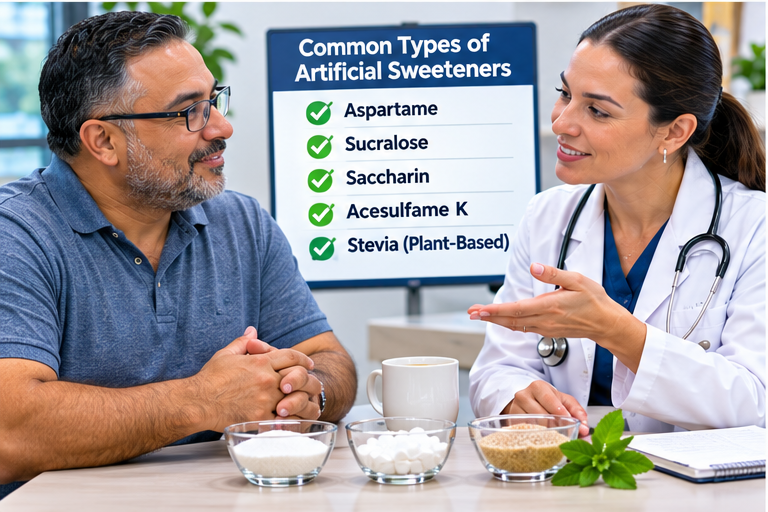
The FDA lists saccharin, aspartame, acesulfame potassium (Ace-K), sucralose, neotame and advantame as six high-intensity sweeteners approved as food additives. They have different sweetness levels, permitted uses and acceptable daily intake values. Consumers should check ingredient labels rather than assuming a brand name always refers to a single ingredient.
Purified steviol glycosides, often marketed as stevia-derived sweeteners, and monk fruit extracts have been the subject of GRAS notices to which the FDA had no questions. Whole-leaf stevia and crude stevia extracts do not share the same legal status as highly purified steviol glycosides.
Aspartame contains phenylalanine. People with the rare inherited condition phenylketonuria (PKU) need to avoid or restrict aspartame as directed by their clinical team. This is a specific, established warning, not a reason to suggest that all sweeteners carry the same risk.
People with a known allergy, intolerance or other medically relevant condition should review ingredients and speak with their healthcare professional. The FDA has a detailed explanation of high-intensity sweeteners.
Artificial Sweeteners and Diabetes: What the ADA Recommends
The American Diabetes Association 2026 Standards state that nonnutritive sweeteners may be used in place of sugar-sweetened products in moderation and in the short term to reduce overall calorie and carbohydrate intake. This is a qualified recommendation, not a promise of lasting weight loss or improved health from unlimited diet products.
The same guidance encourages water as the primary beverage and minimizing sugar-sweetened drinks, including juice. Unsweetened tea or coffee, when medically appropriate, may be useful alternatives. Someone who regularly drinks sugar-sweetened soda may benefit from replacing it with water or a lower-sugar option; the broader goal is a sustainable pattern with fewer added sugars.
The ADA emphasizes an eating pattern containing vegetables, whole fruits, legumes, whole grains, appropriate protein and other nutrient-rich foods. A food does not become a healthy choice simply because it contains a low-calorie sweetener instead of sugar.
Review the actual 2026 nutrition guidance in ADA Standards of Care, Section 5. An individualized plan from a registered dietitian may help with practical trade-offs.
Short-term glucose effects versus long-term outcomes
It is essential to separate immediate blood-glucose responses from long-term health outcomes. Randomized studies can examine what happens when a person replaces a sugary beverage with a no-sugar alternative over a defined period. Observational studies may find that frequent diet-drink consumers have higher rates of certain health conditions, but these studies cannot automatically establish that the sweetener caused the condition.
One important issue is reverse causation: people already at higher risk for diabetes or weight gain may switch from regular soda to diet soda. Their later health outcomes can therefore be associated with diet drinks even when the reason for switching was existing risk. Researchers attempt to adjust for this, but no observational adjustment can remove every uncertainty.
The 2026 American College of Cardiology scientific statement describes long-term metabolic and cardiovascular effects of nonnutritive sweeteners as inconclusive and favors water and unsweetened beverages. For diabetes care, ADA guidance permits moderate substitution while prioritizing the wider dietary pattern.
Avoid interpreting a headline about a single small study as proof that all substitutes cause insulin resistance or, conversely, that all sweeteners improve metabolic health. The strongest conclusion is narrower: replacing added sugar may reduce carbohydrate intake, while long-term benefits and risks require careful evaluation.
What the WHO guideline does and does not say
In 2023, the World Health Organization advised against using non-sugar sweeteners for weight control or prevention of chronic diseases in the general population. That recommendation was conditional and specifically excluded people with preexisting diabetes because managing their disease was outside the guideline’s scope.
The WHO recommendation was not a new toxicology verdict declaring every sweetener unsafe at permitted exposure levels. Acceptable daily intake and food-additive safety assessments address different questions from whether long-term habitual use improves weight or cardiometabolic outcomes.
This distinction helps reconcile two headlines that can sound contradictory: WHO guidance does not endorse sweeteners for general long-term weight control, while ADA guidance allows moderate substitution for sugar-sweetened products in people managing diabetes. Both recognize that food quality and unsweetened options matter.
For readers with diagnosed diabetes, apply ADA and clinician-led management guidance rather than quoting the WHO recommendation as a ban on all sugar substitutes.
Sugar alcohols: a different category with real effects
Sugar alcohols, sometimes called polyols, include erythritol, xylitol, sorbitol and maltitol. They are not the same as alcohol in beer or wine. Unlike very high-intensity sweeteners, many sugar alcohols contribute calories or a measurable carbohydrate effect, although their effects can be lower than table sugar.
Maltitol, for example, may raise glucose more than some other sugar alcohols. Erythritol often contributes very little usable energy, but large quantities of some polyols can cause gas, bloating or diarrhea. Individual tolerance and the rest of the food formulation matter.
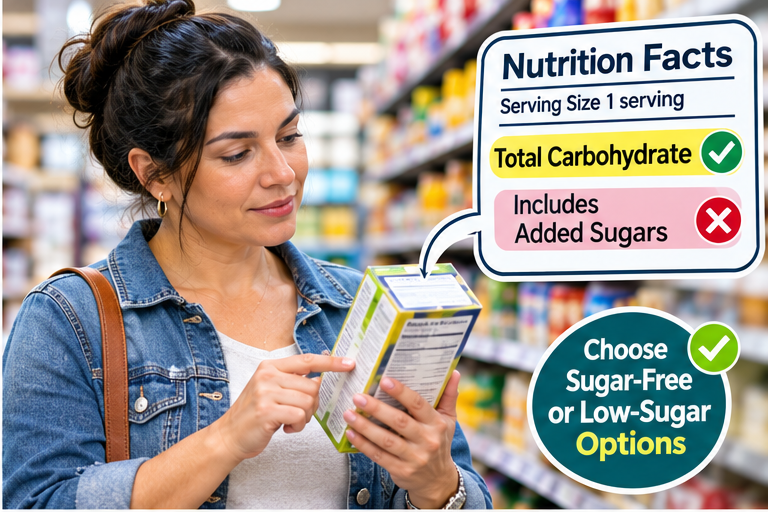
The FDA notes that sugar alcohols may appear under Total Carbohydrate on the Nutrition Facts panel, with voluntary labeling rules depending on the product. Count carbohydrates using the product’s Nutrition Facts information and your diabetes team’s instruction. Do not assume that subtracting every gram of sugar alcohol from the total is always correct.
When choosing a “sugar-free” candy or dessert, look at total carbohydrates, serving size, saturated fat and calories as well as the ingredient list. The FDA Nutrition Facts guidance provides useful context.
Artificial Sweeteners and Diabetes: Reading Food Labels
Start with the serving size. A package may contain two or three servings even when it looks like a single snack. Next check Total Carbohydrate, which includes sugars, starches and other carbohydrate components. Added Sugars is important, but it is not the same as Total Carbohydrate.
A “zero sugar” claim means something different from “zero carbohydrate.” A reduced-sugar breakfast product may still be primarily made of refined grains. A sugar-free chocolate may contain sugar alcohols alongside other carbohydrates. A drink may combine a high-intensity sweetener with fruit juice or another source of sugar.
Review ingredients for more than one type of sweetener or for bulking agents. Claims like “natural,” “keto” and “diabetic-friendly” do not replace label reading and may not describe how the product affects a specific person’s glucose.
Use a regular serving rather than a guessed portion. If you compare products, use equal serving sizes or calculate the nutrition for the amount you actually eat. A dietitian can help interpret complicated labels without requiring restrictive rules for every food.
Water, diet soda and sweetened drinks
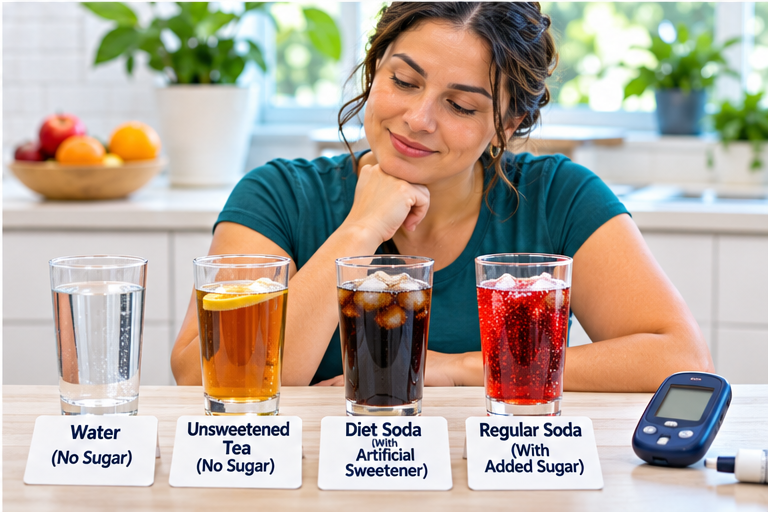
Water is the preferred everyday drink for most people with diabetes. Unsweetened tea, sparkling water or coffee may also fit, depending on personal preferences and other health considerations. A regular sugar-sweetened soda can deliver a substantial carbohydrate load in liquid form, while many diet versions use little or no sugar.
Replacing regular soda with a suitable diet version may reduce sugar exposure in the short term, but it does not automatically make an entire meal healthy. The amount of caffeine, acid content, dental-health implications, food preferences and cost may be relevant to a person’s choice.
Some beverages marketed as “juice drinks” contain added sugar, and 100% fruit juice still contains naturally occurring sugars. Whole fruit provides fiber and is usually a better everyday food choice than large glasses of juice.
Importantly, diet soda is not an appropriate substitute for fast-acting glucose when treating hypoglycemia. A person experiencing low blood sugar needs their clinically approved rapid-carbohydrate or rescue plan; an artificially sweetened drink may contain no useful sugar for that purpose.
Aspartame and cancer headlines: understanding the evidence
In July 2023, the International Agency for Research on Cancer (IARC) classified aspartame as “possibly carcinogenic to humans” (Group 2B), based on limited evidence. This hazard classification asks whether a substance could cause cancer under some circumstances; it does not quantify the risk at typical dietary exposure.
At the same time, the Joint FAO/WHO Expert Committee on Food Additives (JECFA) reaffirmed its acceptable daily intake for aspartame of 0–40 mg per kilogram of body weight per day. The FDA has stated that its existing acceptable daily intake remains protective under approved uses and has disagreed with aspects of the IARC interpretation.
Readers deserve both parts of this story rather than a sensational conclusion that “aspartame definitely causes cancer” or that all uncertainty has been resolved. The US National Cancer Institute discusses the available human research and its limitations.
Anyone who prefers to avoid aspartame can choose water or unsweetened products without needing to make dramatic claims about everyone else’s choices. For PKU, the avoidance or restriction is medically specific and should be followed.
Gut microbiome, insulin response and research uncertainty
Some studies investigate whether particular sweeteners affect the gut microbiome, glucose tolerance or metabolic signaling. Results vary by the substance, design, doses, individual microbiome and other aspects of the diet. A finding from one small experiment does not establish that all approved sweeteners cause diabetes.
If a study administers a much larger exposure than typical food use, the result may not translate directly to a person adding one approved sweetener to tea. Likewise, changes to bacterial populations do not necessarily demonstrate clinically meaningful harm or benefit.
People with diabetes should avoid buying unregulated “gut reset” products on the basis of sweetener headlines. An overall eating pattern with adequate fiber, suitable whole foods and individualized medical care has a stronger basis than chasing short-lived trends.
The most responsible message is that questions remain under study. Do not promise a universal benefit or risk from microbiome changes before robust clinical evidence supports it.
Pregnancy, children, PKU and special considerations
Pregnant people and families with children should use age-appropriate, medically informed nutrition advice rather than diet-product marketing. Pregnancy nutrition must provide enough energy and nutrients, and a gestational diabetes plan should be developed with obstetric professionals. This general article does not replace such a plan.
A person with phenylketonuria must avoid or restrict aspartame because of phenylalanine metabolism. This precaution is clearly identified in FDA guidance and on relevant US product labeling. The restriction does not automatically apply to all other sweeteners.
Some people experience gastrointestinal symptoms from polyols, especially after consuming multiple servings of sugar-free candy or protein bars. Those with digestive conditions may need a different product choice and should discuss recurrent symptoms with their clinician.
Sugar-free food is not automatically suitable for someone treating a low-glucose episode. Caregivers should be taught which products actually contain rapid-acting carbohydrate and how much their family member needs according to the treatment plan.
A frequently missed home safety issue: xylitol and dogs
Xylitol is a sugar alcohol that may be found in sugar-free gum, candies, some peanut butter or baked goods, dental products and other items. It can be extremely dangerous to dogs because it may trigger profound hypoglycemia and potentially serious liver injury. This is a veterinary emergency, not merely a minor digestive upset.
Store products containing xylitol out of reach of pets and check ingredient labels before sharing any human snacks. If a dog may have swallowed xylitol, immediately contact a veterinarian, emergency veterinary clinic or animal poison-control service; do not wait for symptoms. The FDA warning explains the danger.
This warning is separate from the question of whether a human adult with diabetes can use sugar substitutes. Including it can prevent accidental household harm when readers buy new sugar-free products.
How to make a realistic sweetener decision
First, identify what you are replacing. If you currently drink several sugary beverages, substituting water or an appropriately chosen no-sugar drink can substantially reduce added sugar intake. If you rarely use sugar, purchasing a collection of diet products may not produce meaningful benefit.
Second, compare the entire food. Replacing sugar in a dessert does not remove carbohydrate from flour, milk or starch, and the size of the portion still matters. Food quality, fiber, protein and enjoyment should be weighed alongside glucose management.
Third, evaluate the actual outcome. Are you comfortable with the taste? Did total added sugar decline? Has the change helped you meet a realistic nutrition goal without creating distress or more snacking? Ask a dietitian for support when the answer is unclear.
Finally, keep the decision flexible. A sugar substitute may be a helpful transitional tool for some people and unnecessary for others. There is no evidence-based requirement that everyone living with diabetes must use or avoid all nonnutritive sweeteners.
Artificial Sweeteners and Diabetes: Comparison Chart
| Ingredient | US status/category | Typical glucose relevance | What to remember |
|---|---|---|---|
| Aspartame | FDA-approved high-intensity sweetener | Little direct sugar at usual use amounts | Avoid or restrict with PKU |
| Sucralose | FDA-approved high-intensity sweetener | Little direct sugar; product ingredients matter | Check formulated food and baking instructions |
| Saccharin | FDA-approved high-intensity sweetener | Little direct sugar | Check food formulation |
| Acesulfame potassium | FDA-approved high-intensity sweetener | Little direct sugar | Often blended with other ingredients |
| Purified steviol glycosides | Specific purified forms marketed based on GRAS conclusions | Usually little direct sugar | Whole-leaf/crude stevia is different |
| Monk fruit extracts | Specific extracts marketed based on GRAS conclusions | Usually little direct sugar | Blends may include other carbs |
| Maltitol and similar polyols | Sugar alcohols | Can contribute carbohydrate and glucose response | May cause gastrointestinal effects |
| Erythritol and xylitol | Sugar alcohols | Varies by substance; often lower glycemic impact | Xylitol is highly toxic to dogs |
This table describes ingredient categories rather than providing an individualized medical recommendation or a numerical ranking of safety. FDA authorizations and ingredient labeling should be checked for current permitted uses. The exact glucose effect of a food depends on the recipe and portion, not just its sweetener.
A Practical Sugar-Free Label Example
Imagine two fictional packaged snacks of the same weight. Product A lists 0 g added sugars but 24 g total carbohydrate, mostly from flour and starch. Product B lists 8 g added sugars and 14 g total carbohydrate. Looking only at added sugars could make Product A seem better for glucose management, even though it has more total carbohydrate. Real dietary decisions also consider fiber, ingredients, portion size and overall nutrition.
A second example is a “no sugar added” fruit dessert. The phrase does not mean the product lacks naturally occurring sugars. Similarly, honey and agave are still forms of sugar despite natural branding. The Nutrition Facts panel and ingredient list are more informative than a front-of-package claim.
A third example is a diet beverage that genuinely contains negligible carbohydrate. Replacing a regular sugary soda with that beverage can reduce liquid sugar exposure, but choosing water offers a straightforward, unsweetened option. There is no requirement to consume diet soda to manage diabetes.
Artificial Sweeteners and Diabetes: Frequently Asked Questions
Can people with type 2 diabetes use artificial sweeteners?
Some can use lawfully marketed high-intensity sweeteners in moderation as substitutes for sugar, consistent with individual nutrition advice.
Do artificial sweeteners raise blood glucose?
High-intensity sweeteners generally contribute little direct sugar, but mixed products and other ingredients may raise glucose.
Is stevia better than sucralose?
Evidence does not justify a universal winner. Purity, product formulation, taste and the wider diet matter.
Does sugar-free mean zero carbohydrates?
No. Check total carbohydrates, serving size, flour, starch and sugar alcohol content.
Which sweeteners does the FDA approve?
Six high-intensity food additives include aspartame, sucralose, saccharin, Ace-K, neotame and advantame.
Is monk fruit an artificial sweetener?
It is plant-derived; certain extracts are marketed based on GRAS conclusions and do not all have the same regulatory route as approved additives.
Can someone with PKU have aspartame?
People with phenylketonuria need to avoid or restrict aspartame based on medical advice.
Are sugar alcohols the same as artificial sweeteners?
No. Polyols are a separate category and may have calories, glycemic effects or gastrointestinal symptoms.
Can maltitol raise blood sugar?
It can contribute to a glucose response, so do not assume a maltitol-sweetened food is carbohydrate-free.
Can diet soda treat a low blood sugar episode?
No. Diet soda generally lacks the fast-acting carbohydrate used to treat hypoglycemia.
Does WHO advise people with diabetes to avoid sweeteners?
The WHO 2023 weight-control guideline excluded people with preexisting diabetes; it is not a blanket diabetes ban.
Does aspartame cause cancer?
The 2023 IARC hazard classification and JECFA/FDA risk assessments differ in scope; evidence must not be simplified into a definitive causal claim.
Can sweeteners help with weight loss?
Substitution may lower calories in some contexts, but long-term weight outcomes are uncertain and depend on overall diet.
Are sweeteners safe during pregnancy?
Pregnancy requires individualized nutrition and medicine advice; consult the prenatal team about products and dietary patterns.
Why can sugar-free candy cause diarrhea?
Some sugar alcohols can produce bloating, gas or laxative effects, particularly at higher intakes.
Is xylitol safe around pets?
Keep xylitol-containing products away from dogs and seek immediate veterinary help for suspected ingestion.
What is the best drink for diabetes?
Water is the primary preferred choice; unsweetened drinks may also be appropriate.
Should everyone with diabetes stop using sugar?
The aim is an individualized, nutritious eating pattern and appropriate carbohydrate management, not an absolute rule about all sweetness.
BBH Main Menu, Submenu, Support and Five Related Guides
Evidence, Sources and Clinical Review
- ADA 2026: Positive Health Behaviors and Nutrition
- FDA: High-Intensity Sweeteners
- FDA: Aspartame and Other Sweeteners
- FDA: Nutrition Facts and Sugar Alcohols
- WHO: Non-Sugar Sweeteners 2023 Guidance
- National Cancer Institute: Artificial Sweeteners and Cancer
- FDA: Xylitol is Toxic to Dogs
- Mayo Clinic: Artificial Sweeteners and Blood Sugar