Too Much Vitamin A: Risks and Side Effects
Vitamin A Toxicity: Symptoms and Risks

Could a vitamin that supports vision and normal immune function become harmful? Vitamin A is essential, but its ability to accumulate in the body makes excessive intake a concern. If you take several supplements or regularly consume concentrated sources of preformed vitamin A, it is worth reviewing your total exposure rather than judging each product independently.
Thank you for reading this post, don't forget to subscribe!Too much vitamin A can cause a medical condition known as hypervitaminosis A. This guide explains what American consumers should know about acute and chronic toxicity, how to recognize concerning symptoms, and how to respond safely. It does not provide a home diagnostic test or a treatment regimen.
Quick Answer
Excess preformed vitamin A can cause toxicity. The US adult tolerable upper intake level is 3,000 mcg RAE daily from all preformed sources. This is not a recommended target or a threshold for diagnosing poisoning. If an overdose is suspected, contact US Poison Control at 1-800-222-1222 promptly, even without symptoms.
Medical Safety Notice
Seek emergency care for severe headache with visual changes, confusion, repeated vomiting or other serious symptoms after a suspected exposure. Call 911 if someone collapses, has a seizure, cannot be awakened or has difficulty breathing. Do not induce vomiting. This article is educational and cannot determine whether an individual exposure is safe.
In This Guide
Vitamin A forms • Acute and chronic toxicity • Symptoms • Liver risks • Upper limits • High-risk groups • Food versus supplements • Medical assessment • Emergency response • Prevention • FAQs
1. What Happens When You Get Too Much Vitamin A?
Vitamin A supports processes that depend on appropriate nutrient availability, including normal vision and tissue development. Unlike many water-soluble nutrients, preformed vitamin A can be stored for later use. Consequently, repeated excessive exposure may have consequences even when a person does not experience an immediate reaction.
The term preformed vitamin A refers to retinol and related compounds such as retinyl palmitate and retinyl acetate. Some supplements and animal foods contain these forms. Plant foods provide carotenoids, some of which can be converted into vitamin A. The two categories have different safety considerations.
The amount of a nutrient needed for normal functioning is not the same as the amount that can be tolerated without harm. Read Vitamin A: Benefits and Daily Requirements for age-specific nutritional guidance.
2. Vitamin A Toxicity: Acute Versus Chronic Exposure
Clinicians distinguish between a substantial exposure over a short period and excessive consumption sustained over time. This distinction helps guide the medical history and assessment. Neither pattern can be reliably diagnosed by comparing a symptom with a photograph online.
| Exposure pattern | Clinical concern |
|---|---|
| Acute toxicity | Symptoms may develop after a substantial short-term exposure. |
| Chronic toxicity | Repeated excessive exposure may gradually cause symptoms and organ injury. |
| Medication-related toxicity | Retinoid medications can have overlapping adverse effects; professional review is necessary. |
A person who has used a product for months without obvious symptoms should not assume that continued use is harmless. Conversely, exceeding a population intake limit on a single day does not by itself establish clinical poisoning. An actual exposure must be assessed using the product, amount, timing and individual circumstances.
3. Too Much Vitamin A: Symptoms and Side Effects
Symptoms can vary according to the pattern of exposure. Neurological, gastrointestinal, skin and musculoskeletal complaints may occur. They are not unique to vitamin A toxicity and should be evaluated in context.
Early concerns after a suspected vitamin A overdose
Headache, nausea, vomiting and visual disturbances are reasons to seek advice when they occur after a concerning exposure. Do not assume these symptoms will resolve with a glass of water or a meal. A poison specialist can assess the circumstances and determine what level of medical evaluation is appropriate.
Signs associated with repeated excessive vitamin A intake
Longer-term concerns may include changes in skin or hair, discomfort in muscles or bones, fatigue and abnormal liver findings. These symptoms overlap with many common medical conditions. A detailed exposure history is more informative than attributing every symptom to a supplement.
4. Vitamin A Side Effects on the Liver and Other Organs
The liver has an important role in vitamin A storage. The National Library of Medicine’s LiverTox resource describes documented liver injury associated with excessive vitamin A, including progressive damage in some people with prolonged exposure. Case reports demonstrate that injury is possible; they do not predict an individual’s outcome from a label alone.
A person with existing liver disease should discuss supplement use with their treating clinician. An abnormal liver panel may have many explanations, and a normal result does not establish that all exposures are safe. Clinicians may need to consider the full medication and supplement history alongside the examination and laboratory findings.
Excess vitamin A can also be associated with raised intracranial pressure, which can produce headache and visual symptoms. Severe or progressive symptoms require medical evaluation because there are other potentially serious causes. Bone and joint complaints likewise require individualized assessment rather than a self-directed supplement change alone.
Clinical reference: LiverTox: Vitamin A.
5. Vitamin A Upper Limit: What US Readers Need to Know
The tolerable upper intake level (UL) is a nutritional safety reference for usual daily intake. It is not a dose recommendation. The US reference applies to preformed vitamin A from foods, beverages and supplements, not to ordinary dietary carotenoids.
| Age | Daily UL for preformed vitamin A |
|---|---|
| Birth to 12 months | 600 mcg |
| 1–3 years | 600 mcg |
| 4–8 years | 900 mcg |
| 9–13 years | 1,700 mcg |
| 14–18 years | 2,800 mcg |
| 19 years and older | 3,000 mcg |
Pregnancy and breastfeeding use the age-appropriate upper limits. Medical treatment under professional supervision can involve different decisions. Source: NIH Office of Dietary Supplements.
Important distinction
The upper intake level is not a poisoning cutoff. Do not use the table to decide whether an accidental ingestion is safe. For an actual suspected overdose, contact Poison Control or seek medical care.
6. Can Food Alone Cause Excess Vitamin A?
A varied diet is generally a practical way to meet nutrient needs. However, some foods contain concentrated amounts of preformed vitamin A. Liver and certain fish liver oils deserve special attention, particularly when a person also uses supplements. Frequency, portion size and product composition all matter.

Ordinary portions of carrots, sweet potatoes and leafy greens do not carry the same toxicity risk as excessive retinol. The body regulates conversion of provitamin A carotenoids. A varied eating pattern is preferable to eliminating nutritious vegetables out of fear of vitamin A toxicity. Read Best Food Sources of Vitamin A for food comparisons.
Carotenemia versus vitamin A toxicity
Eating substantial amounts of carotenoid-rich foods over time can sometimes produce yellow-orange skin discoloration. This is called carotenemia and is different from preformed vitamin A toxicity. It can be benign, but a change in skin color should not automatically be attributed to carrots. Yellowing of the whites of the eyes, dark urine or other signs of illness warrant prompt medical evaluation.
7. Excess Vitamin A From Supplements and Overlapping Products
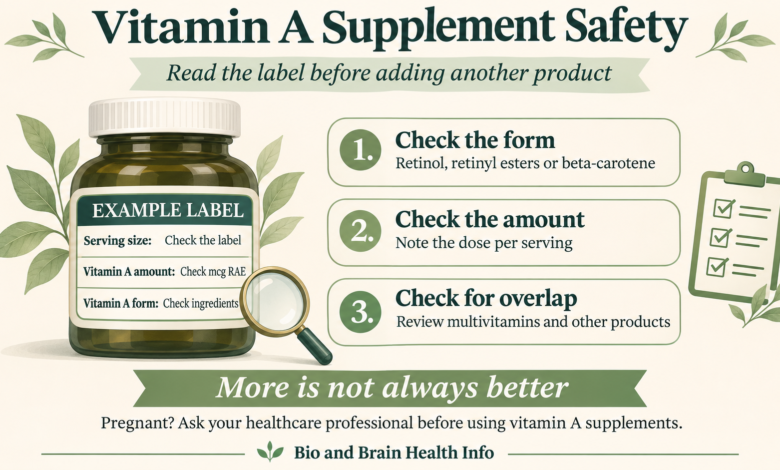
A multivitamin, a skin-health product and a fish liver oil may contain overlapping ingredients. Consumers often compare each bottle with a dietary recommendation without considering their combined intake. This can obscure exposure, especially when different labels use different units.
Start with the Supplement Facts panel. Record the serving size, the amount actually consumed and the ingredient form. If a label contains both preformed vitamin A and beta-carotene, note the stated proportions. If the proportions or units are unclear, ask a pharmacist or the manufacturer rather than guessing.
The safest use of an exposure inventory is to support a professional review, not to design a high-dose regimen. Include fortified products and regular consumption of concentrated foods. More information is available in Vitamin A Supplements: Uses and Safety.
BBH Supplement Inventory
Record the name of every product, its vitamin A form, amount per serving, actual frequency of use, starting date and reason for taking it. Bring the original packages or clear photographs to your pharmacist or healthcare professional.
8. Who Is More Vulnerable to Vitamin A Toxicity?
Individual risk varies. A person with liver disease may require a more cautious approach, while children have different age-specific nutritional limits. People receiving prescription retinoids should review any supplemental vitamin A with the prescriber or pharmacist. Do not stop a prescribed medicine without seeking appropriate medical advice.
Pregnancy and excess preformed vitamin A
Adequate vitamin A is needed during pregnancy, but excessive preformed exposure can harm fetal development. Prenatal vitamins should be reviewed as part of obstetric care. If you are pregnant or planning pregnancy, discuss additional retinol-containing products and frequent liver consumption with your obstetric clinician. A concerning accidental exposure warrants timely advice even when you feel well.
Smoking history and beta-carotene supplements
Beta-carotene supplements have a separate risk profile. Large randomized trials found unfavorable lung cancer outcomes in certain high-risk groups receiving high-dose beta-carotene formulations. Current and former smokers should discuss such products with their healthcare professional. These findings should not be interpreted as a reason to avoid carotenoid-rich vegetables.
Read the National Cancer Institute overview of antioxidant trials for background.
9. How Healthcare Professionals Assess Suspected Vitamin A Toxicity
Assessment usually begins by reconstructing the exposure. A clinician may ask when a product was started, whether the dose changed, which other products are used, and whether symptoms appeared before or after supplementation. A list of prescribed medications and any recent illness can help identify competing explanations.
The physical examination and appropriate laboratory testing depend on the situation. Liver tests, other blood work and eye or neurological assessment may be considered. Serum retinol by itself is not a dependable measure of all stored vitamin A or a stand-alone test for toxicity. A clinician interprets laboratory findings together with exposure history and symptoms.
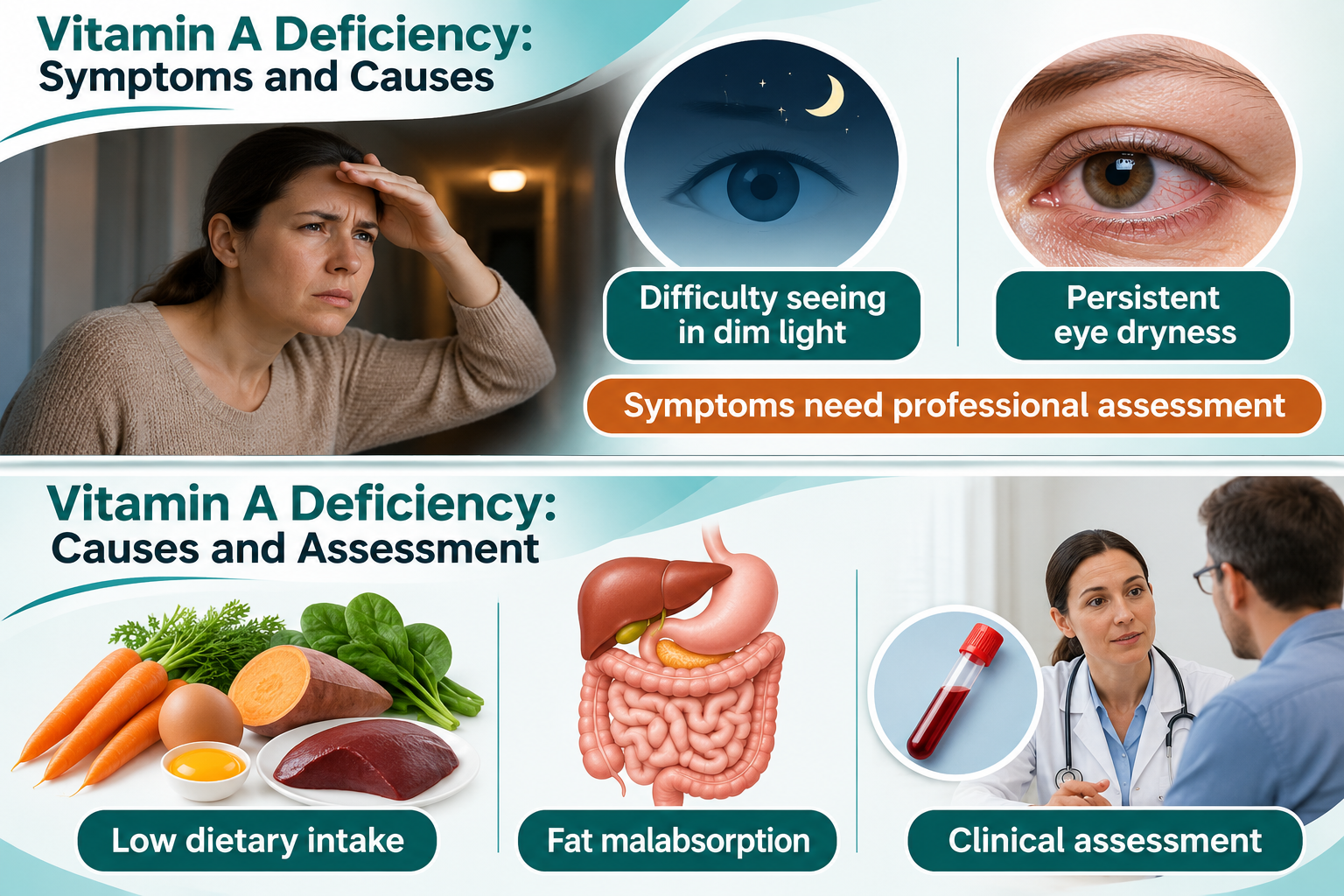
A person concerned about low vitamin A should not infer that symptoms of excess prove deficiency or vice versa. See Vitamin A Deficiency: Symptoms and Causes for a separate discussion of nutritional assessment.
10. What to Do After a Suspected Vitamin A Overdose
If an accidental ingestion or overdose is suspected in the United States, call Poison Control at 1-800-222-1222 or use its official online service. Do not wait for symptoms. Keep the packaging available so a specialist can identify the actual ingredients. Multivitamin products may contain other substances that also require assessment.
| Situation | Action |
|---|---|
| Suspected accidental ingestion | Contact Poison Control promptly. |
| Collapse, seizure, breathing difficulty or inability to awaken | Call 911. |
| Severe or worsening headache, vomiting or visual symptoms | Seek urgent medical assessment. |
| Concern about repeated supplement use without urgent symptoms | Arrange a prompt medication and supplement review. |
Do not induce vomiting or try a home detoxification method. Do not take additional doses of a suspected overdose supplement while seeking advice. If the exposure involves a prescribed medication, seek instructions from the treating team. Visit US Poison Control for assistance.
11. Preventing Too Much Vitamin A in Everyday Life
Keep supplements in their original labeled containers, away from children. Gummies can look like candy and should not be stored alongside snacks. Check the serving size before using a new product. A change in brand can also change the nutrient form or amount even when the front label looks similar.
Review your supplement list during routine healthcare visits. Ask whether a product has a clear indication, whether its benefits have been demonstrated for your circumstances and whether a follow-up plan is needed. If a clinician has prescribed nutritional replacement, follow that plan rather than discontinuing it because of general information online.

For related nutritional education, visit Vitamins and Minerals for Brain Health.
Reporting a suspected supplement adverse event in the USA
After obtaining medical care or advice, consumers can report a suspected serious supplement reaction to the FDA. Retain the product name, manufacturer, lot number and relevant dates if possible. Reporting helps regulators investigate potential safety concerns but does not replace urgent medical assistance. See FDA supplement safety guidance.
Free BBH Worksheet
Download the Vitamin A Food and Supplement Safety Tracker to organize questions for a healthcare appointment.
Preparing for a review of excessive vitamin A intake
Before a nonemergency appointment, create a chronological record of when each supplement was introduced or changed. Include products that you have already discontinued, because past exposure can be relevant. Note the first appearance of symptoms and whether they interfere with ordinary activities. Bring laboratory reports, prescription lists and photographs of product labels rather than relying on memory.
Ask your clinician which findings need monitoring, whether a specialist referral is appropriate and when to return for follow-up. If symptoms worsen before the scheduled appointment, seek advice sooner. A reduction in symptoms is encouraging but does not by itself establish that organ function has recovered.
For households with several family members taking supplements, maintain separate labeled storage and avoid sharing products intended for different age groups. Review the ingredient list whenever a product is replaced. These simple precautions can reduce avoidable dosing errors without creating unnecessary anxiety about ordinary nutritious foods.
Frequently Asked Questions
Can too much vitamin A cause headaches?
Yes, headache can occur with toxicity, but other causes are possible. Severe or progressive symptoms need medical attention.
Can vitamin A damage the liver?
Excess preformed vitamin A may cause liver injury, particularly with repeated excessive exposure.
Can carrots cause vitamin A poisoning?
Ordinary dietary carotenoids do not have the same toxicity profile as preformed vitamin A.
Does one day above the upper limit mean poisoning?
Not necessarily. The upper limit is not an overdose assessment tool. Seek advice for concerning exposures.
Can supplements cause toxicity even without symptoms?
Repeated excessive intake can be concerning before obvious symptoms develop. Discuss exposure with a healthcare professional.
Is vitamin A toxicity reversible?
Recovery depends on the severity and duration of exposure and whether complications have developed. Prompt evaluation matters.
Should I stop every vitamin A-containing food?
No. Avoid unnecessary dietary restrictions unless your healthcare team recommends them.
What number should I call in the United States?
Poison Control is available at 1-800-222-1222. Call 911 for life-threatening emergencies.
Conclusion
Too much vitamin A is preventable in many circumstances through informed product choices, careful label review and appropriate clinical guidance. Nutritional adequacy remains the goal. Do not confuse the benefits of an essential nutrient with a reason to consume unlimited amounts, and seek timely assistance when an exposure raises concern.
Independent Clinical Review
Review status: Pending independent clinical review. This article draws on the research and public guidance linked below. BBH will add the reviewer’s name, credentials, and review date once an independent review is documented.
Research References
NIH Vitamin A and Carotenoids: professional fact sheet