HbA1c Test: Levels, Results and Meaning
HbA1c Test Results: Normal to Diabetes


BBH Physical Health · Diabetes & Blood Sugar · U.S.-first evidence-based guide with international comparisons
Thank you for reading this post, don't forget to subscribe!A laboratory report may show an HbA1c of 5.9%, 6.4%, or 7.2%, leaving you to wonder what the number says about your health. A reader in the United States may see different prediabetes cutoffs from a relative in the United Kingdom or Canada. Meanwhile, the same test can be used for two different purposes: finding diabetes and following treatment after diagnosis.
This guide explains the HbA1c test using the American Diabetes Association’s 2026 diagnostic framework as the primary reference. It also compares the United Kingdom, Canada and Australia, including the difference between reporting results as a percentage and as mmol/mol. Knowing which country and clinical context apply is essential before interpreting a result.
You will learn how the test works, why it does not require fasting, what common numbers mean, when a result needs confirmation, when HbA1c may be inaccurate and how it differs from home glucose readings. The goal is practical, evidence-based education—not self-diagnosis or unmonitored changes to diabetes medicines.
1. How Does the HbA1c Test Work?
The HbA1c test measures the proportion of hemoglobin in red blood cells that has glucose attached to it. Red blood cells circulate for weeks to months, so the result reflects longer-term glucose exposure rather than the exact concentration at the moment the sample is collected.
Clinicians generally describe A1C as reflecting roughly the previous two to three months, with recent weeks contributing more strongly than older weeks. This averaging makes the test helpful for screening and long-term care, but it does not show the precise highs and lows that occurred between blood draws.
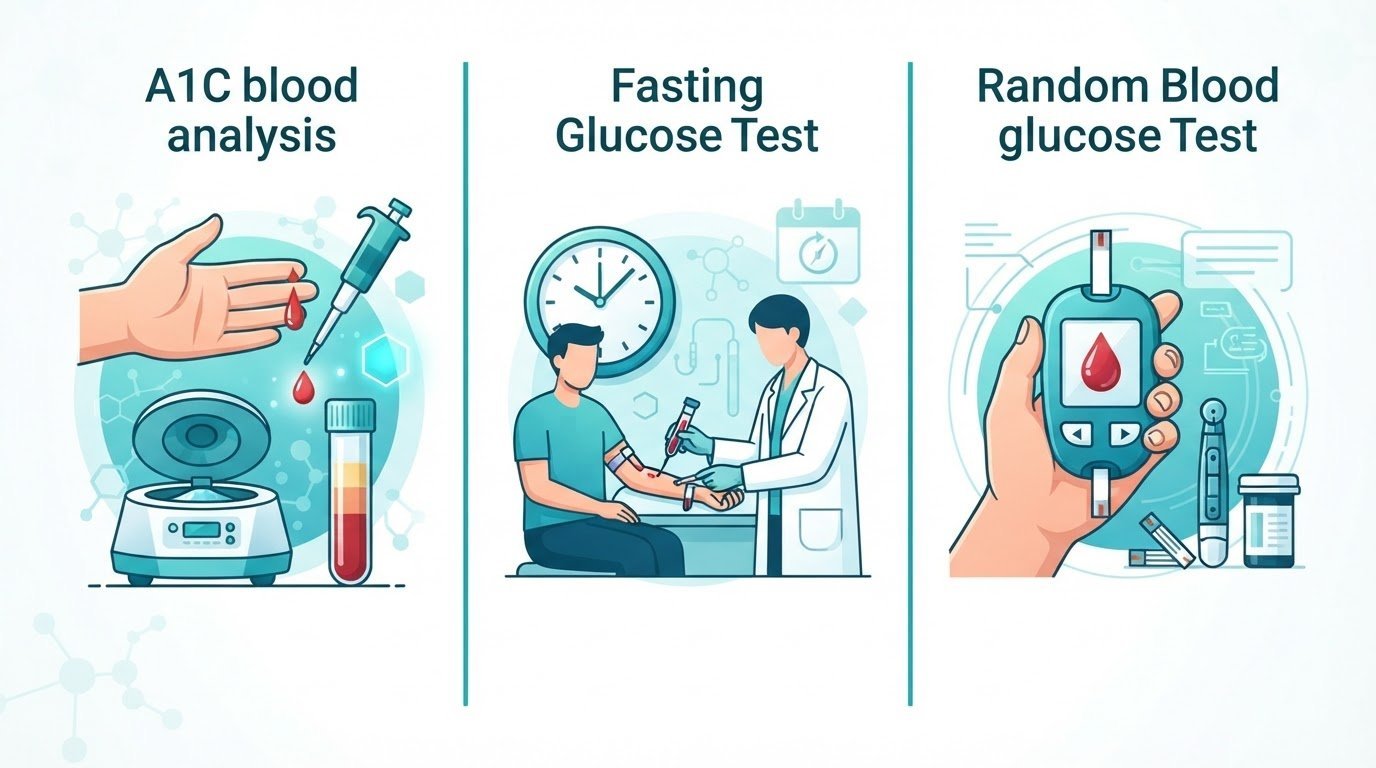
A blood sample is taken and analyzed using an appropriate method. Fasting is usually unnecessary for an HbA1c-only test. If the laboratory also ordered fasting plasma glucose or another test, follow the preparation instructions for that additional test.
The HbA1c result is not a direct measurement of insulin resistance, pancreatic insulin production, or the type of diabetes. A clinician uses symptoms, history and sometimes other laboratory investigations to answer those separate questions.
2. HbA1c Levels Chart: U.S. ADA 2026 Criteria
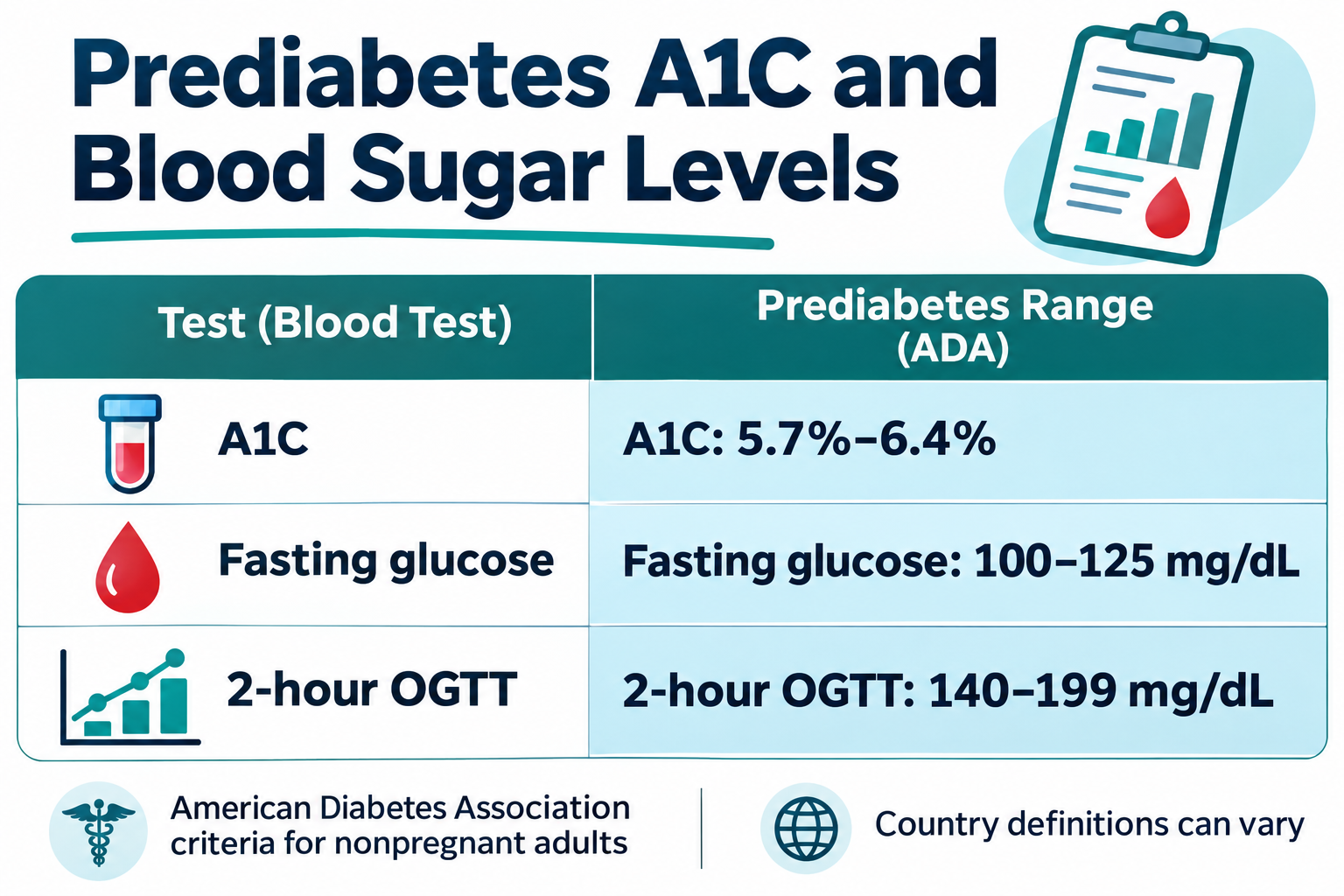
In the United States, the ADA provides commonly used categories for identifying nonpregnant adults at elevated risk and for diagnosing diabetes. A value below 5.7% is in the normal category, a value from 5.7 through 6.4% meets the prediabetes definition, and at least 6.5% meets the diabetes diagnostic threshold.
A number close to the boundary should not be treated as an entirely different biological state from a number just across it. Measurement variation and individual risk still matter. Prediabetes describes increased risk, not an inevitable future diagnosis of type 2 diabetes.
For example, 5.8% and 6.3% both fall in the U.S. prediabetes range, while 6.6% is above the diabetes cutoff. A person should not begin or discontinue treatment on the strength of that isolated number without professional review.
These ADA thresholds apply to a properly performed laboratory test and to appropriate diagnostic circumstances. Certain blood conditions and pregnancy can make A1C unsuitable for diagnosis, so plasma glucose criteria may be preferred.
| HbA1c (US ADA) | Percent | IFCC mmol/mol |
|---|---|---|
| Normal | Below 5.7% | Below 39 |
| Prediabetes | 5.7–6.4% | 39–47 |
| Diabetes threshold | 6.5% or higher | 48 or higher |
3. How the United States, UK, Canada and Australia Differ
This is a major international content gap: a search result written for the United States may label HbA1c 5.8% as prediabetes, while an official Canadian or Australian guide often focuses on the higher-risk range beginning at 6.0%. The difference reflects guideline definitions, not different human biology.
U.S. ADA guidance identifies prediabetes from 5.7–6.4% (39–47 mmol/mol). Diabetes UK and NICE commonly use 42–47 mmol/mol, or approximately 6.0–6.4%, for non-diabetic hyperglycaemia or a higher-risk category. Canada likewise uses 6.0–6.4% for prediabetes.
Diabetes Australia and Australian clinical references commonly use 6.0–6.4% for higher-risk classification. All four countries recognize 6.5%, or about 48 mmol/mol, as a diabetes threshold in appropriate diagnostic circumstances, with confirmation and exceptions.
A result in the range 5.7–5.9% therefore deserves context rather than a universal label. In the U.S., it meets the ADA prediabetes definition; elsewhere, a clinician may use other risk assessments and glucose tests to determine an appropriate plan.
| Country | Prediabetes / higher-risk HbA1c | Diabetes threshold |
|---|---|---|
| United States (ADA) | 5.7–6.4% (39–47 mmol/mol) | ≥6.5% (≥48 mmol/mol) |
| United Kingdom (Diabetes UK / NICE) | 42–47 mmol/mol (approximately 6.0–6.4%) | ≥48 mmol/mol (≥6.5%) |
| Canada (Diabetes Canada) | 6.0–6.4% | ≥6.5% |
| Australia (Diabetes Australia / RACGP) | 6.0–6.4% as higher-risk range | ≥6.5% |
4. HbA1c Percent Versus mmol/mol: Understanding Units
Reports may present A1C as a percentage under the NGSP/DCCT system, as IFCC mmol/mol, or both. The percentage describes the proportion of hemoglobin that is glycated in standardized form. The IFCC system expresses a related standardized result using a different scale.
These units differ fundamentally from the mmol/L used to measure glucose concentration. A report of 48 mmol/mol HbA1c is roughly 6.5%; it does not mean blood glucose was 48 mmol/L. Mixing the two measurements is a serious interpretation error.
Common paired values are approximately 5.7% and 39 mmol/mol, 6.0% and 42 mmol/mol, 6.5% and 48 mmol/mol, 7.0% and 53 mmol/mol, and 8.0% and 64 mmol/mol. Exact conversions may differ slightly after rounding.
If you read British or Australian resources, look for mmol/mol on HbA1c reports. Canadian and U.S. resources often display percentages prominently. Always retain the unit when recording results or discussing them online.
An accurate HbA1c test interpretation requires the original laboratory units, individual history and relevant national guideline.
5. What Does an HbA1c of 5.7, 6.0, 6.5 or 8 Mean?
A result of 5.7% begins the U.S. ADA prediabetes range, but a result at that value does not itself mean diabetes. Similarly, an HbA1c of 6.0% meets the prediabetes or higher-risk definition used in all four reference settings discussed here, although terminology may differ.
An HbA1c of 6.5% meets the commonly used diabetes threshold, generally followed by confirmation where no unequivocal hyperglycemia is present. A result of 8.0% in someone already diagnosed may be above their agreed management target, but treatment changes depend on individual circumstances.
A1C 7.0% may be a reasonable treatment result for one patient but not necessarily the correct goal for another. Age, pregnancy, hypoglycemia risk, existing complications and treatment options affect the appropriate target.
Do not interpret A1C in isolation if symptoms, meter records or the person’s health status tell a conflicting story. The result should prompt useful questions about risk, confirmation and management rather than automatic medication decisions.
6. HbA1c vs Fasting Blood Sugar and OGTT
HbA1c estimates longer-term glucose exposure, whereas fasting plasma glucose is a single blood glucose measurement after at least eight hours without calories. A 75-gram oral glucose tolerance test evaluates how glucose changes after a standardized drink over a defined period.
For U.S. ADA diagnosis in nonpregnant adults, fasting plasma glucose of at least 126 mg/dL (7.0 mmol/L) and a two-hour 75-g OGTT level of at least 200 mg/dL (11.1 mmol/L) are alternative diabetes thresholds. Different tests may identify somewhat different groups of people.
A person can have a fasting glucose in the ADA prediabetes range and a normal A1C, or a high A1C with a less elevated fasting result. This does not automatically mean a laboratory error. The clinician considers test variability, glucose patterns and whether a red-cell condition alters HbA1c.
For related BBH explanations, see Fasting Blood Sugar: Levels and Results and Diabetes Diagnosis: Which Tests Are Used?.
7. Can One HbA1c Result Diagnose Diabetes?
A diabetes-range A1C should be interpreted under established confirmation rules. In the absence of unequivocal hyperglycemia, the ADA generally requires two abnormal qualifying results, which may be repeated measurements of the same test or abnormal results from different tests collected appropriately.
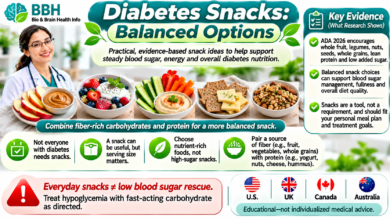
If two diagnostic methods disagree, guidelines generally recommend repeating the test above its diagnostic threshold while considering possible interference. In someone with classic hyperglycemia symptoms and a random laboratory plasma glucose of at least 200 mg/dL, diabetes may be diagnosed without the same routine confirmation pathway.
An abnormal result should lead to an individualized clinical discussion about previous tests, medications, pregnancy, medical conditions and symptoms. Delaying care simply to collect repeated home readings is not an appropriate substitute for laboratory confirmation.
Home glucose meters and continuous glucose monitors are valuable management tools, but standard diagnostic decisions rely on validated laboratory criteria. An HbA1c point-of-care device is appropriate for diagnosis only in settings meeting the applicable quality and regulatory requirements.
8. When Is HbA1c Misleading or Less Reliable?
A1C depends not just on glucose, but also on the behavior and lifespan of red blood cells. Hemolytic anemia, recent blood loss or transfusion, some hemoglobin variants and other conditions can change the relationship between A1C and actual glucose exposure.
Iron deficiency can sometimes raise A1C relative to underlying glucose, while conditions that shorten red-cell survival can cause unexpectedly low results. Advanced kidney disease and therapies affecting red blood cell production can also complicate interpretation.
Pregnancy changes red-cell physiology and requires pregnancy-specific diagnostic pathways. The ADA recommends using plasma glucose criteria in settings where A1C may have an altered relationship to glycemia rather than forcing a misleading A1C-based decision.
If a patient’s A1C appears unexpectedly high or low compared with repeated glucose readings and symptoms, the clinician may investigate the discrepancy, repeat the test with an appropriate method or use plasma glucose measurements. Do not assume the person is misreporting their diet or treatment.
9. HbA1c Treatment Targets Are Not Diagnosis Thresholds
The meaning of the HbA1c test changes after someone has established diabetes. A diagnostic threshold asks whether the person may have diabetes; a management target asks how closely glucose exposure is meeting a personalized treatment goal.
ADA 2026 guidance commonly recommends HbA1c below 7% for many nonpregnant adults with diabetes when this can be achieved safely. Some people may appropriately have tighter or more relaxed goals because of pregnancy, severe hypoglycemia risk, health complexity or other considerations.
An A1C result of 6.8% can therefore be above the diagnostic threshold and still be within a particular patient’s management target. That is not a contradiction: the numbers are answering different questions.
A1C is also only an average. Someone might experience substantial glucose swings or low readings despite an acceptable HbA1c, so finger-stick or continuous glucose data can add essential information for clinical decisions.
10. Estimated Average Glucose and Common A1C Conversions
Estimated average glucose (eAG) is a mathematical translation of HbA1c into approximate glucose units. A commonly used formula is eAG (mg/dL) = 28.7 × HbA1c (%) − 46.7. The estimate helps relate an A1C number to home glucose units but does not reproduce someone’s actual daily readings.
For example, 6.0% corresponds to an eAG around 126 mg/dL (7.0 mmol/L), 6.5% to about 140 mg/dL (7.8 mmol/L), 7.0% to roughly 154 mg/dL (8.6 mmol/L) and 8.0% to about 183 mg/dL (10.2 mmol/L).
An eAG should not be mistaken for a fasting glucose value. It is an average estimated over time and may conceal both highs and lows. Glucose sensor traces and finger-stick results provide information about timing and daily variability.
People from different countries should confirm whether the report expresses A1C as percent, IFCC mmol/mol or eAG. They represent related but distinct concepts and should be labeled clearly.
| HbA1c | IFCC (approx.) | eAG (approx.) |
|---|---|---|
| 5.7% | 39 mmol/mol | 117 mg/dL (6.5 mmol/L) |
| 6.0% | 42 mmol/mol | 126 mg/dL (7.0 mmol/L) |
| 6.5% | 48 mmol/mol | 140 mg/dL (7.8 mmol/L) |
| 7.0% | 53 mmol/mol | 154 mg/dL (8.6 mmol/L) |
| 8.0% | 64 mmol/mol | 183 mg/dL (10.2 mmol/L) |
11. How Often Should HbA1c Be Checked and What Happens Next?
For people living with diagnosed diabetes, A1C is commonly checked about twice a year when management is stable and targets are met, and more frequently—often about every three months—when treatment changes or goals are not being met. The actual schedule depends on a person’s care plan.
For those with a prediabetes-range result, the clinician considers risk factors, lifestyle, other glucose results and when repeat screening is useful. A history of gestational diabetes, certain medicines and other health factors may influence follow-up.

Appropriate risk-reduction measures can include changes to dietary quality, physical activity, sleep and weight management where medically indicated. No single supplement or short-term restrictive diet reliably replaces assessment and an evidence-based plan.
Seek prompt evaluation if classic high-glucose symptoms appear, including persistent thirst, increased urination or unexplained weight loss. Repeated vomiting, deep breathing, confusion or severe dehydration can indicate a medical emergency and require urgent care.
12. Common Questions and a Practical HbA1c Result Checklist
Is fasting needed for an HbA1c test? Usually not. However, you may need to fast if other blood tests are ordered at the same appointment.
Is 5.8% prediabetes? Under U.S. ADA criteria yes, while other countries may use different higher-risk HbA1c thresholds and assess additional clinical factors.
Is 6.5% automatically a confirmed diabetes diagnosis? It meets the threshold but confirmation is generally needed without unequivocal hyperglycemia.
Can A1C be wrong when iron is low? Iron deficiency or certain anemias can alter the relationship between measured HbA1c and glucose. Clinical interpretation or other tests may be required.
Does 7% mean the same thing for everyone? No. HbA1c management goals depend on diabetes type, health status, hypoglycemia risk and other circumstances.
Does a normal A1C rule out type 1 diabetes? No. Symptoms of rapidly developing insulin deficiency require immediate medical assessment, and testing may need to rely on plasma glucose and ketones.
What should I record? Keep the date, numerical result, unit, laboratory, prior result, recent illnesses, medications and the questions you want to discuss with a clinician.
Can a sensor replace an A1C test? A CGM can reveal patterns that A1C misses, but the two provide different information and are used together as clinically appropriate.
Conclusion: Interpret HbA1c With Country and Clinical Context
The HbA1c test offers a useful long-term picture of glucose exposure, but it is not a complete description of every glucose high, low or cause of diabetes. Understanding whether the result is being used for screening, diagnosis or management helps avoid confusion.
For U.S. readers, the ADA prediabetes range begins at 5.7%, while the UK, Canada and Australia commonly focus on 6.0–6.4% for their HbA1c higher-risk classifications. Review the original laboratory report, ask about confirmation and test accuracy when relevant, and follow the individualized plan recommended by your care team.
Scientific References