Health Insurance for People With Diabetes
Diabetes Health Insurance: US Coverage Guide


Health insurance for people with diabetes should protect access to ongoing treatment, not simply provide an affordable monthly premium. Whether you live with type 1 diabetes, type 2 diabetes or another form of the condition, your coverage may need to support medication, glucose monitoring, specialist visits, laboratory testing and care for associated health problems. In the United States, the best fit depends on your eligibility, treatment requirements and the specific benefits of the policy.
Thank you for reading this post, don't forget to subscribe!In This Guide: Pre-existing condition protections; coverage pathways; medication and insulin costs; glucose monitoring and insulin pumps; laboratory and complication care; annual budget comparison; claim denials; changing coverage; assistance; the BBH refill continuity test and FAQs.
Health insurance for people with diabetes: understanding your rights
Diabetes diagnosed before the start of a new policy is a pre-existing health condition. Under ACA Marketplace rules, an insurer cannot exclude you or set a higher premium merely because you have diabetes. Read the official pre-existing condition protections before comparing plans.
Protection against health-based discrimination is not the same as unrestricted payment for every requested medication, brand or device. A policy can have a formulary, equipment criteria, network restrictions and requirements for approval. The practical question is whether a comprehensive plan covers the treatment you need under conditions you can reasonably meet.
Be especially careful with products described as inexpensive short-term or limited-benefit coverage. Such products may operate under different rules. Confirm whether the product is comprehensive major medical insurance and read its exclusions. Do not assume that a discount card or a healthcare sharing arrangement offers equivalent protection.
Types of health insurance for people with diabetes in the US
Employer-sponsored health insurance
If you or a family member has access to job-based coverage, obtain the benefit summary and prescription information for every available option. Compare employee contributions, dependent premiums, network access and the expense of regular diabetes treatment. Employers may offer more than one benefit design, and a higher-premium option may be financially preferable when treatment needs are substantial.
Marketplace health insurance for people with diabetes
The Marketplace allows eligible households to compare individual plans and apply for financial assistance. Use the official plan comparison guide to search for clinicians, facilities and medicines. Assistance depends on applicable eligibility rules; review your own determination for the intended coverage year rather than assuming last year’s savings will continue.
Medicaid and Medicare
Medicaid and CHIP may be relevant for eligible households, with eligibility and administration varying by state. Start at Medicaid.gov. Medicare has separate eligibility requirements and benefit rules. Its drug and equipment protections are particularly important for eligible people who need insulin or glucose-monitoring supplies.
Health insurance for people with diabetes: medication benefits
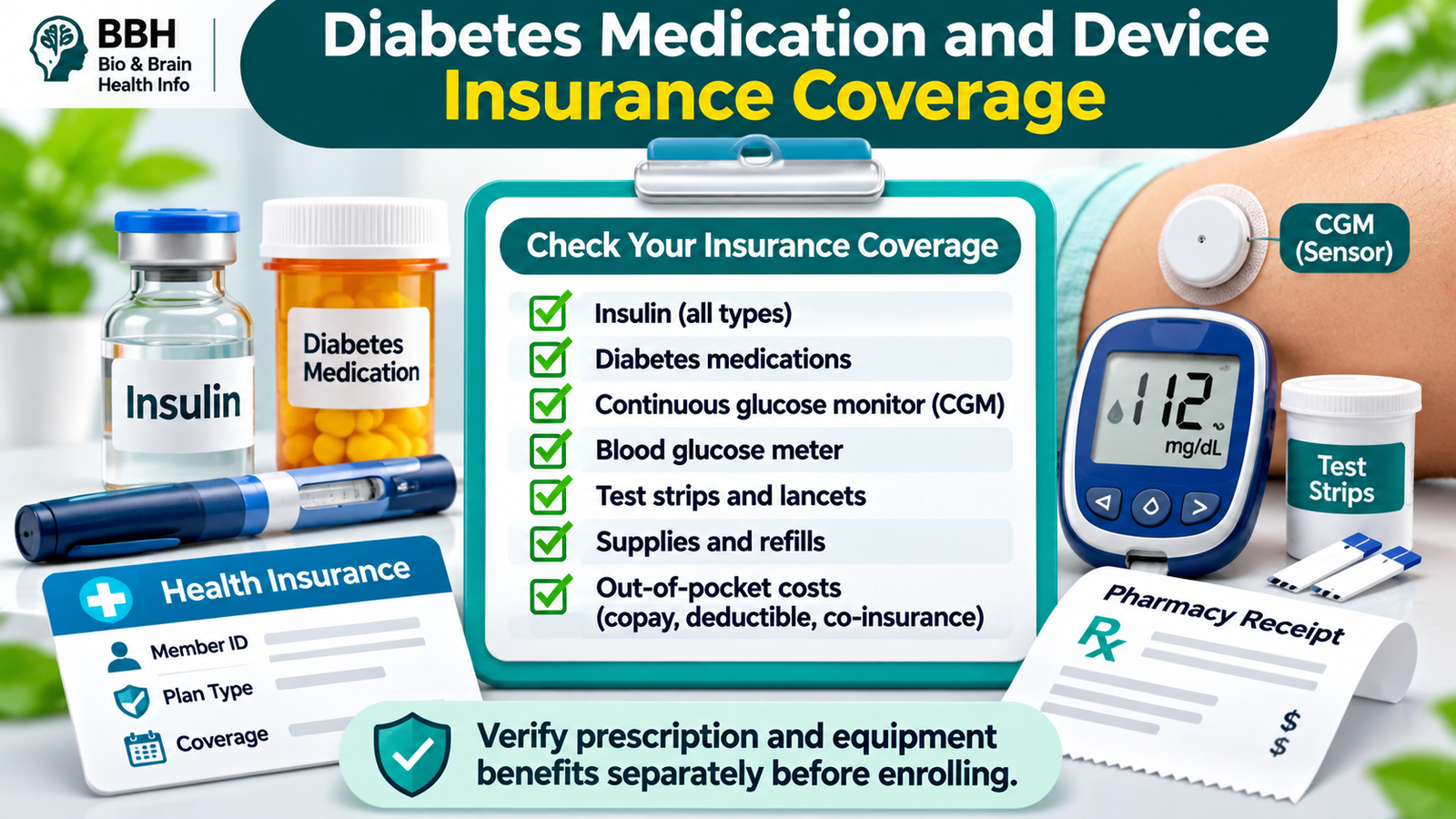
Prepare a list of medicines with their exact names, strengths and delivery formats. Include prescribed insulin, other glucose-lowering medicines and medications for associated conditions. A plan may cover one formulation but require a different process for another. Check the current formulary rather than relying on a generic list of drugs covered by the insurance company.
Record whether each medicine is on a preferred or nonpreferred tier, whether a deductible applies, and whether a preferred pharmacy changes the price. Ask about limits on the quantity supplied at one time. Some medicines require documented clinical criteria or prior authorization. These details can affect both affordability and continuity of treatment.
If your medicine is not listed, contact the insurer and prescriber about the available exception process. The official Marketplace prescription guidance explains how to investigate a missing medicine and request appropriate review. Any alternative should be evaluated by the treating clinician, rather than selected only because its price is lower.
Does health insurance cover insulin?
Coverage depends on the policy and prescribed insulin product. Under Medicare, the patient cost for a month’s supply of each covered insulin product is limited to $35 or less, without an insulin deductible. This protection applies to insulin covered under the relevant Part B or Part D benefit; it is not a universal ceiling for all private insurance, all diabetes medicines or all equipment.
Medicare’s insulin coverage page distinguishes insulin administered through eligible durable pumps from insulin obtained through prescription drug coverage. Verify which benefit applies to your treatment. The cost of a pump, needles, sensors and other supplies may be separate.
Health insurance for diabetes devices: CGM and glucose meters
Continuous glucose monitors
Continuous glucose monitoring equipment can involve recurring sensor costs as well as receiver or transmitter expenses, depending on the system. Confirm whether the product is handled through the pharmacy benefit or a medical equipment supplier. Ask about the approved device model, replacement schedule, eligibility documentation and any requirement for periodic follow-up.
Medicare may cover CGM for eligible people with diabetes who use insulin or have documented problems with low glucose and meet applicable assessment and training requirements. Under Original Medicare, the Part B deductible and usual 20% cost sharing can apply when the supplier accepts assignment. See Medicare CGM coverage for current criteria.
For background on device features, read BBH’s continuous glucose monitors guide. Coverage criteria are not the same as medical suitability; choose a monitoring method with your treating team.
Blood glucose meters and test strips
A conventional glucose meter may have a modest initial price, but compatible strips and lancets represent recurring expenses. Ask the plan which meters and strips are preferred, what supply quantity is covered and how you can obtain additional supplies if clinically necessary. Even people using a CGM may require access to conventional testing as directed by their clinician.
Review Medicare meter coverage and test strip coverage where relevant. BBH’s blood glucose meter guide explains the practical differences among monitoring options.
Insulin pumps and automated delivery systems
Ask whether a pump is covered as medical equipment or through a pharmacy benefit. The answer can affect the supplier, patient costs and approval process. Obtain a written explanation of coverage for the pump, infusion sets, reservoirs, cartridges, compatible sensors and replacements. A plan that covers one component of a connected system may not automatically cover all compatible components.
Before a plan change, ask what happens to an existing pump rental, warranty or equipment authorization. Keep the model number, prescribing records and supplier details available. Do not switch between insulin delivery methods without clinical guidance.
Comparing health insurance for people with diabetes by treatment needs
Different forms of diabetes can involve different treatment patterns. A person with type 1 diabetes generally depends on ongoing insulin therapy, while a person with type 2 diabetes may use insulin, other medicines or a combination of treatment approaches. Coverage decisions should reflect your individual treatment requirements, not an assumption based only on diagnosis.
Write down the services you actually use over a typical year. Include endocrinology visits, primary care, testing, nutrition consultations and management of other conditions. If a new treatment is being considered, discuss expected clinical needs with the prescriber before assuming a particular benefit will be necessary.
Does diabetes insurance cover laboratory tests and complications?
Review coverage for A1C testing, kidney assessments, lipid testing, eye examinations and relevant foot care. Medical necessity, network participation and benefit rules can affect the cost of an individual service. A diagnostic visit or follow-up investigation may be treated differently from routine preventive screening.
Use our diabetes eye examination guide and diabetic kidney disease guide to prepare questions about long-term care. Ask how referrals to ophthalmologists, kidney specialists and other clinicians are handled. These articles explain health needs; they do not guarantee insurance reimbursement.
Also consider mental healthcare, transportation difficulties, appointment availability and access to diabetes education. A plan can look comprehensive on paper while being difficult to use if the participating clinics are too distant or unavailable.
How much does health insurance for people with diabetes cost?
There is no single national monthly premium that is appropriate for every person with diabetes. Compare personalized premiums and the expected costs of healthcare services. Record the recurring price of prescribed medications and supplies, the cost of specialist appointments, deductible requirements and the annual in-network spending limit.
For a hypothetical comparison, Plan A costs $250 per month and leaves $3,600 in estimated annual medical and medication expenses. The projected total is $6,600. Plan B costs $400 per month and leaves $1,400 in estimated medical expenses, producing a total of $6,200. Plan B is less expensive under these assumptions despite its higher monthly premium. These fictional figures are not market quotes.
Test a higher-use scenario as well. Premiums, excluded items and certain out-of-network charges generally do not count toward the in-network out-of-pocket limit. Review the applicable contract and ask whether medication and equipment expenses accumulate toward the same deductible or spending limit.
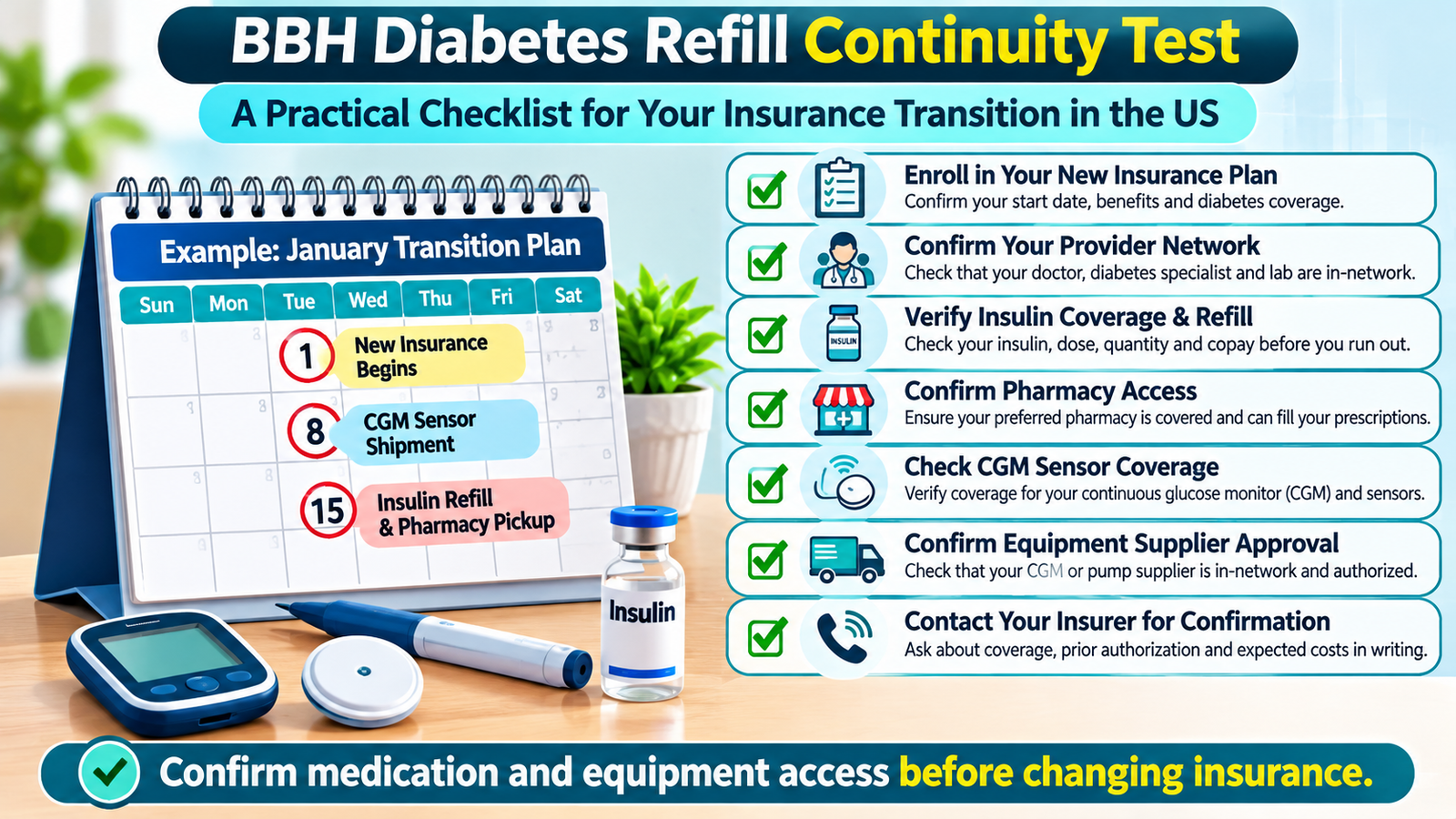
BBH diabetes refill continuity test: verify the whole treatment chain
Before selecting a policy, make a separate entry for every prescribed medicine and each required component of a monitoring or delivery system. Record the exact product, refill date, approved dispensing channel, participating supplier, estimated patient charge, authorization expiration and person responsible for confirming the next order. The ADA plan selection guidance emphasizes reviewing medicines and equipment together. This BBH exercise adds a timing and documentation check.
A plan earns a verified entry only when the relevant insurer and dispensing provider confirm the details. Record conflicting answers as unresolved. Keep dated confirmations securely; do not share sensitive identifiers in public worksheets. Repeat the exercise before annual renewal or a change in treatment. This is an educational workflow, not a clinical scoring instrument or guarantee of coverage.
Prior authorization, claim denials and insurance appeals
When a request is denied, obtain the written decision and identify the reason. It may involve missing documentation, the wrong supplier, a nonpreferred medication, an eligibility question or a contractual exclusion. Ask which policy provision applies and whether the treating clinician can supply additional information.
Keep dates, claim numbers, correspondence and copies of prescriptions. Ask about internal appeal deadlines and whether external review or an expedited process is available for your plan and circumstances. Consult HealthCare.gov internal appeals guidance and the instructions in your denial notice. A claim appeal is an administrative process; it does not replace medical assessment when treatment is urgently needed.
If an authorization is expiring, ask the insurer and clinician about renewal before your supplies are exhausted. Coverage changes are easier to address when you have organized records and enough time to arrange safe alternatives.
Changing insurance without interrupting diabetes care
A new plan may require fresh documentation for a medicine or medical device that was previously approved. Before switching, contact the new insurer, pharmacist and medical equipment supplier. Confirm the effective date, initial payment requirements, provider network and prescription process. Do not assume that an approval from your former insurer transfers automatically.
If you are losing job-based coverage, check whether continuation coverage or a Marketplace special enrollment period is available. Confirm the exact deadline and effective dates through official channels. Discuss medication refill timing with your healthcare team and do not cancel current coverage before confirming replacement arrangements.
What if you cannot afford your diabetes care?
Ask a licensed enrollment assister about potential coverage pathways and financial assistance. Your state Medicaid agency, insurer, community health center, pharmacist or clinician may be able to identify relevant resources. Medicare beneficiaries can explore assistance through official Medicare channels. Eligibility varies, and assistance programs may impose their own restrictions. The American Diabetes Association insulin affordability resources can help identify potential avenues for assistance.
If a seller advertises unusually cheap insulin or devices, confirm the legitimacy of the pharmacy or supplier and the product’s suitability. Avoid buying medication from unverified sellers or changing doses based on online price comparisons. Seek urgent clinical advice when an interruption in essential treatment is likely.
Related BBH articles and insurance resources
Read our Private Health Insurance in the US guide and explore the Health Insurance and Healthcare Costs support page. Four diabetes guides linked above explain monitoring and complication care.
Frequently asked questions
Can I get health insurance for people with diabetes after diagnosis?
Yes. ACA Marketplace insurers cannot reject you or charge more because of your diabetes. You must still meet applicable enrollment and eligibility requirements.
Does every health insurance plan cover a continuous glucose monitor?
No. Check the policy’s device criteria, medical benefit or pharmacy benefit and approved supplier. Clinical need alone does not establish reimbursement under every contract.
Is all insulin capped at $35 in the United States?
No. The Medicare protection applies to each covered insulin product for a month’s supply. Private insurance arrangements and state protections can differ. The ADA state insulin cap guide distinguishes state-regulated plans from other coverage. Do not assume a state cap applies to a self-funded employer plan.
Can I keep my endocrinologist when I switch plans?
Possibly. Confirm that the clinician participates in the exact new policy and can continue treating you. Check referral requirements and the effective date.
Which insurance plan is best for diabetes?
There is no universally best insurer or metal category. Compare annual costs, medication benefits, access to clinicians and equipment criteria according to your actual treatment needs.
Conclusion
Health insurance for people with diabetes is most useful when it supports reliable access to ongoing care at manageable cost. Compare comprehensive coverage, confirm prescriptions and supplies, verify clinicians and prepare a realistic annual budget. Use official resources and qualified professional assistance rather than choosing a policy based on a headline premium.
Editorial disclosure: Key HealthCare.gov, Medicare.gov and American Diabetes Association guidance checked November 29, 2026. General educational information, not individual medical or insurance advice. Verify current plan-year rules and policy terms before enrolling.