Health Insurance for Seniors: 2027 US Guide
Senior Health Insurance: Medicare and Costs


Health insurance for seniors is an important part of retirement planning in the United States. As healthcare needs change, a suitable coverage arrangement can help older adults maintain access to physicians, prescriptions, medical equipment and hospital treatment. The right choice depends on eligibility, existing conditions, preferred clinicians, financial resources and the type of care required. Comparing a monthly premium alone may overlook substantial expenses.
Thank you for reading this post, don't forget to subscribe!In This Guide: Retirement coverage before 65; Medicare eligibility; Parts A, B, C and D; Medigap; 2027 costs; drug coverage; financial assistance; chronic conditions; dental and hearing benefits; long-term care; enrollment and comparison checklist.
Health insurance for seniors before age 65
Retiring does not automatically establish Medicare eligibility. Someone leaving employment before age 65 may need to arrange replacement coverage until eligible for Medicare. Options may include a former employer’s retiree benefits, continuation coverage, a spouse’s workplace policy, individual Marketplace insurance or Medicaid if eligible. Certain younger people qualify for Medicare through separate disability or medical eligibility rules.
The official HealthCare.gov retiree coverage guide explains how the Marketplace may help people who retire early and lose job-based insurance. Before leaving employment, establish the date current coverage ends, potential enrollment deadlines and the cost of available alternatives. Review the effect of retirement income and household circumstances on assistance eligibility.
A person nearing Medicare eligibility should plan the transition in advance. Do not assume that a Marketplace policy, continuation coverage or former employer benefit automatically protects against all Medicare late-enrollment consequences. Ask the relevant agencies how your current arrangement affects your enrollment responsibilities.
Understanding Medicare health insurance for seniors
Original Medicare health insurance for seniors: Parts A and B
Part A primarily supports eligible inpatient and related institutional care. Part B helps pay for eligible physician services, outpatient treatment and other medical benefits. Original Medicare provides access to clinicians and facilities that accept Medicare under the relevant payment rules. Beneficiaries may still owe deductibles, coinsurance and expenses for excluded services.
Original Medicare does not provide a general annual out-of-pocket ceiling for Part A and Part B services. Supplemental coverage can help manage certain remaining expenses. Review the official explanation of Medicare parts to distinguish these benefits.
Medicare Advantage: Part C
Medicare Advantage offers Medicare coverage through approved private plans. These plans generally provide Part A and Part B benefits, may incorporate prescription drug coverage and may offer additional benefits. Networks, referral rules, prior approvals and individual expenses vary by contract. They have an annual limit for applicable covered medical spending, but that limit does not necessarily include prescription expenses or every additional service.
Review the specific plan rather than relying on the insurer’s promotional materials. Verify whether your preferred physicians, specialists and hospitals participate. Ask about treatment outside the service area, particularly if you travel frequently or divide your time between different states.
Part D prescription drug coverage
Part D helps eligible beneficiaries pay for covered outpatient prescriptions. Original Medicare beneficiaries may obtain separate drug coverage; many Medicare Advantage arrangements include it. A formulary lists covered medicines and associated requirements. Check the exact formulation, pharmacy and refill arrangements before enrollment.
Medicare Supplement insurance
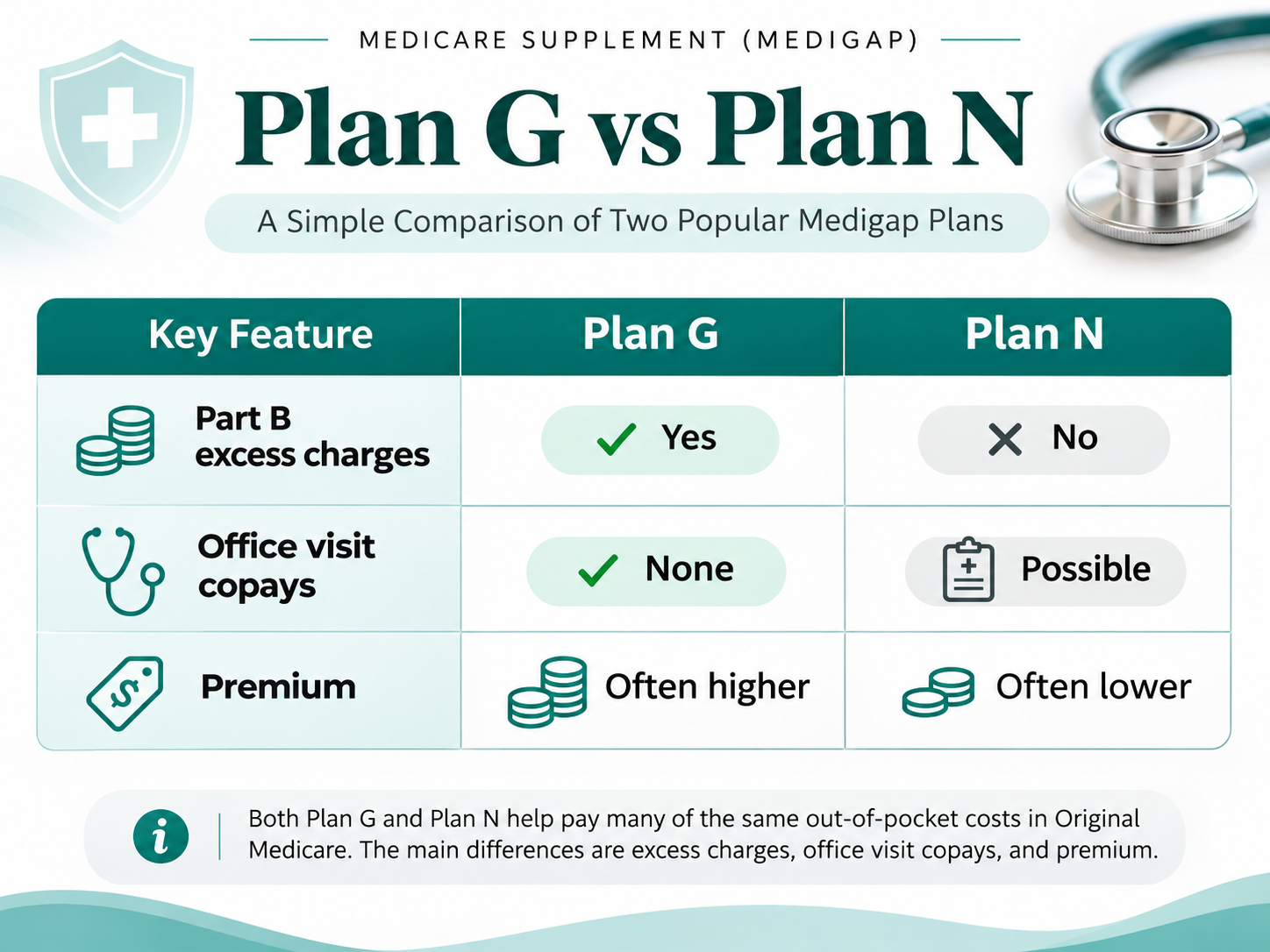
Medigap policies are private supplements designed to assist with eligible cost sharing under Original Medicare. They are not an additional benefit for Medicare Advantage expenses. The standardized benefit design, premium and purchasing rights are important considerations. Consult Medicare’s Medigap guidance before applying.
Enrollment after 65 when you are still working
The usual initial enrollment window spans seven months around the 65th birthday. If you or your spouse have qualifying group coverage based on current employment, a Part B special enrollment period may be available during employment and for eight months after the earlier of employment ending or that coverage ending. COBRA and retiree coverage do not extend this window. Verify whether Medicare pays first and whether your employer expects Medicare enrollment. See Medicare enrollment periods and working past 65.
Prescription drug enrollment has a separate timing rule. Going 63 consecutive days or longer without Medicare drug coverage or other creditable drug coverage after eligibility may result in a late enrollment penalty. Keep the employer’s creditable coverage notice. If you contribute to a health savings account, ask a qualified tax adviser about Medicare enrollment and possible retroactive Part A coverage before making further contributions. Do not treat these deadlines as interchangeable.
Health insurance for seniors: Original Medicare versus Medicare Advantage
Original Medicare may suit a person who values access to participating Medicare providers in different locations. Supplemental benefits and drug coverage may require separate policies. Medicare Advantage can combine multiple benefits in one arrangement but may apply network restrictions and additional approval processes. Neither is inherently superior for every beneficiary.
Start with your existing medical team. If you see several specialists, verify every important provider and facility under the exact plan. Investigate outpatient rehabilitation, diagnostic services, home healthcare and any ongoing treatment requiring approval. Check whether care away from home is covered and under what conditions.
The official Medicare coverage options guide explains the major differences. Make the comparison based on your own care requirements rather than choosing a policy simply because a friend or relative prefers it.
How much does health insurance for seniors cost in 2027?
The published Medicare cost schedules identify a Part A inpatient hospital deductible of $1,776 for each benefit period in 2027, compared with $1,736 in 2026. The annual Part B deductible is $292 for 2027, compared with $283 in 2026. These figures describe specific Original Medicare cost-sharing parameters, not the entire annual expense of healthcare.
People who must purchase Part A may pay a monthly premium that depends on their applicable work history. The standard monthly Part B premium is $209.40 in 2027, up from $202.90 in 2026. Some beneficiaries pay more because of income-related adjustments. Verify your actual premium in your Medicare or Social Security notice. Medicare Advantage, Part D and Medigap premiums can differ by plan, location and individual circumstances.
See the official Medicare cost schedule and obtain personal estimates using the Medicare Plan Finder. Compare the same medication list and healthcare needs for every candidate.
Prescription drug costs and financial protection in 2027
Medicare’s published Part D guidance sets the 2027 annual covered-drug out-of-pocket threshold at $2,400, compared with $2,100 for 2026. After reaching the applicable threshold, beneficiaries do not owe further cost sharing for covered Part D drugs during the remainder of the calendar year. Premiums and medicines outside the covered benefit are separate.
The Medicare Prescription Payment Plan can spread eligible personal drug expenses across the calendar year. It does not itself reduce the underlying total drug expense. Beneficiaries who face substantial costs early in the year can ask their plan whether this payment arrangement would help with budgeting.
Consult the Part D cost guide. If you have a prescription that is not on the formulary, contact your prescriber and insurer about appropriate exceptions or clinically suitable alternatives. Never discontinue necessary medication simply because of a coverage problem.
Affordable health insurance for seniors with limited income
Some older adults may qualify for assistance with Medicare expenses. Medicare Savings Programs are administered through states and can assist eligible beneficiaries with premiums and, depending on the program, certain additional expenses. Extra Help assists eligible people with Part D drug expenses.
Review the official Medicare financial assistance resources and Extra Help guidance. Eligibility depends on applicable income, resource and other requirements. Do not rule out assistance based only on another person’s experience, as state rules and individual circumstances can differ.
A State Health Insurance Assistance Program can provide individualized counseling without selling an insurance product. Ask for help if you are uncertain about enrolling, comparing plans or understanding a benefit notice. Keep your financial and medical information secure and disclose it only through verified channels.
Senior health insurance for diabetes and other chronic conditions
Older adults living with chronic conditions may require recurring prescriptions, laboratory tests and equipment. A coverage comparison should account for the entire treatment plan rather than a single medication or specialist. Ask how routine monitoring, diagnostic follow-up and treatment for associated conditions are handled.
Diabetes medicines and monitoring
For eligible people using Medicare, covered insulin has specific cost-sharing protections. Device costs and supplies may be treated separately. Ask whether a glucose monitor is covered under the medical or pharmacy benefit, what eligibility records are required and which suppliers participate. Review BBH’s continuous glucose monitor guide and blood glucose meter guide to prepare relevant questions.
Eye care, kidney care and mental health
People managing diabetes may also require eye examinations, kidney assessments and other specialist care. Routine vision benefits and medically necessary eye treatment can be handled differently. Read BBH’s diabetes eye examination guide and diabetic kidney disease guide for background. Check behavioral health networks and access to appropriate mental healthcare as well.
Does health insurance for seniors cover dental, vision and hearing care?
Original Medicare does not generally cover ordinary dental care, routine eyewear or hearing aids, although specific medical circumstances and related benefits can have different rules. Some Medicare Advantage policies advertise additional benefits. Confirm the actual services covered, annual allowances, network restrictions and patient charges.
A dental benefit described as included may have limits on major restorative procedures. A hearing benefit may cover specific devices or approved suppliers. Compare the detailed benefit with your expected needs rather than treating the advertised allowance as cash that can be spent without restrictions.
Content gap: Medicare is not long-term care insurance
A frequent retirement planning mistake is assuming that hospital or medical insurance will pay indefinitely for assistance with daily activities. Help with bathing, dressing, eating and other personal tasks may be considered custodial care. Medicare and most Medigap policies generally do not cover ongoing custodial long-term care.
Eligible skilled nursing or home health benefits are different from indefinite personal assistance and are subject to their own requirements. The official long-term care coverage explanation provides an important starting point. Explore state Medicaid eligibility, personal savings, caregiver support and separate long-term care arrangements as appropriate.
Families should consider how care would be arranged if an older adult needs help at home or cannot live independently. Review local care availability, likely costs, transportation and caregiver capacity. A healthcare policy comparison is only one component of a wider retirement support plan.
Original BBH three-layer retirement coverage stress test
Compare three distinct layers of risk: routine medical and prescription costs, a year with substantial covered medical treatment, and noncovered personal assistance. Record the plan’s actual medical out-of-pocket limit if it has one, and separately record drug expenses. Original Medicare alone does not have an annual Part A and B spending limit. Do not substitute the Part D drug limit for a medical spending limit.
The exercise separates insurance protection from the practical ability to remain independent. Ask a clinician or social worker to identify suitable care, then check the actual benefit and local service costs. If eligible, investigate state Medicaid long-term services and supports and local aging resources. Do not assume a temporary skilled nursing or home health benefit funds indefinite custodial care. Discuss caregiver capacity, backup arrangements and transportation before a crisis. This BBH framework is an educational decision aid rather than a validated financial or clinical model.
When should older adults review or change insurance?
Medicare enrollment periods depend on the type of coverage and personal circumstances. Initial enrollment, annual plan changes, special enrollment opportunities and Medigap purchasing protections are distinct. Review the official Medicare open enrollment guidance for the dates and changes permitted.
Do not cancel a Medigap policy on the assumption that you can buy another one later without underwriting. Rights to purchase a supplement depend on the applicable enrollment protection and state rules. Ask for confirmation of eligibility, premium and effective date before replacing existing coverage.
Review plan notices each year. A medicine, provider or pharmacy that was covered previously may be handled differently after renewal. Compare next year’s policy documents and contact the relevant providers before deciding.
BBH retirement healthcare budgeting worksheet
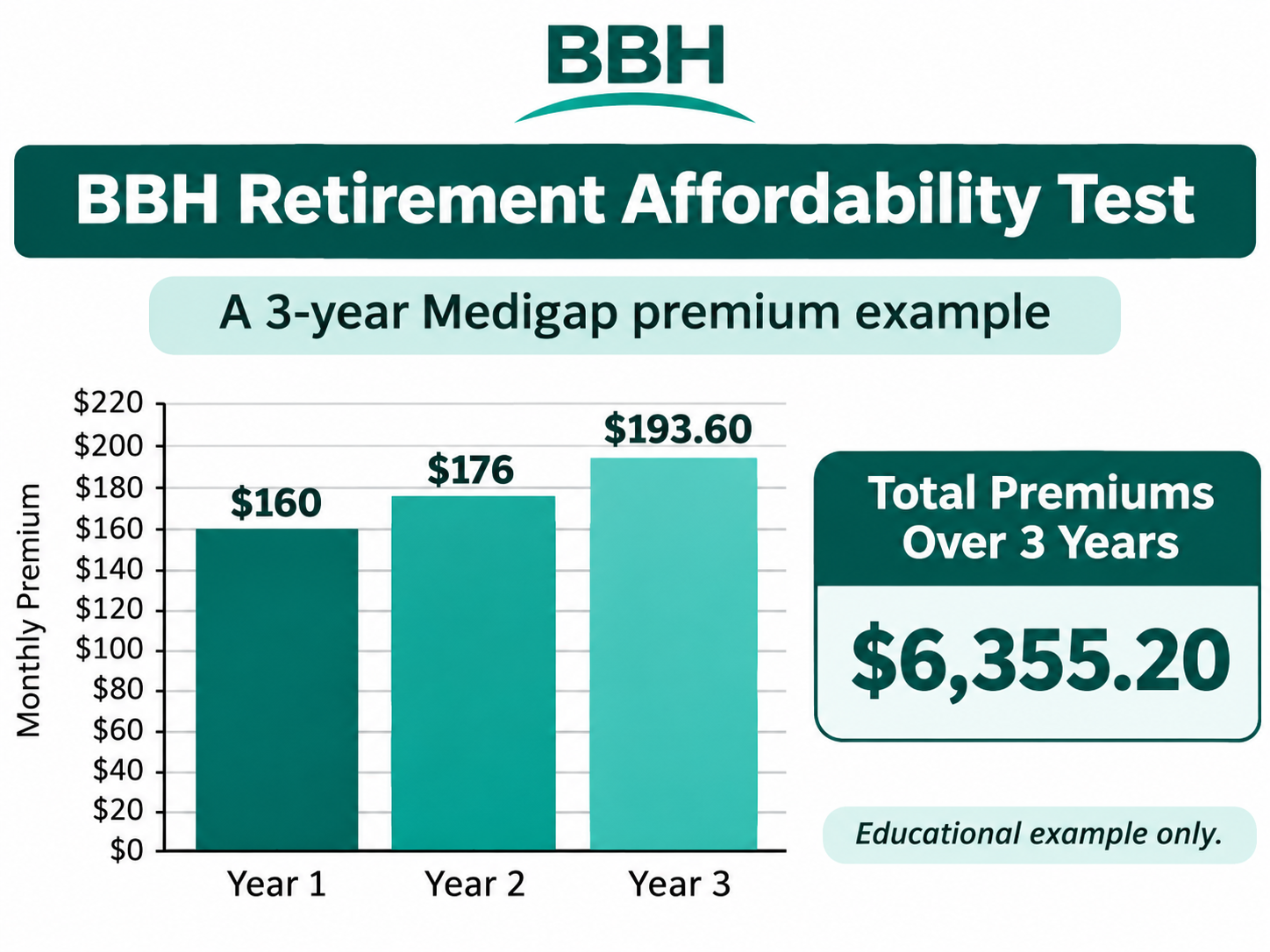
A hypothetical retiree pays $160 monthly for one supplemental arrangement and estimates $900 in remaining annual healthcare expenses. The combined amount is $2,820. A second arrangement costs $220 monthly and leaves an estimated $250 in healthcare expenses, producing a total of $2,890. These fictional figures exclude Medicare premiums, separate drug coverage and excluded care. They are illustrations rather than actual quotes.
Repeat the calculation for an ordinary year and a year involving substantial treatment. List premiums, medication expenses, expected visits, diagnostic procedures, hospital exposure and additional services. Include a separate allowance for dental, hearing, vision and possible long-term support.
Consider the timing of payments as well as the total annual amount. An unexpected bill early in the year can be difficult for a household living on a fixed income. Confirm whether payment arrangements or financial assistance are available before assuming that borrowing is necessary.
Practical senior insurance comparison checklist
Write down Medicare eligibility and enrollment dates, current clinicians, regular medications, preferred pharmacies, planned treatment and travel needs. For each policy, record monthly premiums, medical spending limits, prescription arrangements, network access, approval rules and additional benefits. Compare the complete annual cost and identify excluded expenses.
Ask how to request a written coverage decision or appeal. Keep dated benefit documents and correspondence. If a caregiver assists with insurance administration, follow the appropriate authorization process and protect the beneficiary’s privacy. Review coverage annually and after major changes in health or residence.
Related BBH resources and free budget worksheet
Read Medicare Supplement Plans: 2027 US Guide for Medigap details. The four diabetes articles linked above explain monitoring and complication care. Explore the Health Insurance and Healthcare Costs support page for more insurance guides.
Frequently asked questions
Is Medicare free after age 65?
No. Some beneficiaries qualify for premium-free Part A, but other premiums and cost sharing may apply.
Which senior health plan is best?
There is no universally best policy. Compare eligibility, provider access, medicines, personal expenses and enrollment rights.
Can Medicare pay for assisted living?
Medicare generally does not fund ongoing custodial assistance. Eligible medical services may be covered separately.
Can a retiree get insurance before age 65?
Yes, depending on eligibility, retiree benefits, Marketplace policies, family workplace coverage or Medicaid may be available.
Does a zero-premium Medicare Advantage plan mean free healthcare?
No. Other Medicare premiums, service charges, prescription expenses and exclusions may still apply.
Conclusion
Health insurance for seniors should support reliable healthcare access and realistic retirement budgeting. Compare complete benefit arrangements, review prescription coverage, investigate available assistance and plan separately for long-term support. Use official information and independent counseling to make a decision suited to individual needs.
Editorial disclosure: Medicare.gov cost schedules, enrollment guidance, creditable drug coverage, coverage options, Extra Help and long-term care guidance checked November 29, 2026. Other linked resources should be checked for current applicability. General education only, not personalized medical, financial or insurance advice. Verify current coverage and plan terms.