Health Insurance for Heart Patients
Heart Disease Insurance: US Coverage Guide

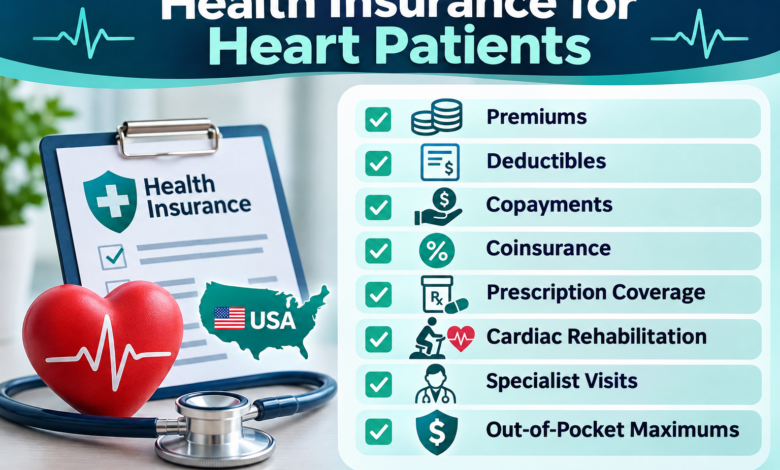
Health insurance for heart patients can help maintain access to cardiovascular specialists, prescribed medicines, diagnostic investigations and hospital treatment. People living with coronary artery disease, heart failure, rhythm disorders or other cardiovascular conditions may need continuing care over many years. A suitable US insurance arrangement should therefore be evaluated according to the complete treatment pathway, not simply the advertised premium or the name of the insurer.
Thank you for reading this post, don't forget to subscribe!In This Guide: Pre-existing condition protections; coverage options; cardiology and hospital care; cardiac tests; surgery; medicines; rehabilitation; emergency services; annual costs; insurance appeals; treatment continuity; the BBH recovery handoff checklist and FAQs.
Health insurance for heart patients with existing diagnoses
Heart disease diagnosed before a policy begins is a pre-existing condition. ACA Marketplace insurance cannot reject eligible applicants or charge higher premiums on the basis of their cardiovascular history. These protections apply to coverage of essential health benefits, subject to ordinary enrollment requirements and plan terms. See the official HealthCare.gov consumer guidance.
This does not mean every policy marketed as cardiac insurance offers comprehensive benefits. Limited-benefit products can operate differently. Ask whether the product is ACA-compliant major medical coverage and examine exclusions, payment limits and enrollment requirements. A specified-disease policy that pays a defined cash benefit is not a substitute for comprehensive medical insurance.
A new heart disease diagnosis does not generally create a federal Marketplace special enrollment opportunity by itself. If you are uninsured, investigate applicable enrollment periods, qualifying events and Medicaid eligibility. If you already have coverage, determine how your current policy handles the newly prescribed treatment.
Health insurance for heart patients: compare coverage options
Employer and Marketplace health insurance for heart patients
Review the actual benefit documents for each available policy. For employment-based coverage, compare employee premium contributions and dependent costs. For individual Marketplace coverage, complete the eligibility process to determine whether financial assistance is available. A lower monthly premium may be offset by larger costs for recurring appointments or hospital services.
Confirm that the network includes your cardiologist and preferred treatment facility. If you require an electrophysiologist, cardiac surgeon or advanced heart failure specialist, investigate those providers independently. Different policies offered by the same insurer can have different networks.
Medicare and Medicaid
Medicare may be relevant for eligible older adults and certain younger people who qualify through other pathways. Original Medicare and Medicare Advantage have different payment and network arrangements. Original Medicare beneficiaries may also investigate supplemental coverage and separate prescription drug benefits.
Medicaid eligibility and administration vary by state. Contact the appropriate agency through Medicaid.gov. Do not assume that eligibility for one public program establishes eligibility for another. Check the coverage available to your household through official channels.
Health insurance for heart patients: diagnostic tests
Heart disease assessment may involve blood tests, electrocardiograms, echocardiography, stress testing, ambulatory rhythm monitoring or other investigations. The treating clinician determines which tests are appropriate. Insurance payment depends on covered services, clinical criteria, the facility and relevant benefit rules.
Medicare describes certain cardiovascular screening benefits separately from diagnostic testing. A screening test in someone without symptoms is not necessarily billed the same way as an investigation prompted by symptoms or an established diagnosis. Ask the insurer how the expected service will be classified.
For planned tests, request a written estimate and identify whether professional interpretation and facility charges are included. Confirm that the ordering clinician and testing facility meet the plan’s requirements. Do not arrange unnecessary testing simply because a policy offers a particular benefit.
Health insurance for heart surgery and hospital procedures
Angioplasty, stents and coronary bypass surgery
These procedures can involve separate hospital, physician, anesthesia, diagnostic and postoperative expenses. Coverage depends on the clinical circumstances and insurance contract. Before planned treatment, ask the hospital’s financial or insurance coordinator for an estimate that identifies the major categories of cost.
Verify the exact facility and physician participation. Ask whether authorization is required and who submits the supporting records. An authorization does not necessarily guarantee that every associated service will be paid. The final patient expense can differ if additional medically necessary services are required.
Pacemakers and other implanted cardiac devices
Implanted devices may involve an initial procedure followed by programming, monitoring and periodic follow-up. Ask whether the implant, hospital services and ongoing device management are covered through the same benefit arrangement. Confirm whether remote monitoring involves additional professional or technical charges.
A change in insurer can create new administrative requirements for ongoing device management. Keep the device information and relevant clinician contact details available. Never adjust or discontinue recommended device follow-up because of an insurance question without consulting the treating team.

Emergency cardiovascular treatment and insurance
Comprehensive Marketplace policies include emergency services among their required benefit categories. Federal protections also address emergency care received outside the network. The official emergency care guidance explains relevant patient rights.
These protections do not make every emergency service free. Applicable deductibles, copayments or coinsurance may still be owed, and ground ambulance bills generally fall outside federal No Surprises Act protections, although state law may provide additional protection. See CMS billing rights guidance. Emergency assessment must take priority over comparing potential charges or obtaining insurer approval.
After an emergency admission, obtain the explanation of benefits and compare it with the provider’s bill. Ask for clarification of unexpected charges and investigate applicable billing protections. Discuss discharge planning and follow-up appointments with the hospital team.
Health insurance for heart patients: cardiac rehabilitation
Cardiac rehabilitation is a structured recovery program that may include supervised exercise, education and counseling. Medicare Part B provides benefits for eligible regular and intensive cardiac rehabilitation programs following qualifying cardiovascular conditions or procedures. The official Medicare cardiac rehabilitation guide describes eligibility and costs.
Ask whether your clinician has recommended rehabilitation and whether a participating program is accessible. Confirm referral requirements, expected session expenses, program location and any applicable limits. Other insurers may have their own coverage requirements.
Rehabilitation can be overlooked when a household budgets only for surgery or hospital admission. Include the cost of recommended follow-up services, travel and time away from work when estimating recovery expenses. Exercise after a significant cardiac event should follow individualized clinical advice. The 2025 AHA acute coronary syndromes patient guidance emphasizes rehabilitation after a heart attack. Confirm clinical suitability and coverage separately.
Prescription coverage for people with heart disease
Cardiovascular treatment may involve medicines for blood pressure, cholesterol, heart rhythm, fluid management or other indications. The appropriate regimen depends on the diagnosis and clinical assessment. When comparing insurance, use the exact list provided by your prescriber, including formulation and strength.
Use HealthCare.gov prescription guidance to understand exceptions. Check the formulary, pharmacy network, prescription deductible, tier charges, refill quantities and prior authorization requirements. Ask whether a preferred pharmacy or an approved longer supply changes the expense. Medicare beneficiaries should verify the distinction between Part B and Part D coverage where relevant. See Medicare outpatient prescription guidance.
How much does health insurance for heart patients cost?
There is no reliable universal premium for a person with heart disease. Marketplace rates depend on permitted rating factors rather than a cardiac diagnosis. The financial impact of treatment depends on the policy, services required and relevant cost-sharing rules. Obtain personalized quotations and benefit estimates.
Include annual premiums, expected specialist expenses, medicines, diagnostic services, rehabilitation and hospital cost sharing. Separately account for services excluded from coverage and practical expenses such as transportation. Avoid counting deductible payments twice when calculating total patient expenses.
Consider two hypothetical policies. Plan A costs $300 monthly and leaves an estimated $5,500 in annual eligible medical cost sharing, producing a combined expense of $9,100. Plan B costs $475 monthly and leaves an estimated $2,200 in cost sharing, producing a total of $7,900. These are invented examples, not current quotes or predictions of cardiac treatment costs.
Model a higher-use year involving hospitalization as well as an ordinary year involving medicines and routine monitoring. Check the applicable out-of-pocket maximum and identify expenses that do not count toward it. Original Medicare without additional coverage does not have a general annual Part A and Part B spending ceiling, which is important when comparing arrangements.

Heart disease and other chronic health conditions
A person with cardiovascular disease may also require treatment for diabetes, kidney disease or emotional health concerns. An insurance comparison should account for all relevant clinicians and prescribed treatments. Selecting a policy exclusively for cardiac services may leave other essential care difficult to obtain.
BBH’s diabetes and stroke guide explains one aspect of vascular risk. Our diabetic kidney disease guide provides background on associated kidney care needs. Neither article replaces an individualized treatment plan.
People who monitor glucose can consult the BBH continuous glucose monitor guide when preparing device coverage questions. The diabetes and depression guide discusses the importance of coordinated physical and emotional care. Confirm the relevant benefits separately with the insurer.
Content gap: the complete recovery pathway after a cardiac event
Hospital treatment is only one stage of recovery. A person may need follow-up consultations, wound assessment, medication monitoring, rehabilitation, assistance at home and further testing. Before planned discharge, ask the treating team to explain the recommended follow-up schedule and identify services that need to be arranged.
Distinguish medically necessary home healthcare from ongoing help with daily personal activities. Insurance benefits for skilled services may have specific eligibility requirements and may not cover indefinite custodial assistance. Discuss practical recovery needs with the hospital’s discharge planning team.
Record which professionals are responsible for medication refills, test results and rehabilitation referrals. Ask whom to contact if an approval is delayed. A clear transition plan can help reduce avoidable administrative difficulties without replacing professional clinical follow-up.
BBH cardiac recovery handoff audit
Before discharge, use the care team’s actual instructions to record each follow-up service, responsible clinician, prescribed medicine, pharmacy, rehabilitation referral, insurance approval and expected patient charge. Keep the clinical due date separate from the insurer’s response date. If the dates conflict, ask the treating team for a safe plan rather than postponing care yourself.
Check whether home health services are medically necessary and eligible under the policy. Record noncovered transportation and personal assistance costs separately. This BBH audit is an educational planning aid, not a validated clinical tool or a guarantee of insurance payment.

What if insurance denies a cardiac procedure or medication?
Request the written denial and identify its precise reason. It may concern missing clinical records, authorization, network participation, benefit exclusions or billing issues. Ask which policy provision applies and whether the treating clinician can provide relevant supporting information.
Keep dated correspondence, claim references and copies of submitted documents. Depending on the plan and applicable protections, internal appeals and independent external review may be available. Review the official internal appeals guidance. Ask about urgent review when clinically appropriate.
An administrative appeal should never delay emergency assessment. If a denial threatens access to necessary treatment, contact the cardiology team promptly to discuss appropriate care and the safest available next steps.
BBH checklist for health insurance for heart patients
For every eligible plan, record the exact plan name, premium, deductible, spending maximum, cardiology network, hospital participation, prescription formulary, diagnostic test charges and cardiac rehabilitation benefits. Identify any authorization or referral requirements relevant to anticipated treatment.
Ask about out-of-area care, ongoing device monitoring and follow-up services. Obtain written clarification of uncertain benefits. Calculate expected annual expenses and a higher-use scenario. If switching plans, confirm the new effective date and coordinate medication and appointment continuity before ending previous coverage.
Review the policy at renewal and after important changes in medical needs, employment or residence. Keep insurance correspondence and medical information secure, and share necessary records only with verified authorized parties.
Related BBH resources and free budget worksheet
Compare High-Deductible Health Insurance Plans and the four chronic-care articles linked above. Visit the Health Insurance and Healthcare Costs support page.
Frequently asked questions
Can I get health insurance after a heart attack?
Yes, eligible Marketplace applicants cannot be rejected because of their heart attack history. Applicable enrollment periods and eligibility requirements still apply.
Does insurance cover every heart surgery expense?
Not necessarily. Verify the procedure, providers, facility, benefit rules and cost sharing. Ask for a personalized estimate before planned treatment.
Is cardiac rehabilitation covered by Medicare?
Medicare Part B covers eligible regular and intensive cardiac rehabilitation programs when applicable criteria are met.
Can I keep my cardiologist when changing insurance?
Possibly. Confirm participation in the exact new policy and discuss continuity arrangements before switching.
Which health insurance is best for heart patients?
No single plan is best for every person. Compare the complete treatment pathway, provider access, medication benefits and expected annual expenses.
Conclusion
Health insurance for heart patients should support continuous cardiovascular treatment and realistic financial planning. Compare comprehensive benefits, confirm the entire care team, examine medication and rehabilitation coverage, and understand the expenses that remain your responsibility. Use current official resources and qualified assistance to make decisions suited to individual circumstances.
Editorial disclosure: Core HealthCare.gov pre-existing condition and prescription guidance, Medicare rehabilitation guidance, CMS emergency billing guidance and AHA recovery and emergency guidance consulted November 29, 2026. Educational information only, not individualized medical, financial, legal or insurance advice. Verify current policy terms and eligibility.