Lemon: Nutrition, Benefits and Side Effects
Lemon Health Benefits, Nutrition and Risks

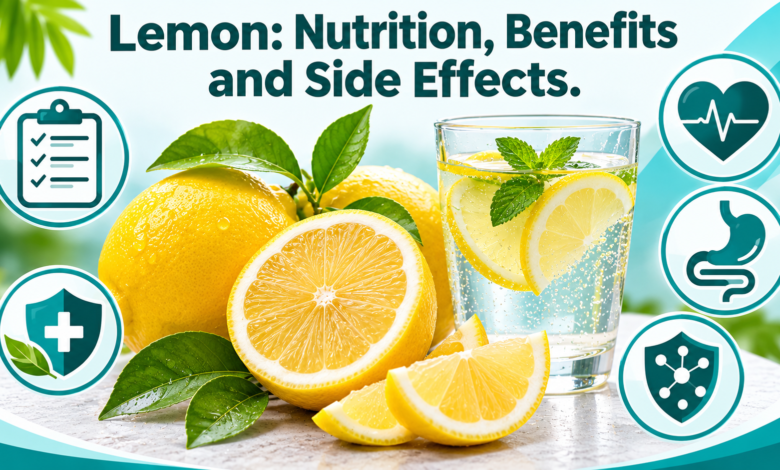
A squeeze of lemon can brighten a meal, and lemon-flavored water may make drinking water more enjoyable. But the claims surrounding this familiar citrus fruit can be confusing. Does it dissolve kidney stones, reverse diabetes, detoxify the liver or burn abdominal fat? The answer depends on the specific outcome, the preparation and the quality of the supporting evidence.
Thank you for reading this post, don't forget to subscribe!Understanding lemon health benefits requires distinguishing whole fruit, strained juice, flavored water and sweetened lemonade. This guide uses US nutrition reference values, American household measurements and federal clinical resources. It explains the difference between a nutrient’s established biological role and a disease-treatment claim, while offering practical ways to enjoy lemon without unnecessary restrictions or unrealistic expectations.
Independent Clinical Review
Review status: Pending independent clinical review. This article draws on the research and public guidance linked below. BBH will add the reviewer’s name, credentials, and review date once an independent review is documented.
Medical Safety & Disclaimer
This article provides general nutrition education, not diagnosis or treatment. Follow individualized guidance for kidney stones, diabetes, reflux, dental erosion and food allergy. Do not replace prescribed medicines or delay medical care because of lemon research.
Quick Answer
Raw peeled lemon provides about 29 calories, 53 mg vitamin C and 2.8 g fiber per 100 g. A typical squeeze of juice provides much smaller amounts. Lemon juice has been studied for kidney stone prevention and short-term glucose responses, but it is not a proven cure for either condition. Frequent acidic exposure can damage tooth enamel.
In This Guide
What you will learn
Nutrition facts • Whole lemon versus juice • Vitamin C and iron absorption • Kidney stone trials • Blood sugar evidence • Lemon water and detox claims • Dental erosion • Reflux and allergy • Practical US shopping • FAQs
1. Lemon nutrition facts: Whole fruit versus juice
The USDA reference for raw lemon without peel includes edible flesh and juice. The separate raw juice record describes a liquid with much less fiber. Comparing these two foods by equal weight helps explain why a beverage made from a small amount of juice cannot be assumed to contain the nutrients of an entire lemon.
| Nutrient | Raw peeled lemon, 100 g | Raw lemon juice, 100 g |
|---|---|---|
| Energy | 29 kcal | 22 kcal |
| Total carbohydrate | 9.32 g | 6.90 g |
| Dietary fiber | 2.8 g | 0.3 g |
| Total sugars | 2.50 g | 2.52 g |
| Protein | 1.10 g | 0.35 g |
| Vitamin C | 53 mg | 38.7 mg |
| Potassium | 138 mg | 103 mg |
Sources: USDA FoodData Central: raw peeled lemon and USDA FoodData Central: raw lemon juice. Values are approximate USDA SR Legacy reference amounts. The actual composition varies with fruit size, variety, storage and processing. US total carbohydrate includes fiber and sugars. One hundred grams of lemon flesh is a reference amount, not a required daily serving.
Which nutrients explain lemon health benefits?
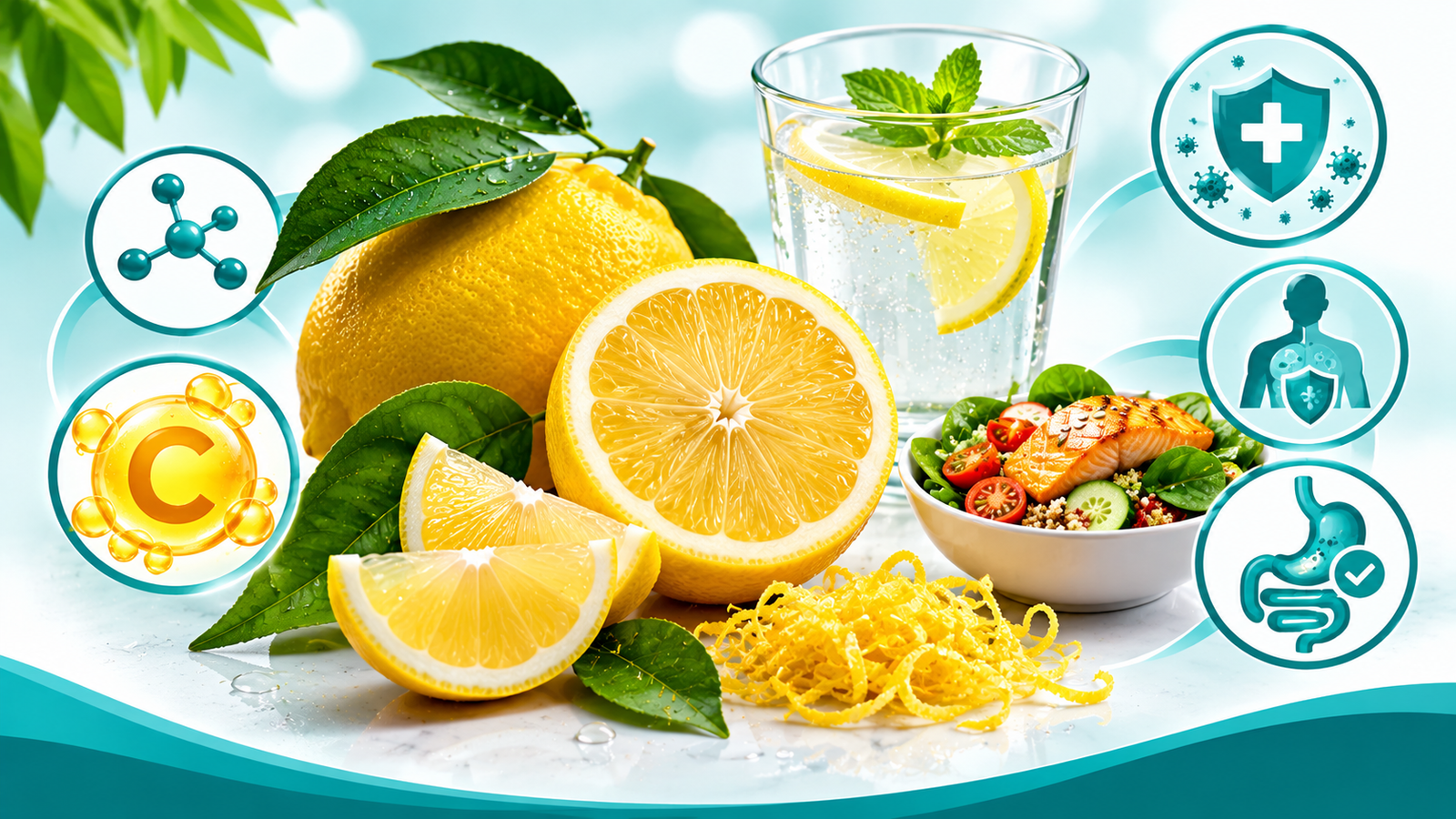
Vitamin C participates in collagen formation, normal immune function and absorption of plant-derived iron. Whole lemon flesh also provides fiber, while both fruit and juice contain organic acids and other plant compounds. The presence of these substances does not establish that lemon prevents infections, removes toxins or treats chronic disease.
The most useful comparison is the amount actually consumed. A person who adds a small squeeze to a glass of water receives far less vitamin C than someone eating 100 g of the fruit. The water itself provides hydration, while lemon contributes flavor and some nutrients. A larger water volume does not increase the amount of vitamin C supplied by a fixed amount of juice.
2. Lemon health benefits and vitamin C: A realistic serving guide
The NIH vitamin C fact sheet describes vitamin C as an essential nutrient. The US adult label Daily Value is 90 mg. Individual recommended intakes vary by age, sex and circumstances, including smoking and pregnancy. The following examples use the USDA juice record and are calculated by weight.
| Raw lemon juice | Vitamin C | Energy |
|---|---|---|
| 15 g (approximately 1 tablespoon) | 5.8 mg | 3.3 kcal |
| 30 g (approximately 2 tablespoons) | 11.6 mg | 6.6 kcal |
| 60 g | 23.2 mg | 13.2 kcal |
| 100 g | 38.7 mg | 22 kcal |
Two tablespoons therefore provide about 13% of the adult label Daily Value, not the approximately 59% supplied by 100 g of whole peeled lemon. These are different portions and preparations. Vitamin C can also decline during storage or heating, so a calculation from a raw juice reference should not be treated as a guaranteed laboratory measurement.
The NIH notes that routine vitamin C supplementation generally does not prevent common colds in the general population, although some research suggests modest effects on duration. That evidence cannot be converted into a claim that lemon water cures respiratory infections. A varied diet containing multiple vitamin C sources is more dependable than relying on a particular morning drink. See Orange: Nutrition, Benefits and Side Effects for another citrus-fruit comparison.
3. Lemon health benefits and plant-based iron absorption
The NIH iron fact sheet explains that vitamin C can enhance absorption of nonheme iron, the form present in many plant foods. Adding lemon juice to lentils, beans or a meal containing iron-fortified grains may be a practical culinary choice. The magnitude of absorption varies with the whole meal, iron status and other dietary components.
For example, a lentil salad with lemon dressing contains both a plant iron source and some vitamin C. This is a more direct nutritional rationale than drinking lemon water hours before eating. However, a small quantity of juice does not guarantee that a person’s iron requirements will be met. Iron deficiency can result from blood loss, inadequate intake, malabsorption or other medical conditions.
Iron Safety
Lemon juice is not a substitute for evaluation or prescribed iron treatment. Persistent fatigue, shortness of breath, weakness or suspected anemia deserve medical assessment. People with iron overload disorders should follow individualized advice.
4. Lemon and kidney stones: What human research shows
Citrate can interfere with calcium crystal formation in urine. That biological mechanism is one reason citrus drinks have been investigated for calcium stone prevention. However, increasing dietary citrate is not the same as demonstrating fewer recurrent stones, and the effect depends on the composition of the beverage, urine chemistry and the type of stone.
The 2022 PROBE randomized kidney stone trial enrolled 203 people with recurrent idiopathic calcium oxalate stones. Participants received a standard prevention diet, with or without fresh lemon juice supplementation. The primary outcome was recurrence over two years. The trial did not demonstrate a statistically conclusive benefit on that primary outcome. An exploratory one-year analysis suggested a possible benefit, but adherence declined and gastrointestinal symptoms were a concern.
A subsequent 2025 AHRQ evidence review of stone recurrence estimated a relative risk of 0.68 with a 95% confidence interval from 0.42 to 1.09 for recurrence or regrowth at two years, grading the evidence as low strength. The interval includes no effect. This is a reason for cautious interpretation rather than a promise that lemon juice prevents stones in every patient.
The NIDDK kidney stone nutrition guidance emphasizes adequate fluid intake, primarily water, and nutrition changes tailored to stone composition. Normal dietary calcium, appropriate sodium intake and other recommendations may be important. The NIDDK kidney stone treatment describes treatment according to stone type and individual circumstances. Potassium citrate, when prescribed, is a medication with a defined dose and monitoring requirements. Lemon juice should not be substituted without professional advice.
Kidney Stone Safety
Do not attempt to dissolve an obstructing stone using lemon juice. Severe flank pain, fever, chills, persistent vomiting or inability to urinate require prompt medical assessment; fever with suspected obstruction can be an emergency.
5. Content gap: Lemon health benefits versus citrate treatment
Popular articles often combine three distinct claims: that lemon contains citric acid, that citrate may affect urine chemistry, and that drinking lemon juice prevents clinical stone recurrence. The first is a composition fact, the second is a physiological question and the third requires reliable outcome trials. They are not interchangeable.
| Claim | Evidence interpretation |
|---|---|
| Lemon contains citric acid | Established food composition. |
| Citrate may inhibit calcium crystal formation | Biological mechanism. |
| Lemon juice reduces recurrent calcium stones | Limited, inconclusive long-term trial evidence. |
| Lemon dissolves all kidney stones | Not established; stone types differ. |
| Lemon replaces prescribed potassium citrate | Not a safe general recommendation. |
A consumer with a stone history should ask which stone was identified, whether a urine evaluation is indicated and what prevention goals apply. People with fluid restrictions should not increase drinking volumes indiscriminately. An individual treatment plan can address fluid, sodium, dietary calcium and medication together rather than focusing on one ingredient.
6. Lemon health benefits and blood sugar: Crossover trials
The 2021 lemon juice and bread crossover trial compared bread consumed with water, tea or a lemon-containing beverage in healthy participants. The lemon condition produced a lower and later average glucose peak than water. The reported reduction in peak concentration was about 30% under the study conditions. It was a short-term response to a specific test meal, not a measurement of long-term HbA1c or diabetes remission.
A related 2022 MRI and glycemic response crossover trial used magnetic resonance imaging to investigate gastric responses and glucose after bread consumption. Such experiments help explore possible mechanisms, but results from healthy volunteers cannot establish that a squeeze of lemon reliably controls glucose in people with diabetes. Meal composition, medication and individual metabolism may change the response.
Lemon juice itself contains carbohydrate, although a small squeeze contributes relatively little. A sweetened lemonade can contain much more carbohydrate from added ingredients. Read the label or calculate the complete recipe. For more practical meal guidance, see Fruit and Diabetes: Portions and Choices and Carb Counting for Diabetes.
Blood Sugar Safety
Do not reduce insulin or other prescribed medicines because of lemon juice research. Lemon water is not a dependable treatment for hypoglycemia. Follow your individualized fast-acting carbohydrate plan.
7. Lemon health benefits and hydration: Separating evidence from detox claims
Adding lemon to water may encourage some people to drink more because they enjoy the flavor. That is a behavioral advantage rather than evidence of a special detoxification pathway. The liver and kidneys perform essential metabolic and excretory functions. A lemon beverage does not replace those functions or treat organ disease.
The NCCIH detoxes and cleanses explains that detox and cleanse programs have limited evidence and can carry risks. Replacing balanced meals with acidic drinks or consuming excessive fluid may cause nutritional or electrolyte problems. A lemon-flavored drink can be part of ordinary hydration without being marketed as a cleanse.
Weight change also depends on overall energy intake and expenditure. Replacing a sweetened drink with unsweetened lemon water may reduce calorie intake, but adding lemon water to an unchanged diet does not establish fat loss. The temperature of the drink and time of day have not been shown to create a reliable fat-burning effect.
8. Lemon side effects: Dental erosion and exposure frequency
The American Dental Association dental erosion identifies repeated exposure to acidic foods and beverages as an important contributor to erosive tooth wear. Erosion is a chemical loss of tooth structure and is distinct from bacterial dental decay. Sweetened lemonade can introduce both acidity and added sugar, but unsweetened lemon water is not necessarily free of erosion risk.
Frequency matters. Sipping an acidic beverage repeatedly over many hours exposes teeth more often than consuming a similar amount with a meal. Dilution can reduce acid concentration but does not establish a universal safe recipe. Salivary flow, existing erosion, reflux and other exposures influence individual risk.
The HRSA oral health and nutrition advises rinsing with plain water after acidic foods or beverages. Avoid holding lemon juice in the mouth or applying it directly to teeth as a whitening remedy. The ADA recommends avoiding immediate brushing after acidic exposure; ask your dentist about appropriate timing and preventive measures if you have sensitivity or erosion.
Dental Safety
Persistent tooth sensitivity, visible wear or pain warrants dental assessment. Lemon juice is not a tooth-whitening treatment. Do not brush with lemon juice or an acidic homemade mixture.
9. Lemon side effects: Reflux, allergy and medical precautions
Acid reflux and digestive sensitivity
The NIDDK GERD nutrition guidance lists citrus among foods that can trigger symptoms for some people with gastroesophageal reflux disease. Individual responses differ, so blanket avoidance is not necessary for everyone. If lemon-containing foods repeatedly worsen symptoms, discuss suitable alternatives or portion changes with a clinician.
Persistent reflux, swallowing difficulty, gastrointestinal bleeding or unexplained weight loss requires assessment. New or severe chest pain should not be assumed to be reflux; seek emergency care when symptoms suggest a serious cause.
Food allergy and concentrated products
Citrus allergy is possible. Stop consuming a suspected trigger and seek assessment. Breathing difficulty, throat swelling or faintness can indicate a severe allergic reaction. Use prescribed epinephrine if indicated and call 911. Ordinary food use does not establish that concentrated lemon essential oils or supplements are safe to ingest. Follow product-specific instructions and medical guidance.
Medical Safety
Use lemon as food rather than as a replacement for medication. Severe allergic symptoms, serious chest pain or suspected complications of kidney stones require appropriate urgent care.
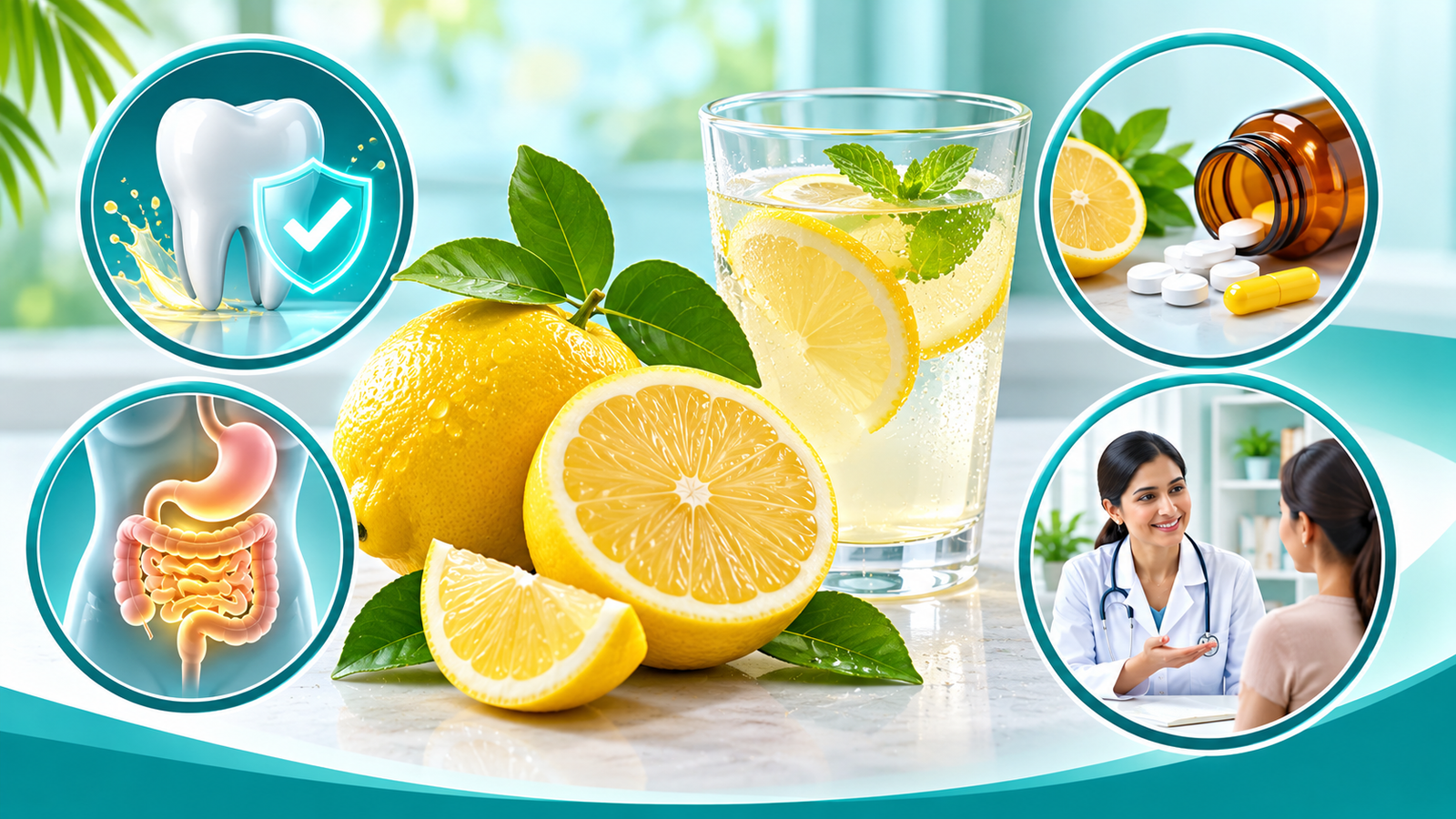
10. How to enjoy lemon health benefits in everyday US meals
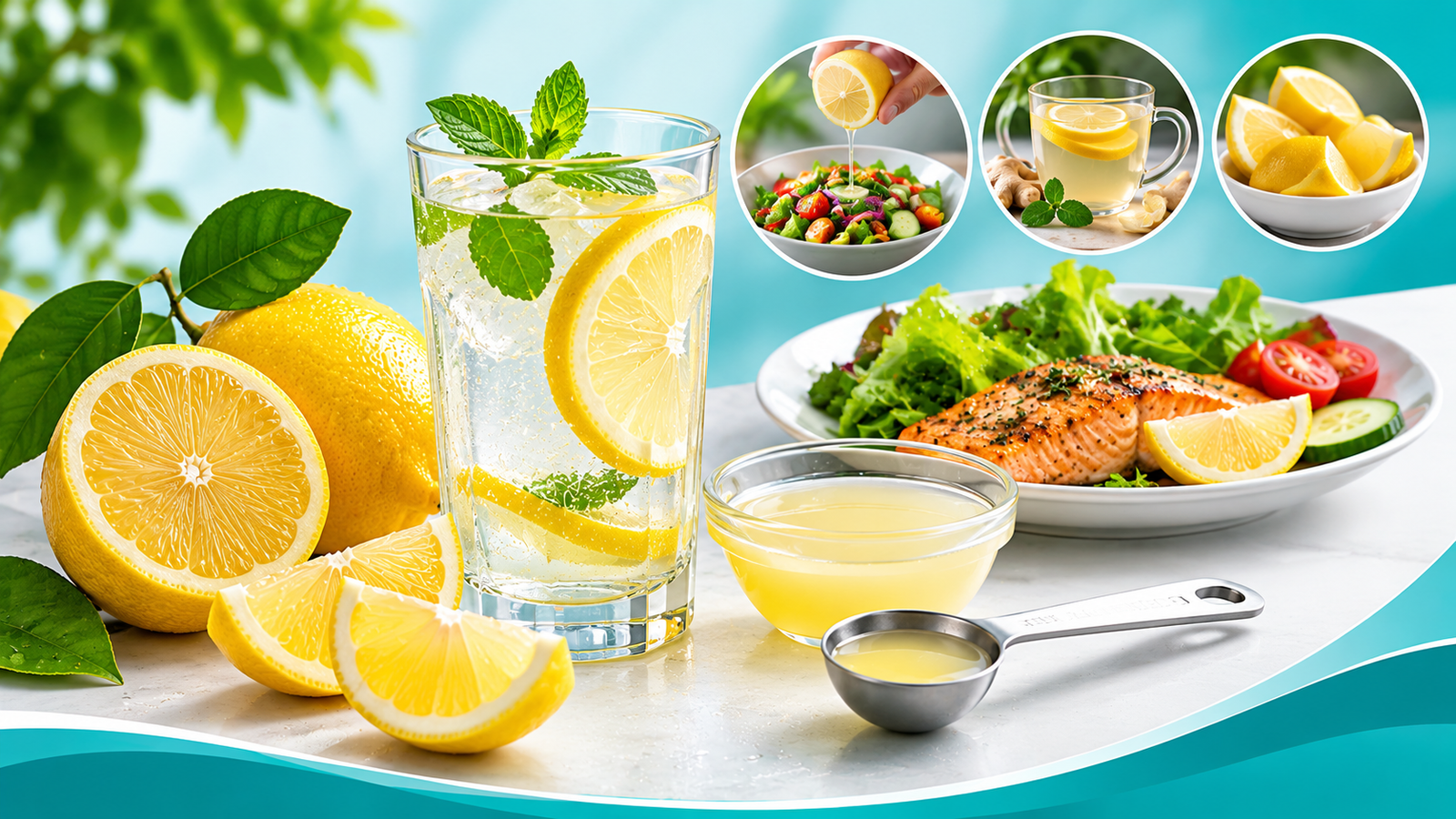
Fresh lemon juice can flavor vegetables, beans, fish or salad dressings. Zest adds aroma, but its composition differs from the peeled fruit reference. Wash the fruit under running water before cutting or zesting, following FDA produce safety. Refrigerate cut fruit and freshly prepared beverages as appropriate.
Compare bottled juice, lemonade and flavored drinks using the FDA Nutrition Facts guide. A hypothetical beverage with 20 g added sugar per serving supplies that amount in addition to any naturally occurring sugar; the added sugar is already included within the total sugar and carbohydrate figures. Check the number of servings in the bottle.
A varied eating pattern matters more than a single citrus ingredient. See Mediterranean Diet and Type 2 Diabetes for broader dietary context and Coconut: Nutrition, Benefits and Side Effects for another example of how different preparations of a fruit have distinct nutritional properties.
11. Frequently asked questions
Is lemon water good every day?
It can be an ordinary beverage if tolerated, but consider dental exposure and individual reflux or fluid restrictions.
Does lemon juice prevent kidney stones?
Evidence is limited and depends on stone type. Follow an individualized prevention plan.
Can lemon lower blood sugar?
Short-term meal studies do not establish diabetes treatment. Continue prescribed care.
Is whole lemon better than juice?
Whole flesh supplies more fiber by weight. Juice may be more convenient for cooking; compare actual portions.
Does lemon water detoxify the body?
No convincing clinical evidence establishes a special detoxification benefit.
Conclusion
Lemons provide vitamin C and useful flavor, while their acidity and the amount consumed matter. Human studies of kidney stone recurrence and short-term glucose responses have important limitations. Choose a suitable preparation, protect dental health, read beverage labels and seek medical care when symptoms require it.
BBH Key Takeaway
Enjoy lemon as a food ingredient or beverage flavoring, not as a cure. Compare actual portions and evaluate clinical claims according to the outcome studied.
Scientific references
USDA FoodData Central: raw peeled lemon • USDA FoodData Central: raw lemon juice • NIH vitamin C fact sheet • NIH iron fact sheet • 2022 PROBE randomized kidney stone trial • 2025 AHRQ evidence review of stone recurrence • NIDDK kidney stone nutrition guidance • NIDDK kidney stone treatment • 2021 lemon juice and bread crossover trial • 2022 MRI and glycemic response crossover trial • American Dental Association dental erosion • HRSA oral health and nutrition • NIDDK GERD nutrition guidance • NCCIH detoxes and cleanses • FDA Nutrition Facts guide • FDA produce safety
Related reading on BBH
Explore: Physical Health → Weight, Nutrition & Metabolic Health support page