Grapefruit: Nutrition, Benefits and Side Effects
Grapefruit Health Benefits and Medication Risks


Grapefruit is a refreshing citrus fruit that many Americans enjoy at breakfast. Its vitamin C, water and modest energy content make it a useful food for some people. Yet a person taking a particular prescription medicine may receive very different advice from someone who takes no interacting medicines. A nutritious food is not automatically a safe food for every medical situation.
Thank you for reading this post, don't forget to subscribe!Understanding grapefruit health benefits means considering both the nutritional value and the possibility of food–drug interactions. This US-focused guide explains the evidence behind vitamin C, weight management, blood sugar and cardiovascular claims, and distinguishes established nutrient functions from clinical outcomes that have not been proven. It also provides a practical framework for checking medications before making grapefruit a daily habit.
Independent Clinical Review
Review status: Pending independent clinical review. This article draws on the research and public guidance linked below. BBH will add the reviewer’s name, credentials, and review date once an independent review is documented.
Important Medical Safety
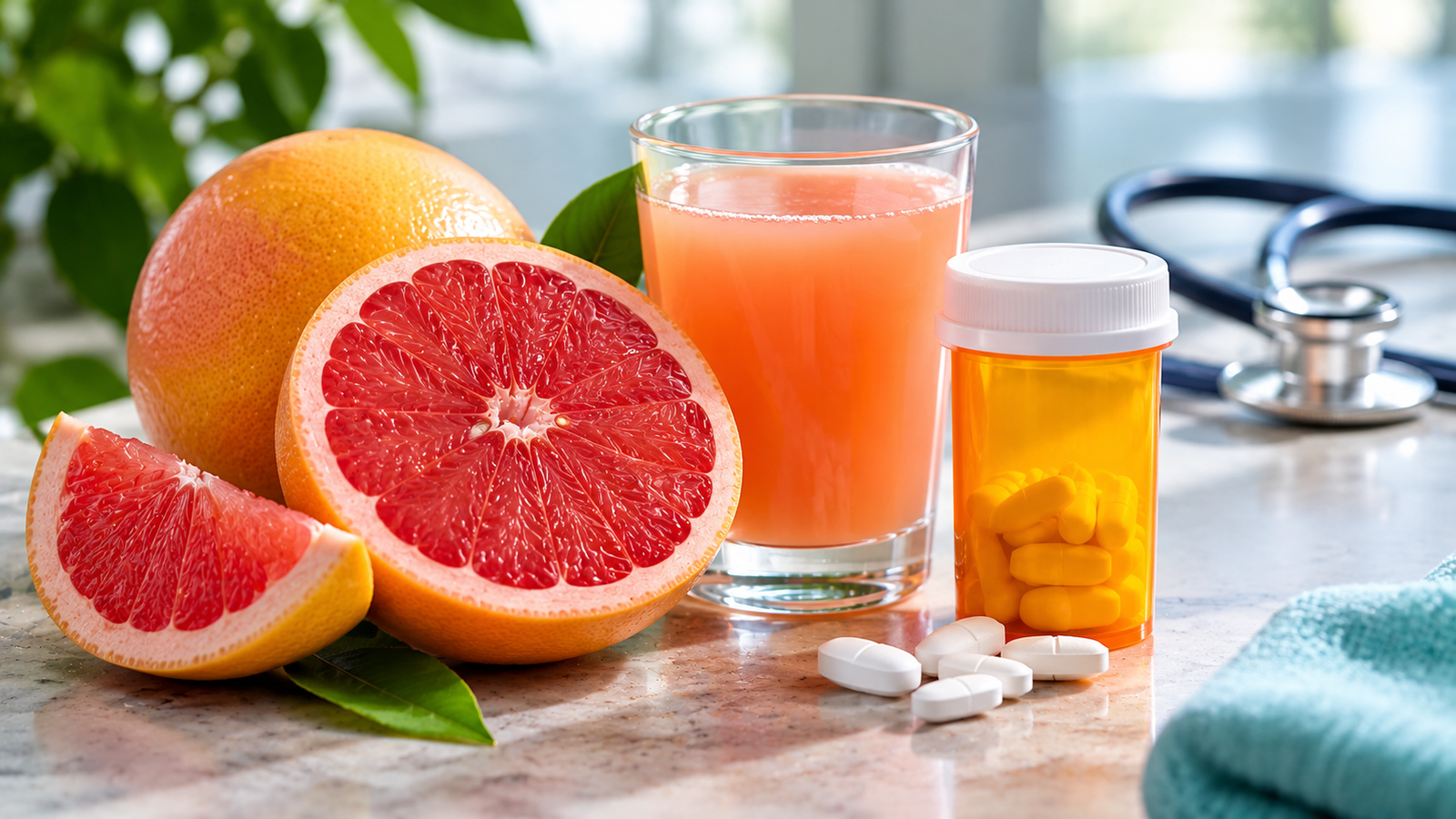
Grapefruit and grapefruit juice interact with certain prescription and over-the-counter medicines. Check your exact medication with a pharmacist or prescriber before eating grapefruit. Never stop, skip or adjust a medicine to accommodate grapefruit. This guide is educational, not individualized medical advice.
Quick Answer
Pink and red grapefruit provide approximately 42 calories, 31.2 mg vitamin C and 1.6 g fiber per 100 g. Whole fruit can contribute to a varied diet when medically appropriate. Research does not establish grapefruit as a reliable weight-loss treatment. Its drug interactions are clinically important and can either increase drug exposure or decrease absorption, depending on the medicine.
In This Guide
What you will learn
Nutrition facts • Vitamin C and fiber • Whole fruit versus juice • Weight-loss evidence • Blood sugar • Heart health • Drug interactions • Medication safety checklist • Digestive and dental precautions • Practical shopping • Frequently asked questions
1. Grapefruit nutrition facts: What a realistic serving provides
USDA reference data for raw pink and red grapefruit describe the edible portion rather than the whole unpeeled fruit. The values below are useful for comparing foods but are not guaranteed measurements of every grapefruit. White grapefruit, pink varieties and different growing regions may have somewhat different nutrient profiles.
| Nutrient | Per 100 g | Per 150 g edible portion |
|---|---|---|
| Energy | 42 kcal | 63 kcal |
| Carbohydrate | 10.66 g | 16.0 g |
| Dietary fiber | 1.6 g | 2.4 g |
| Protein | 0.77 g | 1.2 g |
| Vitamin C | 31.2 mg | 46.8 mg |
| Potassium | 135 mg | 203 mg |
| Vitamin A | 58 mcg RAE | 87 mcg RAE |
Source: USDA FoodData Central: raw pink and red grapefruit, SR Legacy 174673. A 150 g portion is an illustrative weighed amount, not a fixed size for half of every grapefruit. About 46.8 mg vitamin C is 52% of the US adult label Daily Value of 90 mg. The Daily Value helps compare products; individual requirements vary.
Which nutrients explain grapefruit health benefits?
Vitamin C is involved in collagen production, normal immune function and nonheme iron absorption. Fiber contributes to normal bowel function and supports dietary adequacy. Water contributes to fluid intake. Pink and red grapefruit also contain carotenoids, including lycopene. These are reasons grapefruit may fit a varied eating pattern, not proof that it treats infections, cancer or cardiovascular disease.
The NIH vitamin C fact sheet describes the established biological roles of vitamin C. The quantity in a serving depends on edible weight and preparation. Grapefruit is not essential for obtaining vitamin C: peppers, strawberries and other suitable fruits can supply the nutrient. For readers who have an interaction warning, selecting a medically appropriate alternative can preserve nutritional variety without introducing an avoidable drug risk.
2. Grapefruit health benefits: Whole fruit versus juice
Whole grapefruit contains intact fruit segments and fiber. Strained juice removes much of the structural fiber and is easier to consume rapidly. A large glass of juice may represent more fruit than a person would usually eat at one sitting. Commercial juice drinks may also contain added sugar, water or other fruit juices, so the name alone does not establish nutritional composition.
Read the actual Nutrition Facts panel, checking the serving size, total carbohydrate, added sugars and dietary fiber. A bottle containing more than one serving requires calculating the total amount consumed. The FDA Nutrition Facts guide explains US label conventions. Added sugars are included within total sugars, and both are included within total carbohydrate; they should not be counted twice.
The safety distinction is particularly important here: whole grapefruit can interact with medicines as well as juice. Switching from juice to fruit does not reliably remove the interaction. Neither a no-added-sugar label nor an organic label establishes medication compatibility. See Lemon: Nutrition, Benefits and Side Effects and Orange: Nutrition, Benefits and Side Effects for comparisons with other citrus foods, but check individual medicine instructions before selecting an alternative.

3. Grapefruit health benefits and weight management: What trials show
Grapefruit has long been associated with restrictive diets and promises of rapid fat loss. Its relatively low energy density can make it an appealing replacement for some higher-calorie foods. However, a substitution that reduces overall calorie intake is different from demonstrating that grapefruit independently accelerates fat metabolism.
The 2017 systematic review of grapefruit randomized clinical trials examined randomized trials of grapefruit and outcomes such as body weight and cardiovascular risk markers. The available studies were limited in number and duration. The evidence does not support a dependable grapefruit-based weight-loss prescription or establish an effective amount that produces sustained results.
The 2012 randomized trial in overweight adults studied 74 overweight adults. The researchers reported some improvements from baseline in the grapefruit group, but the trial did not establish a clear between-group advantage for weight, blood pressure or lipid outcomes. A change from baseline can reflect multiple factors, including changes in behavior during a study. Comparing randomized groups is more informative for attributing an effect to the food itself.
Weight Management Takeaway
If grapefruit is safe with your medicines, it can be one component of a balanced diet. Avoid restrictive grapefruit diets, meal replacement claims and promises of targeted abdominal fat loss. No particular fruit is required for healthy weight management.
4. Grapefruit health benefits and blood sugar
Raw pink or red grapefruit contains about 10.7 g total carbohydrate per 100 g. A 150 g edible portion supplies approximately 16 g. These numbers describe the food, not the glucose rise that a particular person will experience. Glucose responses depend on medication, portion, meal composition, activity and individual physiology.
Whole fruit may be easier to portion than a sweetened beverage. If a person has an individualized carbohydrate goal, the portion can be weighed or estimated according to their care team’s recommendations. Juice products require checking the actual label rather than applying the whole-fruit nutrition table to the drink.
Grapefruit does not reverse diabetes or replace medication. In people with diabetes who also take medicines for blood pressure, cholesterol or other conditions, the medication safety question may be more consequential than the carbohydrate count. Both issues deserve separate attention. Read Fruit and Diabetes: Portions and Choices and Carb Counting for Diabetes for practical meal-planning education.
Diabetes Safety
Continue prescribed diabetes treatment. If you are experiencing low blood sugar, follow your individualized fast-acting carbohydrate plan. Do not delay treatment or rely on grapefruit as a universal rescue food.
5. Grapefruit health benefits and cardiovascular evidence
A diet with varied fruits and vegetables can contribute to nutrient adequacy. Grapefruit supplies some potassium, and the NIH potassium fact sheet explains potassium’s importance for physiological functions. However, a single fruit does not guarantee lower blood pressure, improved cholesterol or prevention of heart attacks.
Clinical trials of grapefruit generally examine intermediate measures such as weight, lipid values or blood pressure rather than long-term cardiovascular events. The limitations of the trials described earlier mean the observed findings cannot justify replacing prescribed treatment. A dietary pattern, appropriate medical care and other health behaviors have greater relevance than a promise attached to one food.
Some people seeking cardiovascular benefits may take statins or calcium channel blockers that interact with grapefruit. This creates a crucial distinction: a food promoted for heart health can be unsuitable with a specific heart-related medication. Ask a pharmacist about your own medicine rather than interpreting nutrition claims as permission to consume grapefruit. See Mediterranean Diet and Type 2 Diabetes for broader dietary-pattern context.
6. Grapefruit drug interactions: Two different mechanisms
The FDA: Grapefruit Juice and Some Drugs Don’t Mix explains that compounds in grapefruit can inhibit intestinal CYP3A4, an enzyme involved in metabolizing some oral medicines. For susceptible drugs, more of an oral dose can reach the bloodstream. The resulting risk depends on the medicine, its therapeutic range and individual factors. Greater exposure can increase the likelihood of adverse effects.
A different mechanism involves inhibition of intestinal uptake transporters. Some medicines may be absorbed less effectively when taken with certain fruit juices. The 2005 randomized fexofenadine crossover study investigated fexofenadine in a small randomized crossover study in healthy volunteers. Its findings illustrate that grapefruit does not always increase drug exposure. The 2010 review of fruit juice uptake-transporter interactions discusses this distinct mechanism and why specific drug and beverage combinations matter.
| Interaction pathway | Potential result | Illustrative drug example |
|---|---|---|
| Intestinal CYP3A4 inhibition | Increased systemic exposure | Simvastatin |
| Reduced uptake transport | Reduced absorption | Fexofenadine |
The table is illustrative, not a comprehensive interaction checker. It does not indicate that every medicine in either drug category behaves the same way. The exact active ingredient, formulation and prescribing information determine the relevant precautions. Fexofenadine labeling can also restrict taking the medicine with other fruit juices.
7. Content gap: Grapefruit health benefits cannot override medication labeling
A useful consumer safety guide should distinguish a drug class from a specific active ingredient. Some statins interact substantially with grapefruit while others have different metabolic pathways. The same variation applies to blood pressure medicines and other categories. A brand name alone may not be sufficient because combination products contain multiple active ingredients.
FDA guidance provides examples from several therapeutic categories. The following list illustrates why readers should check the exact prescription and not assume all drugs in a class are interchangeable.
| Medication category | Examples that may interact | Why review is needed |
|---|---|---|
| Cholesterol management | Simvastatin, atorvastatin | Exposure may increase; magnitude differs by drug. |
| Blood pressure management | Nifedipine | Potentially increased exposure. |
| Anxiety treatment | Buspirone | Potentially increased exposure. |
| Transplant medicines | Cyclosporine | Potentially increased exposure; close monitoring matters. |
| Allergy treatment | Fexofenadine | Absorption may decrease. |
Sources: FDA: Grapefruit Juice and Some Drugs Don’t Mix and Poison Control: Does grapefruit juice interact with medications?. This list is not exhaustive and does not define a safe amount. Do not assume an unlisted medicine is compatible. Use the actual prescription label, patient leaflet and professional advice.
Does taking grapefruit several hours apart prevent interactions?
Not necessarily. The Bailey et al., CMAJ 2013: Grapefruit–medication interactions discusses the mechanism-based inactivation of intestinal CYP3A4. The effect can persist beyond the period when grapefruit is physically present in the digestive tract. Moving the fruit to breakfast and taking an interacting medicine at night may therefore fail to prevent a clinically relevant interaction. The timing requirements for transporter-related interactions differ and should follow the individual product label.
The FDA also identifies certain related citrus fruits, including Seville oranges, pomelos and tangelos, as potentially problematic with susceptible medicines. Ordinary sweet oranges should not be treated as an automatic replacement for every medication, because some juice-uptake interactions involve orange or apple juice as well. Check the medicine-specific instructions.
Medication Safety Checklist
Identify every prescription, nonprescription drug and supplement. Check the active ingredients and current patient information. Ask the pharmacist whether grapefruit flesh, juice, mixed beverages or related citrus should be avoided. Follow the advice for your exact medicine. Do not invent your own spacing schedule or change your dose.
8. What to do after an accidental grapefruit–medicine combination
An accidental combination does not necessarily cause harm, but its significance cannot be determined from the name of the fruit alone. Record what was consumed, the medicine name, the usual dose, and when each was taken. Contact your pharmacist, prescriber or US Poison Control at 1-800-222-1222 for situation-specific guidance. Do not take extra doses or discontinue necessary treatment unless a qualified clinician directs you to do so.
Severe symptoms such as collapse, breathing difficulty, marked confusion or severe chest pain require emergency care; call 911 in the United States. Other concerning symptoms depend on the medicine. For example, unexpected muscle pain or weakness while taking a statin warrants medical advice. Do not use symptoms alone to decide that a combination is safe.
For current US labeling, DailyMed US medication labeling database provides access to drug information submitted to the FDA. A pharmacist can interpret warnings in the context of your exact prescription, other medicines, kidney and liver function and health history.
9. Grapefruit side effects: Reflux, teeth and dietary restrictions
Digestive sensitivity and dental enamel
Citrus acidity may worsen reflux symptoms for some people. The NIDDK GERD nutrition guidance describes citrus as a possible trigger, rather than a food everyone with reflux must avoid. Consider your own symptom pattern and medical recommendations. Repeated exposure to acidic beverages may also contribute to dental erosion, as described by American Dental Association: dental erosion. Drinking water after acidic foods and avoiding prolonged sipping may help reduce exposure.
Kidney-related restrictions and allergy
People with kidney disease may have individualized potassium or fluid targets. Grapefruit should be assessed within those targets and alongside medication considerations. The fruit is neither a kidney treatment nor a universally forbidden food. Citrus allergy is possible; suspected reactions should be evaluated. Use prescribed epinephrine if indicated and call 911 for severe allergic symptoms.
10. Practical ways to enjoy grapefruit health benefits safely
First establish medication compatibility. If grapefruit is appropriate, choose an edible portion that fits your eating plan. Serve it with a balanced breakfast or enjoy fruit segments as part of a snack. Avoid assuming that added sugar is necessary to balance the tart flavor. If a clinician advises against grapefruit, select a suitable alternative rather than trying to neutralize the interaction through preparation.
Wash fresh produce under running water before cutting, including fruit whose peel will be discarded. Follow FDA selecting and serving produce safely for food handling guidance. Read the ingredient list on mixed citrus drinks, flavored waters and fruit salads, since grapefruit may be present even when it is not the prominent flavor on the package.

11. Frequently asked questions
Can I eat grapefruit every day?
It may be suitable for some people, but daily intake is not required. Check medicine compatibility and individualized dietary needs.
Does grapefruit burn fat?
Clinical research does not establish a reliable independent fat-burning effect.
Can I eat grapefruit while taking a statin?
It depends on the exact statin. Ask your pharmacist or prescriber and follow the medication label.
Is grapefruit juice safer than whole grapefruit with medication?
No. Both can produce clinically important interactions.
Can grapefruit lower blood sugar?
It can fit some meal plans but is not a proven diabetes treatment.
Does cooking grapefruit eliminate medication risks?
Do not assume preparation makes it safe. Follow the specific medication guidance.
Conclusion
Grapefruit provides vitamin C, water, fiber and other nutrients, but its interaction with certain medicines makes individualized safety essential. Weight management claims remain limited by the available clinical evidence. Choose a varied diet, compare realistic portions and seek professional advice about medication compatibility before adding grapefruit to a daily routine.
BBH Key Takeaway
Nutrition and medication safety are separate questions. When grapefruit is incompatible with a medicine, choose an appropriate alternative and continue your prescribed care.
Scientific references
USDA FoodData Central: raw pink and red grapefruit, SR Legacy 174673 • FDA: Grapefruit Juice and Some Drugs Don’t Mix • Bailey et al., CMAJ 2013: Grapefruit–medication interactions • Poison Control: Does grapefruit juice interact with medications? • 2017 systematic review of grapefruit randomized clinical trials • 2012 randomized trial in overweight adults • 2005 randomized fexofenadine crossover study • 2010 review of fruit juice uptake-transporter interactions • NIH vitamin C fact sheet • NIH potassium fact sheet • NIDDK GERD nutrition guidance • American Dental Association: dental erosion • FDA Nutrition Facts guide • DailyMed US medication labeling database • FDA selecting and serving produce safely
Related reading on BBH
Explore: Physical Health → Weight, Nutrition & Metabolic Health support page