Fasting Blood Sugar: Levels and Results
Normal Fasting Blood Sugar: What It Means


BBH Physical Health · Diabetes & Blood Sugar · Research-based health education
Thank you for reading this post, don't forget to subscribe!You wake early, visit a laboratory before breakfast and receive a report that says fasting glucose: 108 mg/dL. Is that normal? Does it mean you have diabetes? Should you change what you eat that day? The meaning depends on what was measured, how long you fasted, the unit on the report and whether the reading was confirmed.
Understanding fasting blood sugar levels can help you read a laboratory result without confusing screening with a diagnosis. For nonpregnant adults, the American Diabetes Association (ADA) classifies fasting plasma glucose below 100 mg/dL as normal, 100–125 mg/dL as prediabetes, and 126 mg/dL or higher as meeting a diabetes threshold. A qualifying result usually needs confirmation when high glucose is not otherwise unequivocal.
This guide covers test preparation, charts in mg/dL and mmol/L, readings near cutoff values, why results vary, how fasting glucose compares with HbA1c and OGTT, and what to ask a healthcare professional next. It also explains an important point that online charts often miss: diagnostic thresholds are different from treatment goals.
1. Fasting Blood Sugar Levels Chart: Normal to Diabetes
This fasting plasma glucose chart uses the ADA 2026 criteria for nonpregnant adults. The results are from a laboratory blood sample collected after at least eight hours without calorie intake. They should not be applied to an ordinary reading taken after eating.
| Result category | mg/dL | mmol/L (approx.) | Interpretation |
|---|---|---|---|
| Normal | Below 100 | Below 5.6 | Does not by itself establish diabetes or exclude future risk |
| Prediabetes (impaired fasting glucose) | 100–125 | 5.6–6.9 | Above the ADA normal range but below its diabetes threshold |
| Diabetes threshold | 126 or higher | 7.0 or higher | Usually requires diagnostic confirmation without unequivocal hyperglycemia |
These categories describe a particular test, not a person’s identity or a long-term forecast. A value of 125 and a value of 126 mg/dL lie on opposite sides of a diagnostic threshold, but the tiny numerical difference does not mean a sudden change in biology occurred overnight.
Clinical interpretation considers previous results, risk factors, symptoms and laboratory accuracy. A clinician may repeat a fasting test or use another qualifying test such as HbA1c. If you have symptoms of significant hyperglycemia or serious illness, a random plasma glucose test and urgent evaluation may be more appropriate than waiting for a fasting appointment.
2. What Does Fasting Mean Before a Blood Sugar Test?
For the standard fasting plasma glucose test, fasting means consuming no calories for at least eight hours before the blood draw. Plain water is generally permitted and can help make the visit more comfortable. The fasting requirement is not the same as avoiding only sugar; a breakfast containing protein or fat still supplies calories.
A morning appointment is common because you can fast overnight rather than skipping food through a busy day. The laboratory may give additional instructions when other tests are ordered at the same visit. Follow those directions, especially if the requested fasting period differs.
Fasting Blood Sugar Levels: Can You Drink Tea or Coffee?
The simplest preparation is plain water only unless the testing center specifically permits something else. Milk, sugar, sweeteners in calorie-containing drinks, juice and snacks can compromise the intended fasting conditions. Even unsweetened coffee may not be accepted under the laboratory’s instructions, so ask before the appointment rather than guessing.
Do not fast longer than prescribed in hopes of obtaining a better number. Prolonged food restriction can affect comfort and safety, particularly for people with diabetes who use medications capable of causing hypoglycemia.
3. How to Prepare for Fasting Blood Sugar Testing
The most useful preparation is consistency, not an attempt to influence the result. Keep your ordinary eating pattern in the days before a routine fasting test unless your clinician gives other instructions. Deliberately starving yourself, skipping medicines without advice or exercising excessively can make the result less representative and may be unsafe.
- Confirm whether the ordered test is fasting plasma glucose, HbA1c or a combination.
- Ask the laboratory exactly when to stop eating and whether plain water is allowed.
- Discuss morning medication and insulin instructions with the prescriber before fasting.
- Tell the clinician about an acute infection, recent illness, steroids or other medicines that may affect glucose.
- If you feel shaky, sweaty, dizzy or confused during the fast, seek assistance instead of pushing through symptoms.
- Bring prior laboratory results if you have them, so a trend can be assessed.
People taking insulin or sulfonylurea medications may need individualized instructions because fasting can increase the risk of low glucose. Pregnancy, childhood and complex medical conditions also require special planning. Never stop insulin or another prescribed medicine based only on an article.
4. What Do Specific Fasting Blood Sugar Results Mean?
A single result is easier to understand through examples. A fasting value of 92 mg/dL is approximately 5.1 mmol/L and falls below the ADA prediabetes cutoff. A value of 108 mg/dL is about 6.0 mmol/L and belongs in the ADA prediabetes range. A value of 132 mg/dL is approximately 7.3 mmol/L and meets a diabetes threshold, generally requiring confirmation.
| Example fasting result | Approx. mmol/L | ADA category |
|---|---|---|
| 90 mg/dL | 5.0 | Normal |
| 99 mg/dL | 5.5 | Normal |
| 100 mg/dL | 5.6 | Prediabetes threshold begins |
| 110 mg/dL | 6.1 | Prediabetes |
| 125 mg/dL | 6.9 | Prediabetes |
| 126 mg/dL | 7.0 | Diabetes threshold |
| 140 mg/dL | 7.8 | Above diabetes threshold |
The numerical examples are not predictions about individual health. A fasting 110 mg/dL result does not mean that someone will inevitably develop type 2 diabetes. Nor does a fasting 95 mg/dL result guarantee that an oral glucose tolerance test or HbA1c would be normal in every circumstance.
When evaluating fasting blood sugar levels, ask whether the sample was genuinely fasting, whether it came from a diagnostic laboratory and whether the measurement was affected by illness or medication. This is more informative than interpreting a number without its circumstances.
A review of fasting blood sugar levels should always include the test type, fasting duration, units and clinical context.
5. Why Can Fasting Glucose Rise Overnight?
Glucose regulation continues while you sleep. The liver releases glucose to help supply the body, and hormones influence how much appears in circulation. In people with insulin resistance or insufficient insulin action, the normal overnight balance may be disturbed, leaving glucose elevated in the morning.
Dawn phenomenon and morning glucose
Early-morning hormones can increase glucose availability before waking. This is sometimes called the dawn phenomenon and may contribute to higher morning readings in people living with diabetes. However, one high fasting result cannot establish the mechanism.
Sleep disruption, medication timing, an evening meal, late snacks, illness, stress or other factors may also influence morning glucose. An overnight glucose pattern or continuous glucose monitoring data may be useful for someone already receiving diabetes treatment, but interpretation should follow their care plan.
A high morning reading does not automatically justify reducing food drastically or increasing medicine. Changes need to be based on trends, treatment type and safety, especially where nighttime hypoglycemia is possible.
6. Why Fasting Glucose Results Can Change Between Days
A laboratory measurement is a snapshot. Glucose changes over time with meals, activity, sleep, infection, stress hormones and medicines. Even under similar conditions, ordinary biological and laboratory variation can produce somewhat different readings from one day to another.
NIDDK emphasizes that glucose tests can be less consistent than many people assume, particularly near diagnostic cutoffs. That is one reason professional guidelines require confirming diabetes in most circumstances when clear symptoms or a hyperglycemic crisis are absent.
What if HbA1c and fasting glucose disagree?
Discordance can occur because fasting plasma glucose reflects one moment, while HbA1c describes longer-term glucose exposure. Some conditions that alter red-blood-cell lifespan or hemoglobin also make HbA1c less reliable. The clinician may repeat the test above the diagnostic cutoff or select another appropriate test.
A mildly elevated fasting value and a normal HbA1c do not necessarily mean one laboratory made a mistake. They measure different aspects of glucose regulation. Similarly, a high HbA1c can occur when a single fasting reading is not very elevated because glucose rises at other times.
A review of fasting blood sugar levels should always include the test type, fasting duration, units and clinical context.
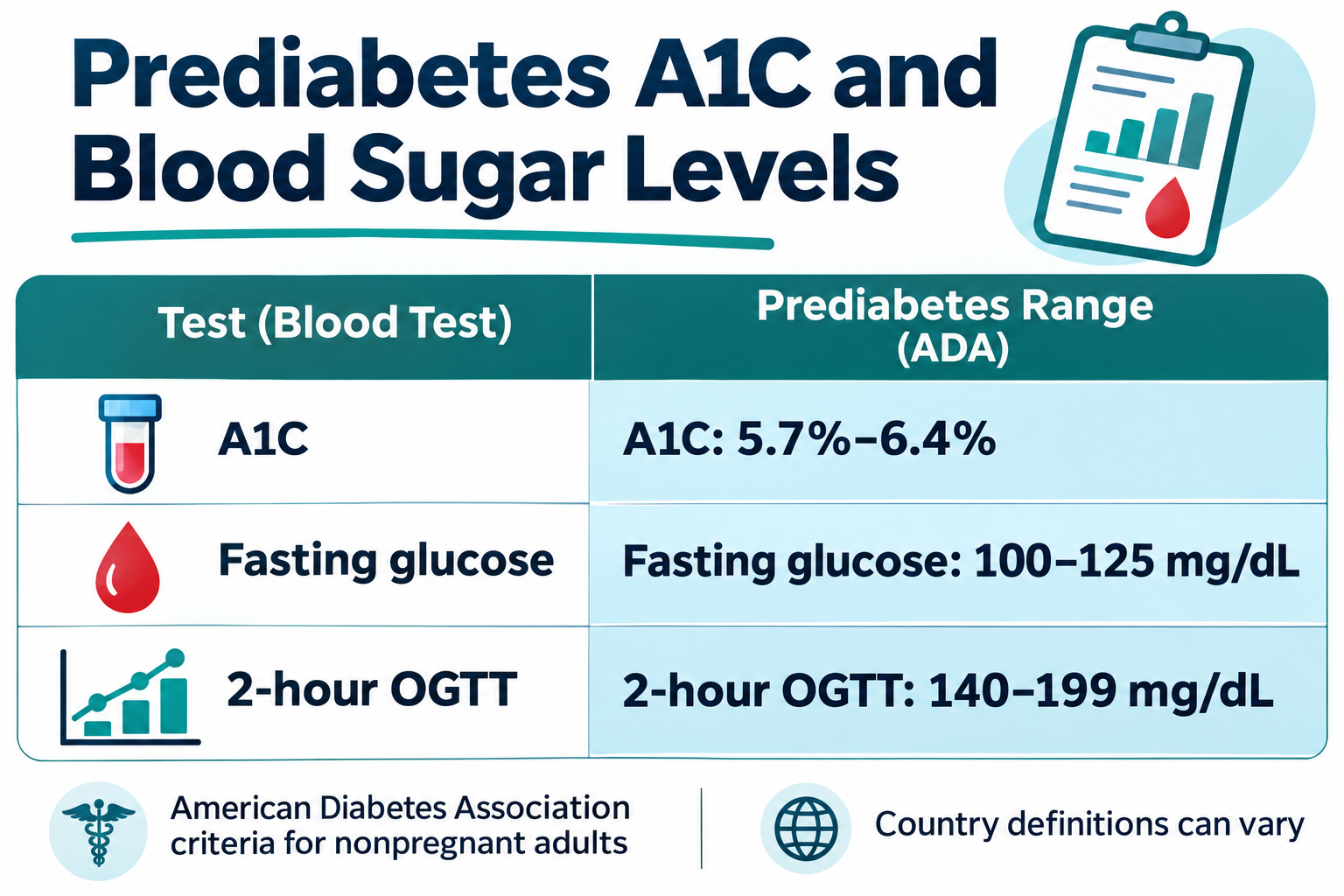
7. Fasting Blood Sugar vs HbA1c and OGTT
The fasting plasma glucose test looks at circulating glucose after an overnight fast. HbA1c estimates longer-term glucose exposure without requiring fasting. A two-hour oral glucose tolerance test evaluates the response to a standardized 75-gram glucose load, with its own preparation and thresholds.
| Test | Prediabetes range | Diabetes threshold |
|---|---|---|
| Fasting plasma glucose | 100–125 mg/dL | 126 mg/dL or higher |
| HbA1c | 5.7–6.4% | 6.5% or higher |
| 2-hour 75-g OGTT | 140–199 mg/dL | 200 mg/dL or higher |
Neither an HbA1c percentage nor an OGTT value should be read as a fasting glucose value. Each test has strengths and limitations. Sometimes an OGTT finds glucose intolerance that fasting plasma glucose does not identify. These differences matter in people at increased risk or with conflicting findings.
Learn about each method in Diabetes Diagnosis: Which Tests Are Used? and review the complementary Blood Sugar Levels Chart: Tests and Units for unit conversion examples.
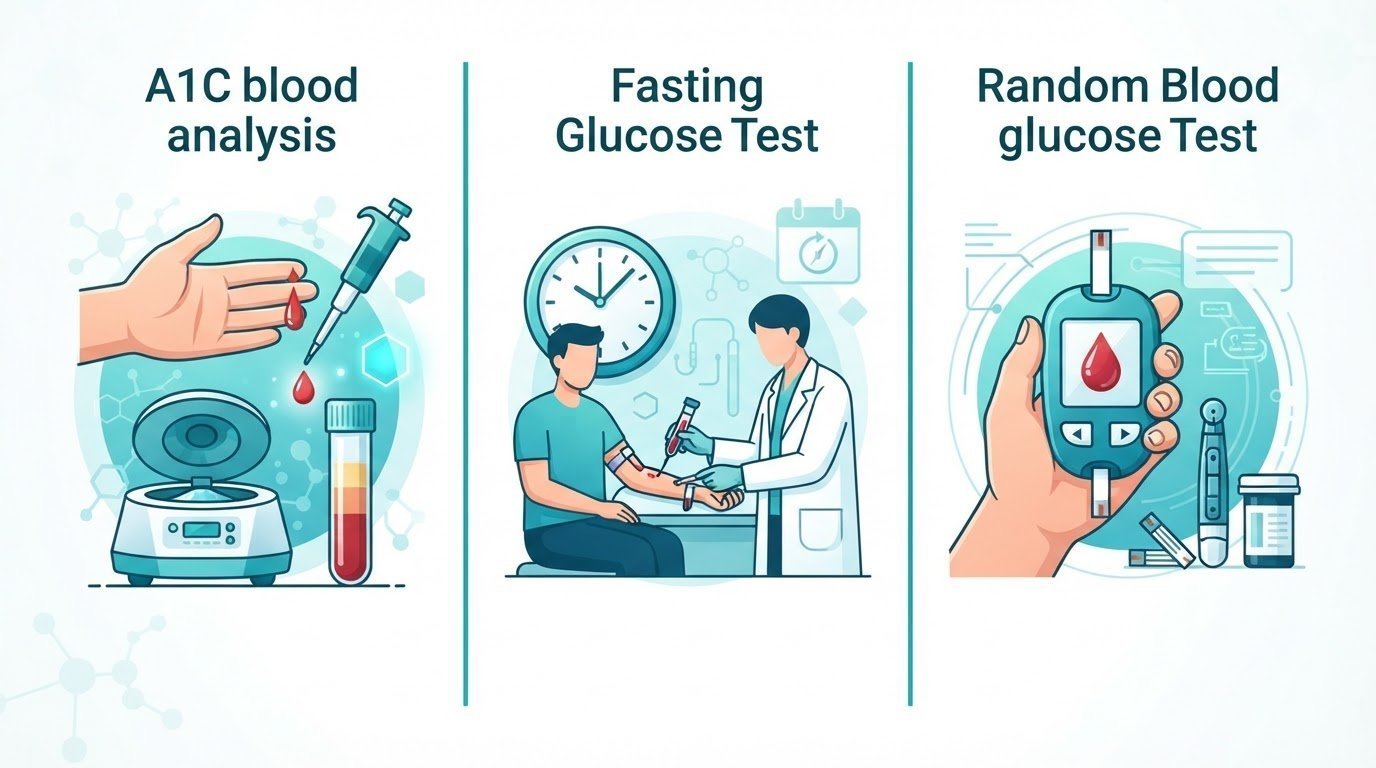
8. Fasting Readings Are Not the Same as After-Meal Results
A home blood sugar reading taken after breakfast or lunch is not a fasting plasma glucose measurement. A person might see 140 mg/dL two hours after eating and mistakenly apply the fasting diabetes cutoff of 126 mg/dL. That comparison would be inappropriate.
The same distinction applies to random plasma glucose and the two-hour 75-g OGTT. A standard OGTT uses a measured glucose drink and a controlled test sequence; it should not be confused with checking two hours after a homemade meal.
If you have diagnosed diabetes, your clinician may recommend before-meal and postmeal monitoring. If you do not have a diagnosis, formal screening typically uses laboratory tests with established interpretation rules rather than selected meter readings.
A useful record always includes the timing of the last food, the test type and units. Without those details, two numbers that appear identical may represent quite different clinical situations.
A review of fasting blood sugar levels should always include the test type, fasting duration, units and clinical context.
9. Normal Fasting Results vs Diabetes Management Targets
One frequent source of confusion is seeing two different ranges online. The ADA normal diagnostic fasting range is below 100 mg/dL. For many nonpregnant adults who already have diabetes, a common before-meal management target is 80–130 mg/dL. These are not contradictory recommendations.
The management target is designed around treatment outcomes, balancing elevated glucose risks with low-glucose safety. It should be individualized for age, pregnancy, medicines, other illnesses and a person’s risk of severe hypoglycemia.
A person with established diabetes and a prebreakfast meter reading of 125 mg/dL may be within their prescribed management target even though 125 mg/dL lies in the prediabetes diagnostic range for someone undergoing fasting laboratory screening. The meaning comes from the purpose of measurement.
Do not treat a published reference chart as an insulin dosing scale. If your clinician has assigned different individualized goals, follow that plan and discuss persistent trends rather than making abrupt changes.
10. Can Fasting Blood Sugar Be Too Low?
Yes. Low glucose is especially important for people taking insulin or medicines that can cause hypoglycemia. A common alert level is below 70 mg/dL (3.9 mmol/L); below 54 mg/dL (3.0 mmol/L) is considered clinically significant hypoglycemia in diabetes care.
Symptoms may include trembling, sweating, hunger, palpitations, dizziness, headache, confusion or unexpected behavior. Some people have impaired awareness of low glucose, so symptoms cannot always be relied on.
People already receiving diabetes treatment should follow their prescribed low-glucose plan. If a person becomes unconscious, has a seizure or cannot swallow safely, emergency help is needed and food or fluids should not be given by mouth. If prescribed, rescue glucagon may be used according to instructions.
11. What to Do After an Abnormal Fasting Result
First, check that the result came from the appropriate laboratory test and that you fasted as instructed. Keep a copy of the report and review it with a qualified clinician. Depending on symptoms and risk factors, they may repeat fasting glucose, arrange HbA1c or consider an OGTT.
A prediabetes-range result is an opportunity to discuss risk reduction, not a definitive prediction of future diabetes. Clinicians may recommend individualized changes to diet quality, physical activity, weight management when appropriate, sleep and regular follow-up. The best plan takes existing health conditions and medications into account.
A result at or above the diabetes threshold should be evaluated promptly, with appropriate diagnostic confirmation. If severe hyperglycemia symptoms develop—such as intense thirst, high-volume urination, unintended weight loss or worsening fatigue—tell the healthcare professional rather than waiting for a routine annual check.
Urgent symptoms including repeated vomiting, deep or rapid breathing, severe dehydration or confusion require emergency assessment. Diabetic ketoacidosis can occasionally occur without extremely high glucose, so emergency symptoms should not be dismissed based on one meter result.
Related reading: Can You Have Diabetes Without Symptoms? and Diabetic Ketoacidosis: Warning Signs.

12. FAQs About Fasting Blood Sugar Levels
Is fasting glucose of 100 mg/dL normal?
Under ADA criteria, 100 mg/dL begins the prediabetes category for properly collected fasting plasma glucose; values below 100 mg/dL are considered normal.
What does a fasting result of 110 mg/dL mean?
A laboratory fasting glucose of 110 mg/dL is approximately 6.1 mmol/L and falls within the ADA prediabetes range. It does not by itself establish diabetes.
Is fasting blood sugar of 126 mg/dL diabetes?
It meets the ADA diagnostic threshold. Confirmation is generally required when high glucose is not unequivocal, and a clinician should interpret the result.
Can I drink water before fasting glucose testing?
Plain water is generally permitted during an eight-hour fast. Follow the specific instructions from the laboratory and medical team.
Does fasting glucose measure the previous three months?
No. It measures glucose at one point in time after fasting. HbA1c provides an estimate of longer-term glucose exposure.
Can stress or illness raise fasting glucose?
Yes. Illness, stress hormones, medicines and disrupted sleep may affect glucose. The result should be interpreted in clinical context.
Why is my fasting glucose normal but HbA1c elevated?
The tests reflect different aspects of glucose exposure. A clinician may repeat testing and review factors affecting HbA1c accuracy.
Is a home fasting meter result enough to diagnose diabetes?
No. Home glucose meters are useful for monitoring but are not normally used alone for formal diabetes diagnosis.
Does a high fasting result mean I need insulin?
Not necessarily. Diagnosis, diabetes classification, treatment choice and medication decisions require individualized clinical assessment.
Can fasting too long produce a better diabetes test result?
Deliberately extending fasting is not a safe or reliable approach. Follow the recommended fasting duration and discuss any concerns with the healthcare team.
Conclusion: Interpret Fasting Glucose With Care
Understanding fasting blood sugar levels begins with the correct test, fasting conditions and units. Values below 100 mg/dL, 100–125 mg/dL and 126 mg/dL or higher have different diagnostic meanings under ADA criteria for nonpregnant adults, but no one result tells the entire story.
For an abnormal result, ask about confirmation, related tests and a realistic follow-up plan. For people already living with diabetes, use individualized treatment targets rather than diagnostic cutoffs. Clear interpretation and timely care are more useful than repeatedly checking numbers without understanding their context.
Scientific References