Random Blood Sugar Test: Results Explained
Random Blood Sugar: Normal and High Results

BBH Physical Health · Diabetes & Blood Sugar · US-first education with UK, Canada and Australia context
Thank you for reading this post, don't forget to subscribe!A patient may have blood drawn in the afternoon after lunch and receive a result of 165 mg/dL. Another person might have 220 mg/dL while experiencing unusual thirst and frequent urination. These numbers cannot be interpreted correctly without knowing the symptoms, sample type and clinical circumstances. It is especially important not to confuse a random laboratory value with a fasting result.
The random blood sugar test is a convenient laboratory assessment that does not require fasting. It can be important for prompt diabetes diagnosis in symptomatic patients, but many charts leave out the conditions under which its diagnostic threshold applies. This article uses U.S. ADA 2026 criteria as the main reference and compares reporting and practice in the United Kingdom, Canada and Australia.
1. Random glucose: what it measures
Random plasma glucose measures the amount of glucose circulating in the blood at a moment that was not selected according to fasting status. It is often measured during an ordinary office visit, urgent consultation or hospital assessment. No special glucose drink is given. Unlike HbA1c, it does not represent glucose exposure over the previous months.
Food intake, activity, illness, stress hormones and medicines can change glucose during the day. A person who has just eaten may have a different result from the same person before breakfast. The number must therefore be linked to the test conditions and symptoms. A random measurement is particularly valuable when a clinician suspects rapidly developing diabetes and waiting for a fasting test would delay care.
A high value alone does not determine whether the person has type 1 or type 2 diabetes, which treatment is required or whether glucose had been elevated for months. These are separate questions requiring broader assessment.
2. Random Blood Sugar Test: Results Chart
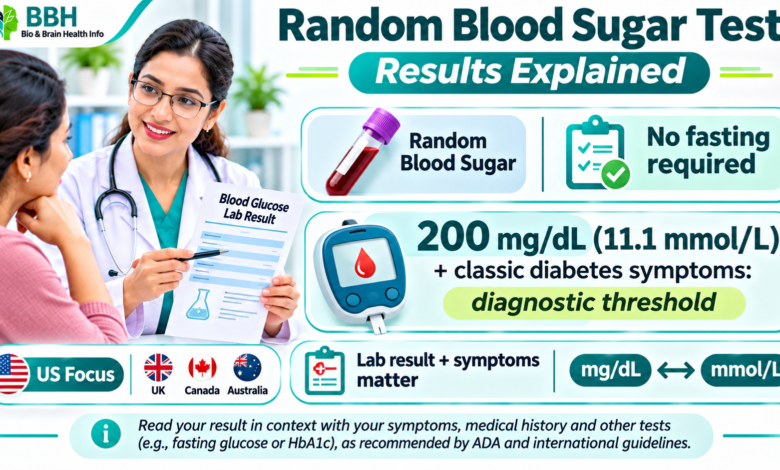
Under the 2026 American Diabetes Association diagnostic criteria, a random laboratory plasma glucose value of at least 200 mg/dL, approximately 11.1 mmol/L, in someone with classic symptoms of hyperglycemia or a hyperglycemic crisis can establish diabetes. The symptom requirement is essential; it should not be omitted from a patient education chart.
| Random glucose | With classic symptoms or crisis | Without classic symptoms |
|---|---|---|
| Below 200 mg/dL | Does not meet this criterion; symptoms still need assessment | Cannot diagnose or exclude diabetes alone |
| 200 mg/dL or higher | Meets ADA random-glucose diabetes criterion | Needs clinical follow-up and generally confirmation |
Random glucose does not have standardized prediabetes thresholds equivalent to fasting plasma glucose, HbA1c or two-hour oral glucose tolerance test results. A reading below 200 mg/dL cannot establish normal glucose metabolism, and an elevated result without classic symptoms usually warrants confirmation with a validated diagnostic test.
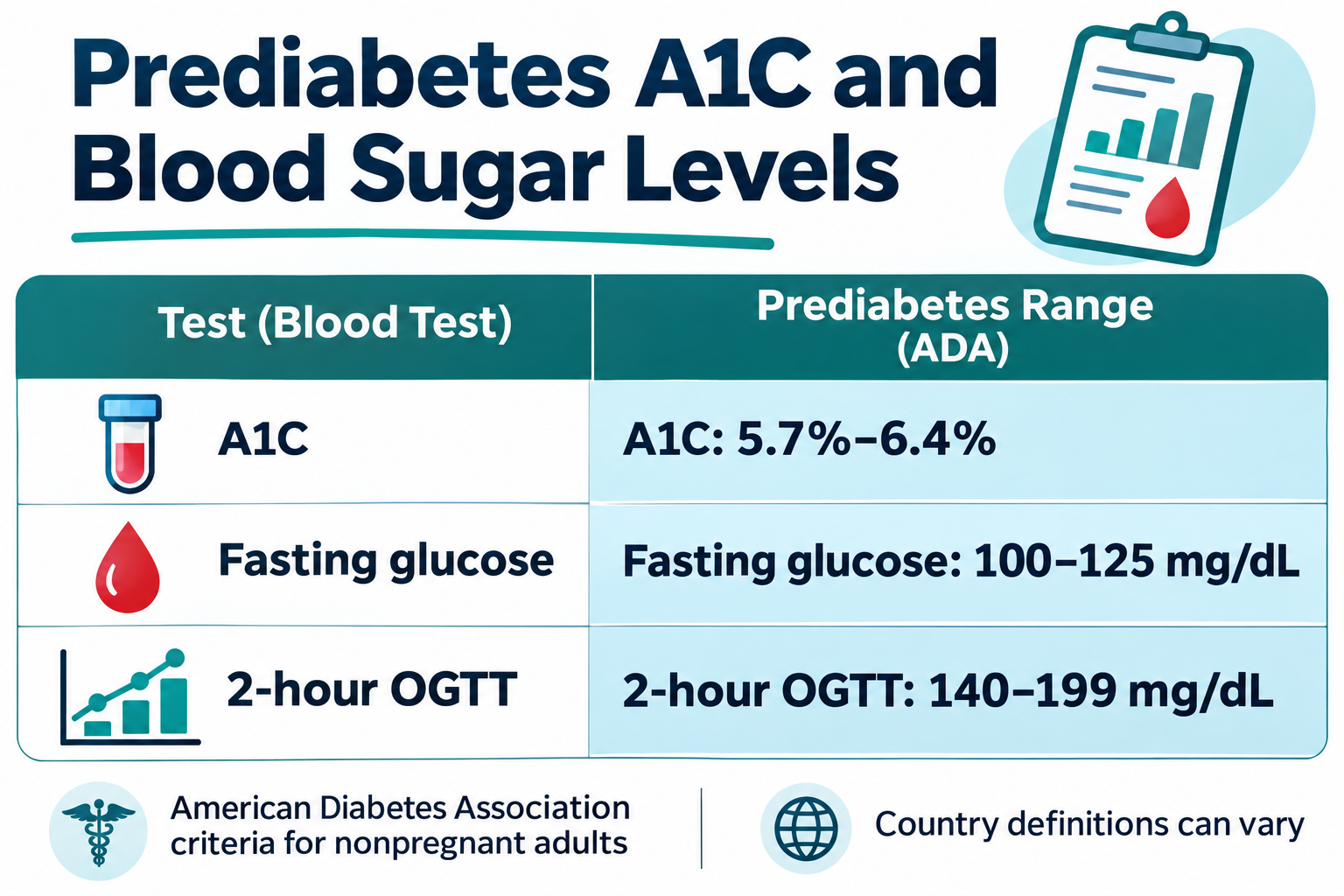
Results obtained from home meters or continuous glucose monitors may be useful clues, but they are not interchangeable with venous laboratory plasma glucose for a formal diagnosis. The clinical setting and accuracy of the method matter.
3. Diabetes symptoms and urgent warnings
Classic symptoms include excessive thirst, unusually frequent or high-volume urination and unexpected weight loss. Fatigue and blurred vision may occur but are not specific enough to diagnose diabetes by themselves. When classic symptoms accompany a qualifying random plasma glucose result, prompt clinical evaluation is important.
Repeated vomiting, abdominal pain, unusual deep or rapid breathing, severe dehydration, profound sleepiness or confusion are more serious warning signs. These may indicate diabetic ketoacidosis or another dangerous condition. Do not wait for an unusually high meter number before seeking emergency assessment.
Some people develop ketoacidosis with glucose that is not dramatically elevated, particularly when taking certain SGLT2 medications. Emergency decisions must follow the person’s symptoms and clinical condition, not merely one random glucose measurement.
4. US, UK, Canada and Australia comparison
The United States commonly reports glucose in mg/dL, whereas the United Kingdom, Canada and Australia usually use mmol/L. The central diagnostic concentration is equivalent: 200 mg/dL in U.S. reporting corresponds to roughly 11.1 mmol/L in the other three countries.
| Country | Typical reporting unit | Symptomatic random-glucose criterion |
|---|---|---|
| United States | mg/dL | 200 or higher |
| United Kingdom | mmol/L | 11.1 or higher |
| Canada | mmol/L | 11.1 or higher |
| Australia | mmol/L | 11.1 or higher |
Diabetes UK and UK laboratory resources describe random venous plasma glucose of at least 11.1 mmol/L as diagnostic in an appropriate symptomatic setting. Canadian guidance associates random plasma glucose at or above 11.1 mmol/L with classic symptoms. Australian guidance likewise recognizes this threshold in symptomatic patients or situations of acute metabolic decompensation.
Local clinical practice differs in how testing is arranged, how abnormal results are confirmed and how laboratory reports are formatted. Patients should follow guidance relevant to their own healthcare system rather than copying an unrelated country’s screening pathway. This article uses U.S. ADA 2026 guidance as its primary framework.
5. Random Blood Sugar Test Preparation
A clinician generally draws venous blood for a laboratory plasma glucose measurement. Random testing can take place after breakfast or lunch and does not require at least eight hours without calories. This helps when symptoms develop suddenly or a clinic appointment occurs later in the day.
If other studies are ordered alongside random glucose, different preparation may apply to those specific tests. Fasting plasma glucose requires an eight-hour calorie-free period, while an oral glucose tolerance test has a specified procedure and standardized glucose drink. Always review the instructions from the laboratory rather than assuming every glucose test works the same way.
Tell the clinician about medicines, unusual symptoms, recent illness and when you last ate if asked. Delaying an urgent assessment simply to fast can be dangerous when someone is severely unwell.
An appropriate random blood sugar test interpretation depends on the clinical setting and symptoms.
6. Random glucose versus fasting glucose and HbA1c
Fasting plasma glucose measures glucose after a period without calories. HbA1c represents a longer-term estimate of glucose exposure, while the two-hour OGTT evaluates glucose after a standardized 75-gram glucose challenge. These methods address overlapping but different aspects of glucose regulation.
The ADA diabetes thresholds for nonpregnant adults include fasting plasma glucose at least 126 mg/dL, HbA1c at least 6.5%, and two-hour OGTT glucose at least 200 mg/dL. The random plasma glucose criterion is at least 200 mg/dL with classic symptoms or crisis. Without unequivocal hyperglycemia, confirmation is generally required.
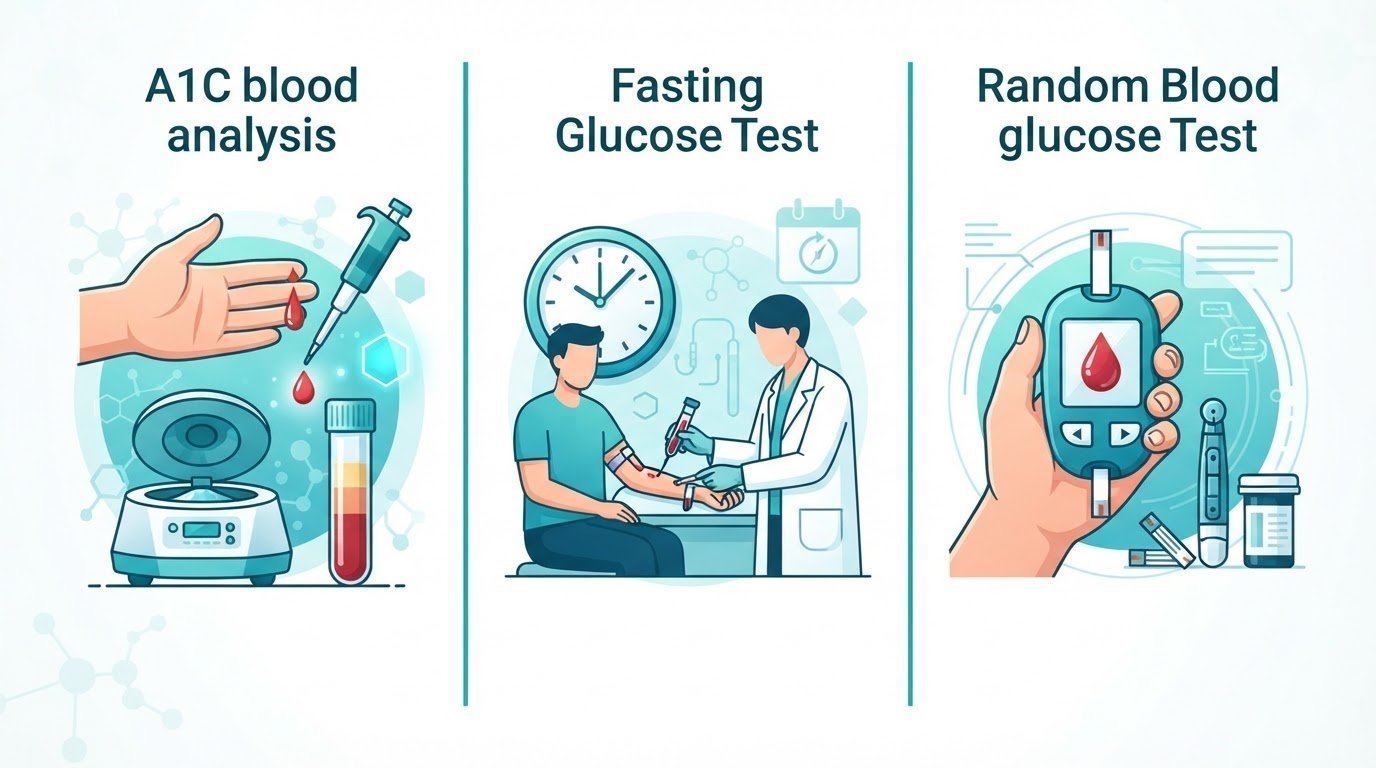
The same person can have different results across these tests. A clinician interprets disagreements, considers anemia or other factors influencing HbA1c and may repeat an appropriate measurement before establishing a diagnosis.
7. Not the same as an after-meal home reading
A glucose value taken two hours after a normal lunch is not the same as the two-hour result of a formal OGTT. The OGTT uses a controlled 75-gram glucose drink and a specified laboratory sequence. Applying OGTT prediabetes thresholds to an ordinary meal reading produces misleading conclusions.
For many adults with established diabetes who are not pregnant, a commonly recommended management target is peak postmeal glucose below 180 mg/dL, measured approximately one to two hours after starting a meal. This is a treatment target rather than a screening or diagnostic cutoff.
A postmeal home value may prompt a discussion about diabetes management, but it does not automatically diagnose diabetes in someone who has never been diagnosed. The purpose and timing of the test are part of the result.
8. mg/dL and mmol/L conversions
Blood glucose in the United States is usually written as milligrams per deciliter. UK, Canadian and Australian laboratories typically report millimoles per liter. Divide mg/dL by approximately 18.018 to obtain mmol/L; multiply mmol/L by the same amount to obtain mg/dL.
The commonly discussed 200 mg/dL threshold corresponds to 11.1 mmol/L. Other useful conversions are 70 mg/dL to 3.9 mmol/L, 140 to 7.8, 180 to 10.0, and 250 to 13.9. Conversion changes the unit but does not alter whether the sample was fasting, random or part of an OGTT.
| mg/dL | mmol/L (approximate) |
|---|---|
| 70 | 3.9 |
| 100 | 5.6 |
| 140 | 7.8 |
| 180 | 10.0 |
| 200 | 11.1 |
| 250 | 13.9 |
Do not confuse glucose mmol/L with HbA1c mmol/mol. HbA1c reports a different biological measurement, and a result such as 48 mmol/mol cannot be interpreted as glucose of 48 mmol/L.
9. Random Blood Sugar Test vs Home Meters
Finger-stick meters usually measure capillary blood glucose for ongoing management. Continuous glucose monitors estimate glucose in interstitial fluid and provide trends, which may lag blood glucose during periods of rapid change. These measurements can be very useful for patients already managing diabetes.
An unexpected reading can reflect device technique, insufficient hand cleaning, sensor issues or real changes in glucose. Confirm according to the device instructions when the reading does not match symptoms and seek medical help when serious symptoms are present.
Formal diabetes diagnosis ordinarily uses validated laboratory testing. Someone with a high home reading and classic symptoms should contact a clinician promptly rather than trying to collect enough home measurements to diagnose themselves.
10. Low and high readings: what needs attention
A high value may occur during diabetes, infection, steroid treatment or other physiological stress. Its significance depends on symptoms and clinical conditions. Severe dehydration, vomiting, abnormal breathing or altered awareness require urgent assessment even when the glucose number seems less dramatic than expected.
For people receiving diabetes treatment, glucose below 70 mg/dL (3.9 mmol/L) is a common low-glucose alert threshold, and below 54 mg/dL (3.0 mmol/L) represents clinically significant hypoglycemia. Insulin and some other medicines can increase the likelihood of low glucose.
A person who is confused, unconscious, having a seizure or unable to swallow safely needs emergency help. Never give food or liquid orally to someone who cannot swallow safely. Follow prescribed rescue medication directions where appropriate.
11. Next steps and confirmatory diagnosis
Keep the laboratory report and write down the reading, units, date, time, symptoms, last meal and current medications. A qualified clinician can decide whether the reading is diagnostic or whether further fasting glucose, HbA1c or OGTT testing is needed.
Under ADA guidance, two qualifying abnormal findings generally confirm diabetes in someone without unequivocal hyperglycemia. A high random result combined with classic symptoms or crisis follows the specific random diagnostic rule. Results close to thresholds can warrant repeat assessment based on professional judgment.

Avoid changing insulin or other prescriptions because of a chart on the internet. If diabetes is confirmed, treatment depends on type, other health conditions and individual goals. Timely follow-up helps determine the safest approach.
12. FAQ: random glucose results explained
Does the test require fasting? No, random plasma glucose can be taken regardless of recent meals. Is 140 mg/dL a normal random result? It does not define a universal normal or prediabetes category; interpretation depends on context.
Can 200 mg/dL establish diabetes? A laboratory random result at or above this value with classic symptoms or hyperglycemic crisis meets the ADA diagnostic criterion. Can diabetes exist below 200 mg/dL random glucose? Yes, another diagnostic test may be required.
Is the threshold the same internationally? The equivalent concentration is 11.1 mmol/L, with local testing and confirmation differences. Is a finger-stick test enough to diagnose? Not ordinarily; laboratory testing is preferred. Can illness raise glucose? Yes. When should a person seek emergency care? Severe vomiting, deep breathing, confusion, fainting or major dehydration demands immediate evaluation.
Additional common questions
Can a random blood sugar test find prediabetes?
No universal prediabetes diagnostic range exists for random plasma glucose. Clinicians use validated fasting glucose, HbA1c or OGTT criteria.
What should someone do with random glucose above 200 mg/dL but no symptoms?
Contact a clinician for formal evaluation and generally confirmatory testing; do not rely on an isolated value.
Why can a random reading be normal when HbA1c is high?
Random glucose captures one moment, whereas HbA1c estimates longer-term exposure. The measurements can differ without a laboratory error.
Does random glucose test replace fasting glucose?
Not in every setting. Tests are selected based on symptoms, risk factors and diagnostic needs.
Does a normal meter result exclude an emergency?
No. Serious symptoms such as unusual breathing, confusion or repeated vomiting require prompt care even when a meter result appears lower than expected.
When random results and symptoms disagree
Sometimes a person has excessive thirst and frequent urination but their random laboratory glucose falls below 200 mg/dL. Such a result does not rule out diabetes or another illness. Glucose can fluctuate throughout the day, and the symptoms may still need evaluation. Clinicians may request fasting plasma glucose, HbA1c or a standardized oral glucose tolerance test, then review other possible causes of the reported symptoms.
The reverse situation is also important. A person without classic symptoms may receive a random plasma glucose result above 200 mg/dL. Rather than assuming that diabetes has been definitively diagnosed, the clinician may assess recent illness, medications that raise glucose and laboratory context before arranging appropriate confirmatory testing. A high result should be taken seriously without skipping the usual confirmation pathway when required.
For someone already living with diabetes, a random value is usually interpreted against their individualized management plan, not the diagnostic threshold for a person without diabetes. The time of the last meal, any recent activity, medication timing and symptoms all contribute to the decision about what to do next. Unusual breathing, repeated vomiting or confusion calls for emergency assessment even if a single glucose value seems inconsistent with the severity of illness.
Conclusion: Read Random Results With Clinical Context
The random blood sugar test is useful because it can be performed immediately and interpreted with a person’s symptoms. In the U.S., the ADA 2026 criterion is 200 mg/dL or higher with classic symptoms or crisis; in the UK, Canada and Australia, the equivalent is about 11.1 mmol/L under appropriate clinical conditions. A high random number without that context usually requires additional assessment.
The most useful next step is reviewing the result with a qualified clinician, including the laboratory method, symptoms, medications and previous results. Severe illness should never be managed only by repeating a home glucose test.
Scientific References